
Open-plan offices keep promising energy, collaboration and agility. What they often deliver is something else: constant background noise, nowhere to concentrate, and rows of people sitting too long at desks that don’t adapt to the work.
That’s the modern office paradox. Teams need openness and privacy. They need interaction and deep focus. They need healthier workstations without sacrificing floor space. The strongest answer for 2026 isn’t choosing between desks or pods. It’s designing them together from the start.
A stand up desk corner setup does one job exceptionally well. It gives an individual a generous, efficient ergonomic footprint without dominating the room. An acoustic pod does another. It creates the quiet boundary that open plan usually fails to provide. Put the two into one workplace strategy and the office starts working properly again.
Table of Contents
- Introduction The Modern Office Paradox
- The Integrated Solution Pods and Corner Desks
- Specifying Your Stand Up Desk Corner
- Designing Productive Zones with Pods and Desks
- Smart Procurement Sustainability and Flexibility
- Your Action Plan and Next Steps
Introduction The Modern Office Paradox
A workplace manager in London, Cambridge or Milton Keynes usually sees the same pattern. The office looks busy, yet people still leave their desks for calls, hide in meeting rooms for concentration, and complain that the workspace feels both crowded and underused.
That contradiction isn’t a design mystery. It happens when a workplace is planned around furniture categories instead of work behaviours. Desks get specified for density. Meeting rooms get specified for capacity. Acoustic needs, posture changes and short bursts of focused solo work get treated as afterthoughts.
The result is predictable. Staff spend long periods seated. Phone calls spill into shared areas. Small confidential conversations block larger rooms. Focus work gets forced into a setting built for interruption.
“The right office doesn’t force people to choose between comfort and concentration. It gives them both by design.”
A better office uses layers. It gives each person a strong everyday workstation and places quiet, enclosed spaces exactly where focused activity needs them. That’s why the combination of a stand up desk corner and a well-chosen pod is so effective. One solves ergonomics and space efficiency. The other solves acoustic control and privacy.
For 2026 workplace planning, that integrated model is the one worth backing. It’s more practical than chasing either trend in isolation, and it reflects how people work.
The Integrated Solution Pods and Corner Desks
A pod without good desks leaves people comfortable only when they leave their main workstation. A desk upgrade without acoustic support still leaves them exposed to office noise. That’s why treating these as separate purchases is a mistake.
A better brief combines the two. The desk supports healthy posture and everyday task flow. The pod handles privacy, calls, concentrated reading, one-to-ones and short meetings. Together they create a workplace that’s flexible without becoming chaotic.
Why the combined approach wins
The acoustic problem is no longer minor. 68% of facilities managers in London and Cambridge offices report poor acoustic separation in hybrid desk-pod layouts, according to the British Safety Council’s 2025 Workplace Wellbeing Report. That matters because it shows many offices are already mixing desks and pods, but doing it badly.
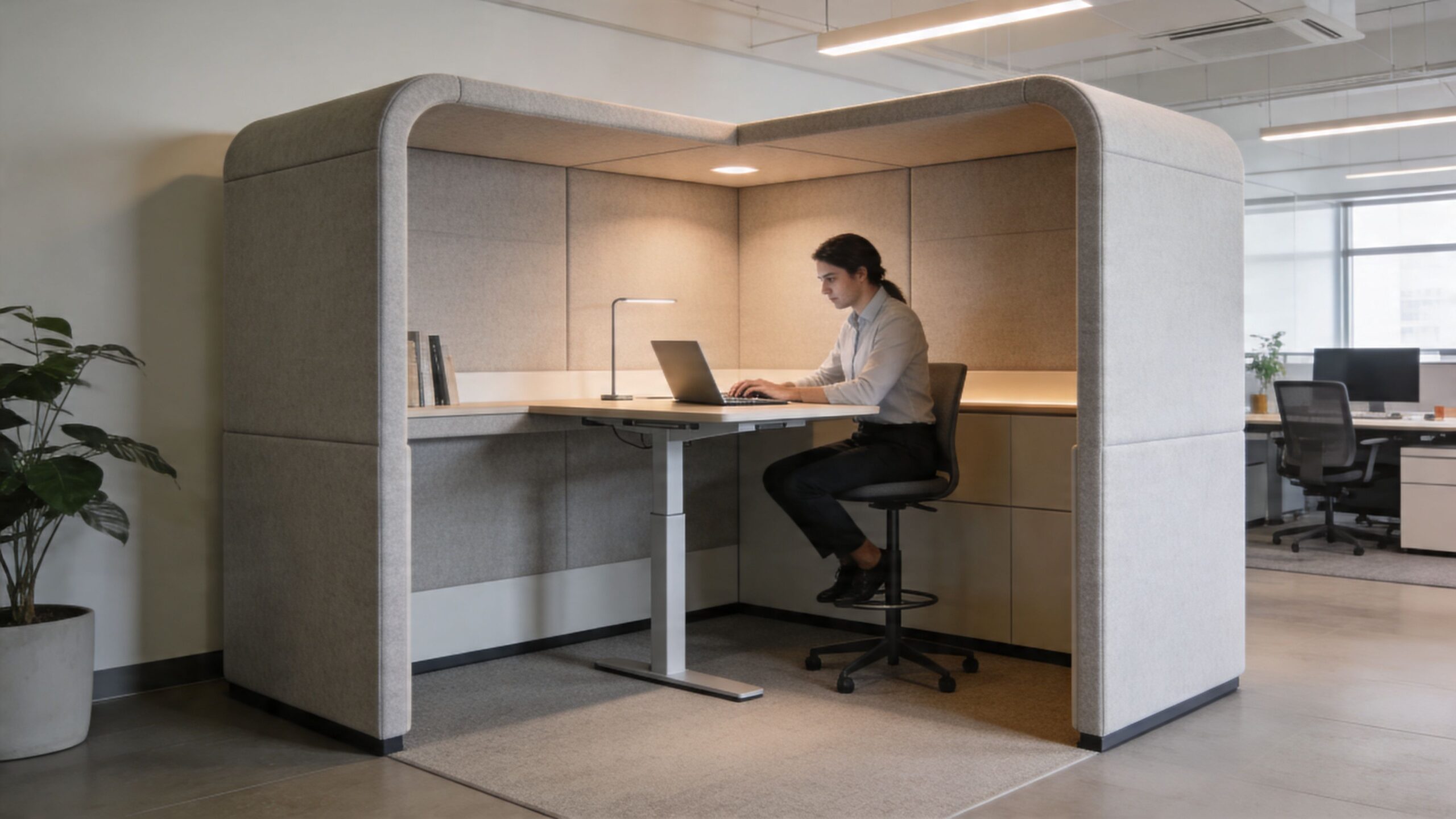
The fix isn’t adding random booths into circulation space. The fix is planning pods and desks as one ecosystem. A stand up desk corner gives a user enough surface for dual screens, notebooks and task equipment in one compact footprint. Nearby pods then absorb the work that open benching handles poorly.
Three workplace gains follow:
- Focus gets protected: Deep work, private calls and sensitive conversations move into enclosed settings instead of spilling across the floor.
- The main desk becomes more effective: Staff can keep an organised daily base while still accessing quiet spaces when the task changes.
- Space works harder: L-shaped desks use corners efficiently, while pods create enclosed functions without the disruption of full building works.
Matching pod types to real work
Different pod types support different moments in the day. That matters more than aesthetics.
A single-user pod is the answer for video calls, concentrated writing and private admin. For that role, Framery pods are a strong fit when consistent acoustic performance and refined user experience matter. Kabin pods suit projects that want a simpler visual language with a clean footprint.
For small team huddles, project discussions or quick check-ins, BlockO pods give flexibility. They work well where teams want enclosed collaboration points without turning every discussion into a formal meeting room booking.
Where health and environmental quality are central to the brief, Vetrospace pods deserve attention. They’re especially relevant in workplaces trying to improve comfort and concentration at the same time.
External settings need the same logic. A sheltered breakout or meeting point can extend the usable workplace beyond the main floorplate, and The Meeting Pod Co pods are useful for that kind of application.
Practical rule: Put pods where noise starts, not where leftover space happens to be.
The desk that makes the system work
The stand up desk corner is often the smarter primary workstation than a straight desk. It gives better zoning across one surface. Screen work can sit on one side, active paperwork on the other, with the corner itself acting as the control point.
That layout reduces desktop clutter and helps users switch tasks without shuffling equipment around all day. It also suits compact plans where every square metre needs to earn its place.
For open-plan projects that still need some spatial separation around the desk neighbourhood, office partitioning walls can support the layout without replacing the role of pods. They help define edges. Pods handle privacy.
The missed opportunity in most office schemes
Too many specifications still split the workplace into separate conversations. Ergonomics gets discussed with desk suppliers. Acoustics gets discussed later, if at all. That sequence creates compromise.
The stronger strategy is simple. Build a desk zone for daily work. Add pods for protected work. Then tune the space between them so movement feels natural and the office supports both collaboration and concentration.
That’s the point most guidance misses, and it’s where better workplaces pull ahead.
Specifying Your Stand Up Desk Corner
The wrong corner desk creates frustration fast. It looks efficient on plan, then wobbles at height, traps cables, limits monitor placement and gives users a large surface that somehow still feels awkward.
The right one is different. It feels stable, easy to adjust and intuitive to use. It supports the work instead of dictating it.
Why the corner format works
A straight desk is fine for light computer work. It becomes limiting once users need multiple screens, paper handling, accessories or regular switching between tasks. The corner layout solves that by creating zones on one workstation.
That’s why the stand up desk corner works so well in design studios, operational teams, admin-heavy roles and management positions. One side can hold screens and docked devices. The other can hold active project work. The corner becomes the natural working centre.
It also helps with room planning. Corner desks tuck into edges and make use of otherwise awkward perimeter space. Reversible returns matter here because they give layout flexibility when a floorplate changes.
What to specify first
The core decision isn’t finish colour. It’s performance.
Height adjustment comes first. Under UK HSE DSE Regulations, dynamic workstations matter, and L-shaped corner desks with dual-motor systems and a height range of 28-48 inches can reduce sedentary time by 28% and lower musculoskeletal disorder claims by 22% in UK office trials, according to this UK office trial summary on L-shaped standing desks.
That makes three features indispensable:
- Dual motors: They give smoother travel and better support for larger corner tops.
- Useful height range: The desk must serve both seated and standing users across a broad height spread.
- Stable frame design: If the desk moves when someone types, the spec has failed.
A procurement team that cuts corners here usually pays for it later in complaints and poor uptake.
| Specification area | What matters | Why it matters |
|---|---|---|
| Frame | Strong steel construction | Keeps the desk stable under daily use |
| Adjustment | Dual-motor movement | Handles larger tops more reliably |
| Layout | Reversible L-return | Makes planning easier across different sites |
| Surface | Enough depth for monitors and task work | Stops the desk feeling crowded |
| Cable management | Integrated routing and power planning | Keeps the workstation usable and tidy |
Features worth paying for
Some extras are cosmetic. Others change daily use.
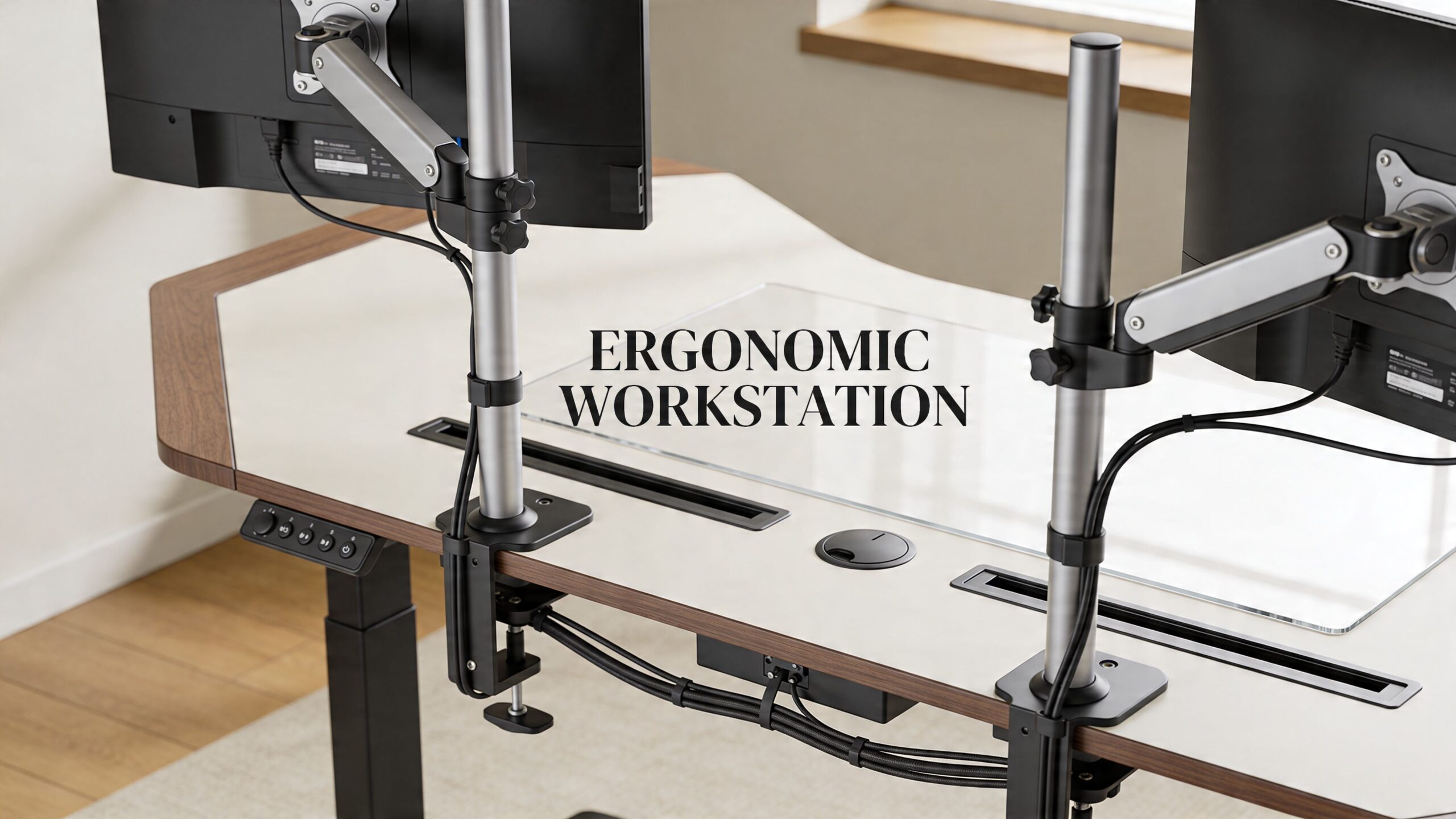
Memory presets are worth it because they make posture change effortless. If staff have to fiddle with buttons every time, usage drops. Cable trays and cable risers are also worth paying for because a height-adjustable desk with hanging leads quickly becomes a mess.
Monitor arms matter more on a corner desk than on a straight desk because they free up the rear arc and improve sightlines. Teams reviewing options for electronic adjustable height desks should treat monitor support and cable control as part of the desk spec, not accessories to sort out later.
A corner desk should feel calm at full height. If it shakes, groans or forces cable compromises, it isn’t fit for a modern office.
The material choice also changes the experience. A durable top with a pleasant edge detail improves touch comfort during long sessions. That sounds minor until a team uses the desk all day, every day.
This walkthrough shows the kind of setup details worth checking before final sign-off.
A blunt buying recommendation
For most UK offices, the best stand up desk corner spec is an electric L-shaped desk with a reversible return, dual motors, strong cable management and enough width to support real task zoning. Cheap manual frames and underpowered electric bases are false economy.
The strongest workplace furniture choices are the ones staff don’t have to think about. They work, day after day.
Designing Productive Zones with Pods and Desks
An effective office layout doesn’t scatter features across a floor. It groups work modes so each area supports a clear purpose.
That’s the logic missing from many refurbishments. Desks go in one package. Pods arrive later. Storage lands wherever there’s a gap. Then the office feels busy but not organised.
A better approach builds productive zones. Each zone has a role, an acoustic condition and a clear relationship to the next one.
A better layout logic
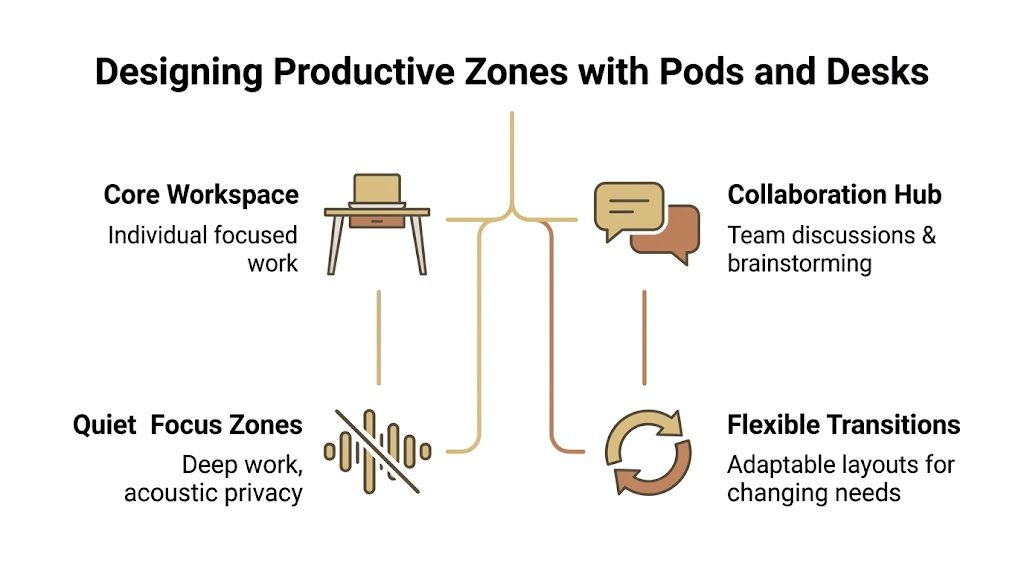
The most useful workplace layouts usually include four layers:
- Core workspace: the daily desk setting for routine individual work
- Collaboration hub: a nearby point for quick discussion and shared review
- Quiet focus zones: enclosed pods for concentration and calls
- Flexible transitions: circulation and movable elements that let the office adapt
A stand up desk corner belongs in the core workspace. It gives each user a proper base. Pods sit at the edge of that zone or between neighbourhoods, where they act as both destination and acoustic buffer.
That’s more effective than pushing all enclosed spaces to one side of the building. When pods are too far from the desk area, staff either don’t use them or occupy larger rooms instead.
How pods improve the desk zone
Pods don’t just help the people inside them. They improve the surrounding area too.
A phone pod reduces the number of calls taken at desks. A two to four person pod captures quick team exchanges that would otherwise happen in open circulation. A larger enclosed booth prevents ad hoc discussion from bleeding into focused desk zones.
That’s why a pod should be placed according to behavioural demand, not just visual symmetry. A bank of corner desks doing concentrated work benefits from nearby enclosed space. A sales floor may need more frequent call booths. A project team may need a pod beside a cluster of desks for rapid review sessions.
Layout insight: The best pod placement shortens the distance between interruption and containment.
For teams refining acoustic expectations, this guide to understanding the difference between acoustic treatment and soundproofing is useful because it explains why surface treatments alone won’t deliver the privacy that enclosed pods can provide.
Where partitions still matter
Pods shouldn’t be asked to solve every spatial problem. Some zones need softer definition, visual screening or lightweight separation rather than full enclosure.
That’s where partitions come in. Systems from Logika are useful when a workplace needs to shape movement, break sightlines or gently divide neighbourhoods without building hard rooms. They work particularly well around touchdown areas, team settings and circulation edges.
A practical zoning mix often looks like this:
| Zone | Primary element | Supporting element | Main purpose |
|---|---|---|---|
| Individual task area | Stand up desk corner | Screen or partition | Daily focused work |
| Call point | Single-user pod | Nearby perch or shelf | Private calls |
| Team huddle area | Small meeting pod | Mobile whiteboard | Fast collaboration |
| Transitional edge | Partition system | Planting or storage | Soften movement and noise |
Power and lighting matter as much as furniture placement. Pods need accessible power and clean data planning. Corner desks need cable routes that don’t cross walkways or create trip points. Lighting should support screen work at the desk and a more enclosed visual comfort level inside pods.
The strongest office plans feel obvious once built. People know where to go for each type of work because the layout guides them there.
Smart Procurement Sustainability and Flexibility
Most workplace mistakes happen before installation. They happen in procurement, when buyers chase unit price instead of long-term fit, or lock themselves into products that can’t flex as teams change.
That’s the wrong mindset for 2026. Offices are still evolving. Headcount shifts. Team patterns change. Occupancy isn’t static. Furniture and pods should be procured with that reality in mind.
Buy less rigidly
Flexible procurement is no longer a niche decision. ONS 2025 data reveals that 41% of UK coworking operators face DSE non-compliance fines averaging £2,500 annually, while queries for pod-rental plus ergonomic desk packages have increased by 35%, as referenced in this UK market overview for flexible ergonomic workspace solutions.
That’s a strong signal. Operators and workplace teams don’t just want products. They want compliant, adaptable packages that reduce risk.
For pods, rental can be the smartest move, especially in fast-changing environments such as coworking, project-led businesses and organisations trialling new workplace models. Framery Subscribed fits that need well because it gives businesses a more flexible route into high-quality pod provision without forcing a rigid ownership decision on day one.
For desk procurement, the same principle applies. Standardise what needs to be standardised, but don’t overspecify every zone identically. Some areas need premium height-adjustable corners. Other zones may suit simpler touchdown settings or affordable office desks where full sit-stand functionality isn’t the priority.
Procure for the circular economy
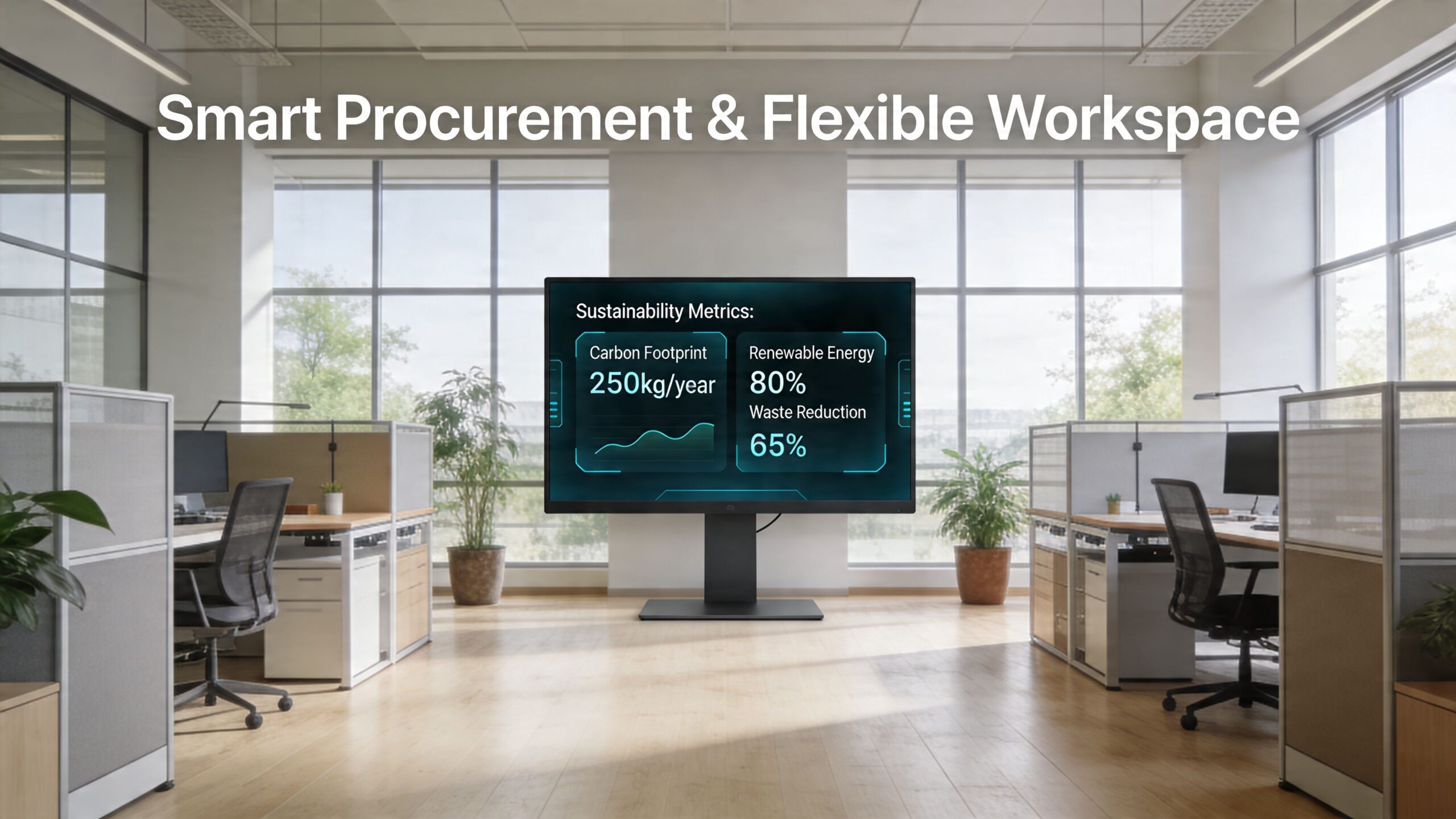
Sustainability shouldn’t be treated as a finishing layer added to the bid pack. It should shape product choice from the start.
That means asking harder questions. Can the pod be relocated? Can components be repaired or refreshed? Will the desk frame outlast the first interior redesign? Can finishes be replaced without scrapping the whole unit?
A circular approach usually leads to better commercial outcomes because it favours longevity, adaptability and reuse. It also aligns with a more responsible workplace strategy. Teams reviewing suppliers should look closely at sustainability at Gibbsonn to understand how sustainability and the circular economy can be embedded into workspace decisions rather than treated as marketing language.
Sustainable procurement isn’t about buying less capable products. It’s about buying products that stay useful for longer.
The strongest specification briefs now combine three filters. Performance, flexibility and lifecycle value. If one is missing, the brief is incomplete.
Your Action Plan and Next Steps
Start with the friction your staff feel every day. In one corner of the office, people are standing for calls beside desks that were never planned for dual screens, note-taking and quick team check-ins. Across the same floor, others are hunting for somewhere quiet because open plan has stripped out privacy. The fix is to treat the stand up desk corner and the acoustic pod as one workplace system, not two separate purchases.
That approach works because each element solves a different operational problem. The L-shaped sit-stand desk gives users enough surface area to split focused work, live calls and reference material without creating clutter. The pod deals with the noise, confidentiality and interruption issues that the desk cannot solve on its own. Put together properly, they raise comfort, concentration and space performance at the same time.
What good looks like
A strong rollout has five clear traits:
- Desks are assigned by task profile: Give corner sit-stand desks to users who need multi-zone surface space and regular posture change.
- Pods sit where noise starts: Place enclosed pods beside call-heavy, meeting-heavy or focus-sensitive teams so people do not walk across the office to find privacy.
- The layout supports behaviour: Keep desks for active individual work. Keep pods for calls, focused work and short private conversations.
- Flexibility is designed in early: Confirm whether pods may need to be moved, rented or reconfigured before the order is signed.
- Ergonomics are handled at specification stage: Screen position, reach zones, cable routing and DSE requirements should be resolved before installation.
A practical rollout checklist
Use a strict sequence. It prevents expensive corrections later.
Audit real work patterns
Identify where calls happen, where noise interrupts concentration, and which roles need a corner desk rather than a standard rectangular top.Pinpoint your pressure zones
Mark the teams carrying the highest volume of video calls, heads-down work or confidential discussion. Those areas should get pod access first.Match desk shape to job demand
Use L-shaped standing desks for staff juggling multiple screens, paperwork, planning tools and frequent task-switching. Do not waste that footprint on low-intensity touchdown use.Choose pod types by use case
Single-user pods suit calls and focused solo work. Small meeting pods suit quick team decisions, one-to-ones and project reviews without disturbing the main floor.Resolve services before procurement
Plan power, data, lighting and cable management early. These details decide whether the finished office feels deliberate or badly patched together.Pilot the combination, not the products in isolation
Test one desk-pod cluster with a real team. Review travel distance to pods, desk usage patterns, acoustic performance and whether the layout reduces disruption.Set a review point after launch
Check occupancy, user feedback and pressure points after installation. Then adjust quantities or locations before rolling the model out wider.
The best UK offices now solve two problems at once. They give people an ergonomic home base with a stand up desk corner, and they give them immediate access to enclosed acoustic space when concentration or privacy matters. That is a better strategy than filling a floor with desks and hoping behaviour adapts.
Gibbsonn helps organisations create quieter, healthier and more adaptable workplaces with premium pods, ergonomic furniture and expert space planning. For specific advice, a practical specification review, or help comparing pod purchase with rental, use the button below. Teams should also book an appointment and visit the showroom in Bishop's Stortford to experience the pod and desk options in person.