

The problem usually starts the same way. A business opens up the office to encourage collaboration, then spends the next year dealing with noise, interruptions, awkward calls, and staff hunting for somewhere private to think. A simple wall room divider can help, but most organisations don’t need another flimsy screen. They need space that works harder.
That’s why the conversation has to move beyond basic partitions. Modern workplaces need privacy, acoustic control, flexibility, and a layout that can change without another full refit. In 2026, the smart answer isn’t just dividing space. It’s creating focused, human-centred environments inside the space already available.
Table of Contents
- Reclaiming Focus in the Open-Plan Office
- From Simple Screens to Intelligent Spaces
- The Power of the Pod A True Wall Room Divider
- Meeting UK Performance and Compliance Standards
- The Smart Investment Rental vs Purchase in 2026
- Designing for a Sustainable Future
- Let's Build Your Perfect Workspace
Reclaiming Focus in the Open-Plan Office
A workplace manager doesn’t need another theory about distraction. This issue is visible every day. One team is trying to concentrate, another is on back-to-back video calls, someone is taking a sensitive HR conversation at a desk, and the only available “quiet area” is a corridor corner with poor lighting and no power.
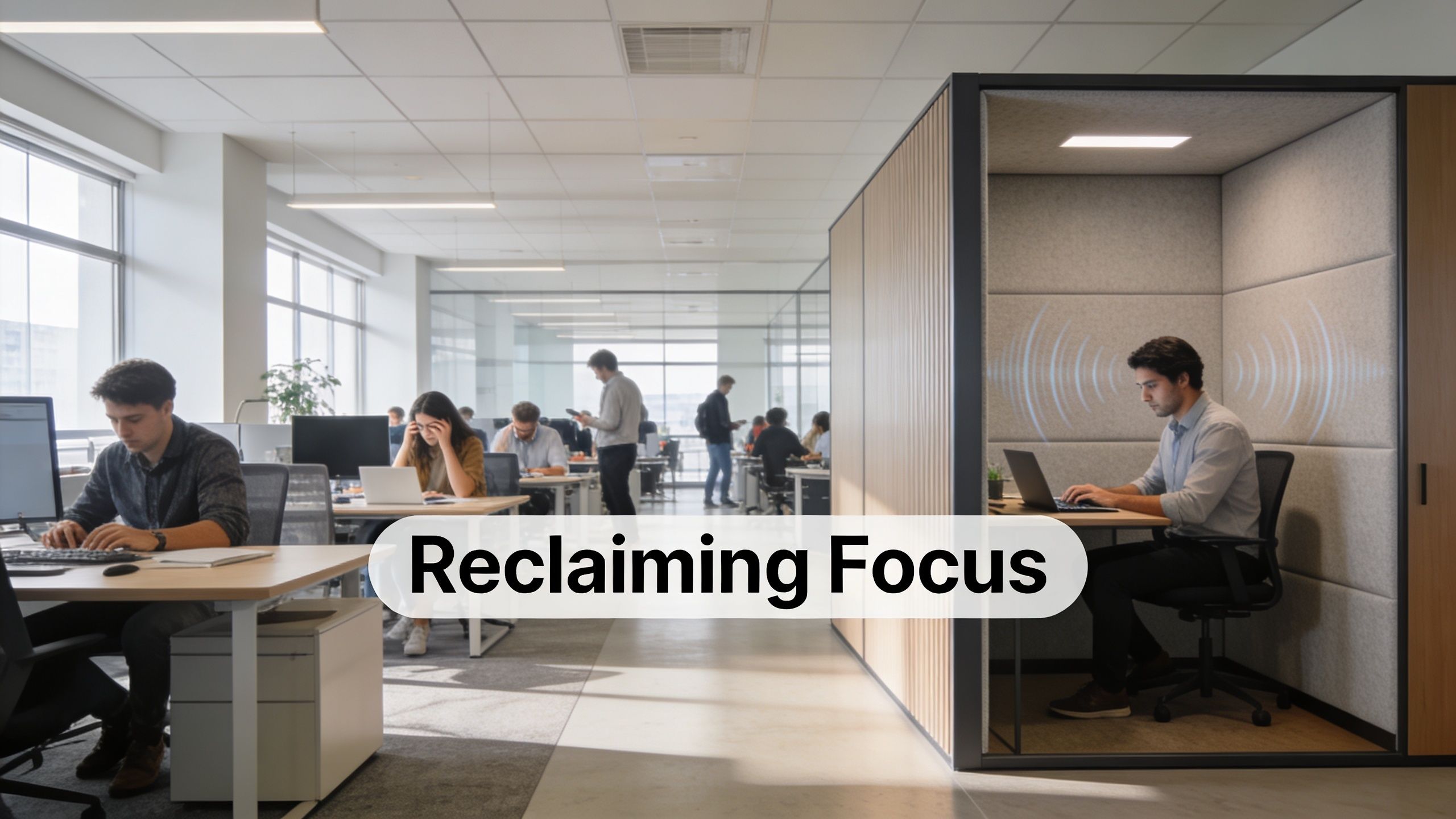
Open-plan design isn’t the problem on its own. Poor zoning is. When space has no clear boundaries, every activity competes with every other one. Focus work, collaboration, private calls, and informal meetings all collide.
The wall room divider has always solved a real problem
The need to divide space isn’t new. In the UK, the rise of open-plan offices after the Second World War brought a 400% increase in multi-purpose commercial spaces, and a 2023 British Institute of Facilities Management survey found 68% of UK facilities managers prioritising acoustic dividers for hybrid work according to this history of antique screens and room dividers.
That matters because it reframes the wall room divider. It isn’t just décor. It’s a practical response to a recurring workplace problem. British interiors used screens and dividers to create privacy, reduce discomfort, and impose order long before modern offices existed.
Practical rule: If a team can’t choose where to focus, where to collaborate, and where to talk privately, the layout is failing them.
Hybrid work needs more than visual separation
Today’s workplace has another layer of complexity. Staff switch between solo work, virtual meetings, team sessions, and informal drop-ins throughout the day. A divider that only blocks sightlines doesn’t solve that. Acoustic performance, airflow, lighting, and technology access all matter.
That’s also why workplace planning now has to connect physical zoning with digital infrastructure. Teams reviewing co-working office Wi-Fi solutions often realise the same truth about connectivity that applies to space planning. Shared environments only work when each zone is designed for its actual use.
A smarter layout starts by identifying the work that needs protection. Once that’s clear, adding a modern open-plan office design strategy becomes far more effective than dropping in a few screens and hoping behaviour changes around them.
From Simple Screens to Intelligent Spaces
Most divider decisions go wrong because buyers compare products that do completely different jobs. A freestanding screen, a glazed partition, and an acoustic pod are not interchangeable. They may all divide space, but they don’t deliver the same result.
What traditional dividers still do well
There’s still a place for conventional solutions:
- Freestanding screens work for quick visual zoning.
- Fixed partitions help define departments or meeting areas.
- Sliding systems can open and close larger spaces as needed.
- Glazed partitions preserve light while marking boundaries.
For businesses looking at partition systems, Logika partitions are a relevant option when the goal is structured space definition rather than enclosed acoustic privacy.
Traditional dividers can also support wayfinding, break up long sightlines, and make open offices feel less exposed. For some projects, that’s enough.
Where simple screens fall short
A basic wall room divider usually does one thing well. It marks territory. What it doesn’t do is create reliable speech privacy, proper acoustic separation, or a controlled environment for concentrated work.
That’s the gap most offices feel but struggle to describe. Staff say the office is “busy” or “too noisy” when the underlying issue is that visual zoning has been mistaken for functional zoning.
A screen can hide a person. It can’t reliably support a confidential call.
A divider becomes inadequate the moment the space needs to control sound, not just shape movement.
Pods are a different category altogether
Office pods change the conversation. They aren’t improved screens. They are self-contained spaces designed for specific workplace activities.
That distinction matters. A pod can support focused work, private calls, one-to-one conversations, or small meetings in a way a conventional divider can’t. It introduces acoustic control, ventilation, lighting, power, and a defined user purpose in one unit.
That makes the decision simpler than many buyers think. If the organisation only needs visual segmentation, screens and partitions may be enough. If the organisation needs concentration, confidentiality, and flexibility, pods are the stronger answer.
The Power of the Pod A True Wall Room Divider
The strongest workplace investments solve more than one problem at once. A pod doesn’t just divide space. It creates an environment people can use well.
Why pods outperform ordinary dividers
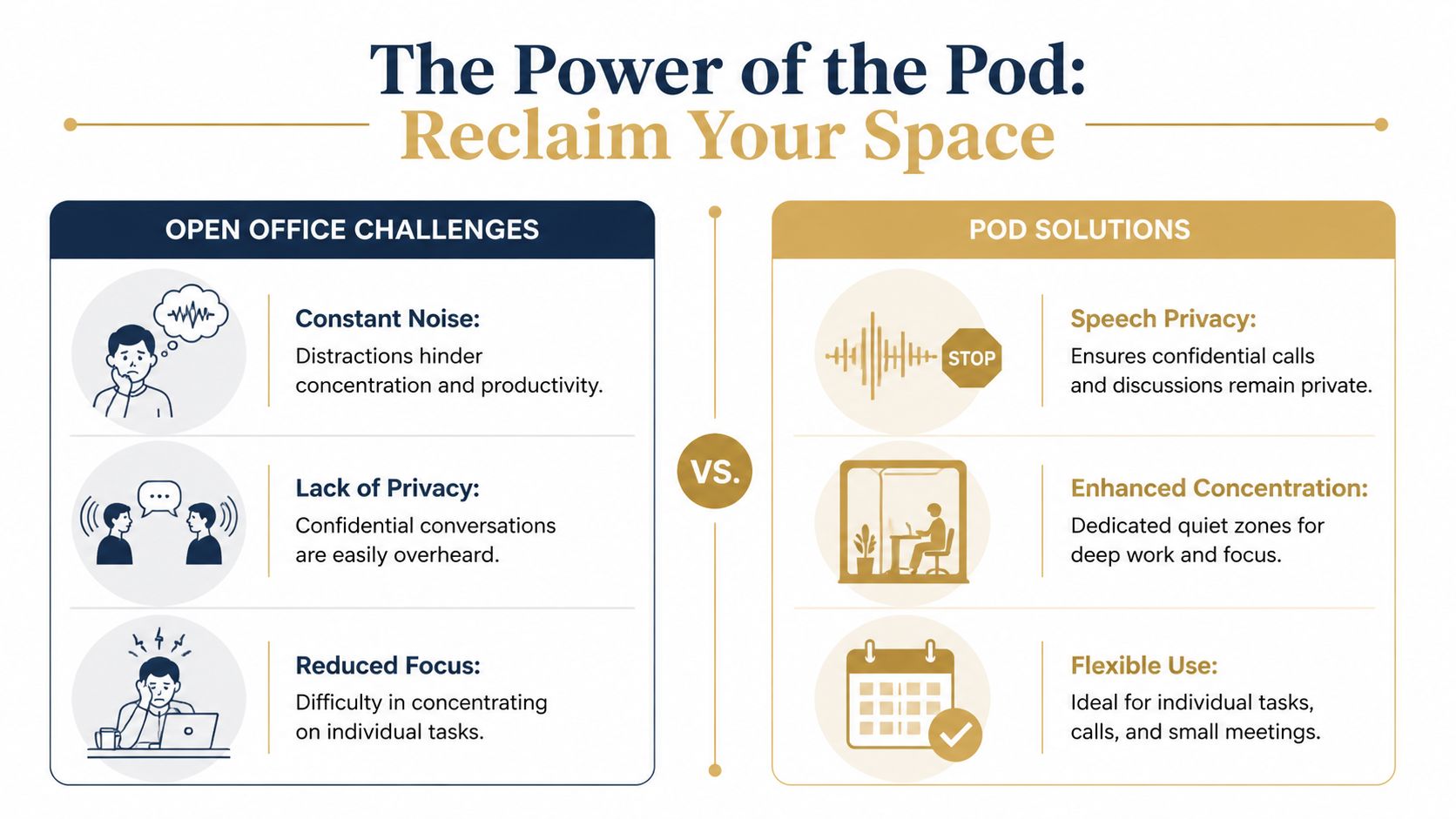
A proper acoustic pod gives a workplace three things a standard wall room divider rarely provides together:
| Need | Basic screen | Acoustic pod |
|---|---|---|
| Visual privacy | Yes | Yes |
| Speech privacy | Limited | Strong |
| Defined purpose | Weak | Clear |
| Integrated power and lighting | Rare | Common |
| Relocation flexibility | Varies | Strong in modular models |
That’s why pods work so well in hybrid offices. They reduce the daily friction of finding somewhere to call, think, meet, or decompress. Instead of trying to force one open room to do everything, they create micro-environments for different tasks.
Acoustic performance is not optional
Performance is where premium products justify their place. According to this acoustic room divider specification overview, premium modular systems such as office pods can use sound-absorbent PET panels with an NRC of up to 0.85, meaning they absorb 85% of ambient noise. The same source notes this level of performance is important for the UK’s Control of Noise at Work Regulations 2005.
That’s the point many buyers miss. Acoustic quality isn’t a nice extra. It is the feature that decides whether the space supports focus and privacy.
A workplace that needs a call booth but buys a decorative screen has merely delayed the necessary expense.
Which pod types suit which workplace
Different brands answer different operational needs.
- For premium phone and meeting booths, Framery pods are often specified where acoustic performance and refined user experience matter most.
- For distinctive design-led interiors, BlockO pods suit clients who want the pod to contribute visibly to the overall fit-out.
- For compact, practical workplace booths, Kabin pods make sense in offices that need straightforward privacy spaces without overcomplicating the layout.
- For architectural acoustic solutions, Vetrospace pods fit well in design-conscious environments where visual presence and performance both matter.
- For external meeting space, The Meeting Pod Co solutions extend the same thinking outdoors.
One route for businesses comparing booths, pods, and other privacy products is to review broader office partitioning wall options first, then narrow the decision by use case rather than aesthetics.
“The right pod isn’t chosen by size alone. It’s chosen by behaviour. What work needs protecting, and for how long?”
The practical benefit staff notice first
Employees don’t usually talk about NRC ratings or modular design. They talk about relief. Relief from overheard conversations, relief from hunting for a quiet call spot, relief from trying to concentrate in public.
That’s why pods outperform ordinary dividers over time. They remove a daily frustration that teams had started to accept as normal.
Meeting UK Performance and Compliance Standards
A workplace divider isn’t just a furniture choice when it goes into a school, healthcare setting, airport, or serious corporate environment. It becomes a specification decision. That means compliance, safety, acoustic performance, and accessibility all need proper attention.
What specifiers should actually check
Many guides focus too heavily on finish and footprint. That’s useful for Pinterest. It’s not enough for procurement.
According to this overview of acoustic divider standards, demand for modular dividers with NRC ratings above 0.8 is rising by 40% in key business hubs. The same source states that certified solutions must meet Building Bulletin 93 for schools, HTM 08-01 for healthcare, as well as BS EN 13501-1 fire standards and accessibility requirements.
That list matters because these environments cannot rely on decorative room division. They need products selected with performance in mind.
What good compliance thinking looks like
A serious buyer should ask:
- How does the product handle sound? Visual privacy without acoustic control won’t support confidential use.
- Is the product suitable for the sector? Education and healthcare settings have specific acoustic and operational expectations.
- What about fire performance? Materials and finishes must align with the project’s wider compliance obligations.
- Can users access it comfortably? Accessibility isn’t a side issue. It affects real daily use.
Why this changes the buying decision
A cheap divider can still become an expensive mistake if it fails the user test or the compliance test. Schools need spaces that support concentration without breaching acoustic expectations. Healthcare teams need privacy and calm. Commercial offices need products that support wellbeing and reduce unnecessary disruption.
That’s why specifiers should treat pods and high-performance dividers as operational infrastructure, not accessories.
The Smart Investment Rental vs Purchase in 2026
Most workplace teams still default to ownership because that’s how furniture has traditionally been bought. For pods, that isn’t always the smartest move. Flexibility often matters more than possession.
The real cost sits beyond the invoice
A bought pod can look straightforward on paper. Pay once, install it, and move on. The problem is that offices don’t stay still. Teams grow, shrink, relocate, reconfigure, and rewrite policies around attendance.
That’s where rental becomes far more attractive. According to this Q1 2026 office furniture rental data, UK office furniture rental models such as Framery Subscribed grew 55% year-on-year. The same source notes that £150 to £400 per month can avoid a £5,000 to £15,000 purchase cost, while a pod can reduce noise-related absenteeism by 15% according to HSE UK stats referenced there.
For many businesses, that changes the whole financial conversation. The question stops being “What does the pod cost?” and becomes “How much flexibility does this model protect?”
Why rental fits modern workplace strategy
A rental model works especially well when an organisation faces any of these conditions:
- Uncertain headcount. A fixed asset can become a poor fit quickly.
- Shorter lease commitments. Mobility matters when the future footprint isn’t locked in.
- Phased refurbishment plans. Rental allows immediate improvement without waiting for a full capital project.
- Pressure on cash flow. Operational spending can be easier to manage than a large upfront purchase.
That’s why Framery Subscribed pod hire deserves serious attention in 2026. It aligns with how many businesses now treat workplace services. They want adaptability, maintenance support, and less capital tied up in assets that may need to move.
A similar logic appears in other office services too. Companies that review UK business coffee machine rentals often reach the same conclusion. Subscription models reduce friction when usage, staffing, and workplace patterns are still changing.
Purchase still has a place
Ownership can still work for stable environments with long leases, fixed layouts, and clear long-term demand. But many organisations no longer fit that profile.
For them, rental is not a compromise. It’s the financially sharper option because it matches the reality of modern occupancy planning.
Designing for a Sustainable Future
Sustainability in workplace design isn’t about adding a few plants and calling the office responsible. It’s about choosing products that last, adapt, and avoid unnecessary waste.
Why modular beats disposable
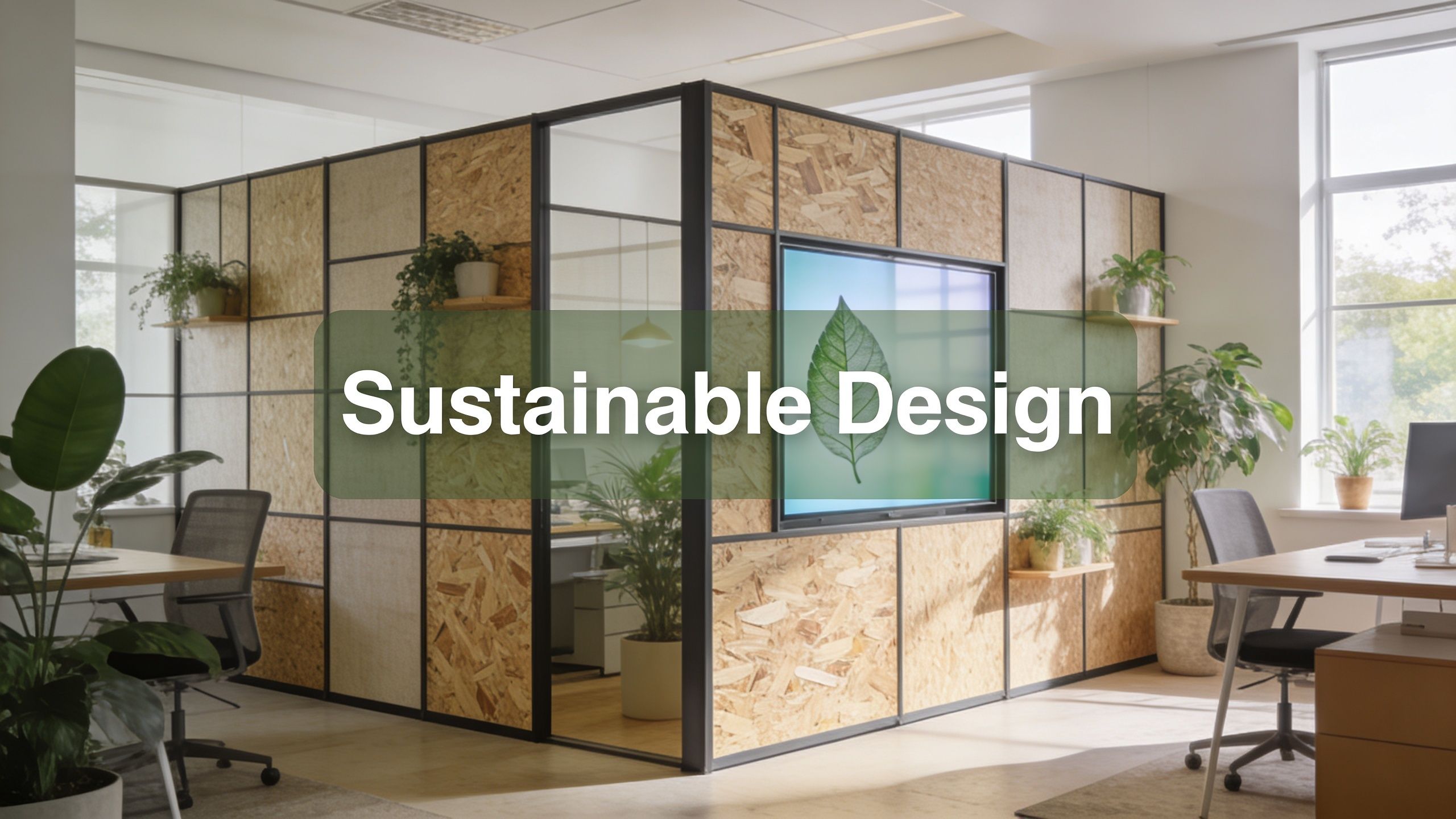
A fixed build-out often locks a business into one interpretation of how work should happen. When the organisation changes, that fit-out becomes waste. Modular pods take a different approach. They can be repositioned, reused, and integrated into future layouts more intelligently than many permanent interventions.
That makes them a practical fit for circular economy thinking. Better products stay useful for longer. Better planning reduces strip-out waste. Better flexibility lowers the need for repeated refurbishments.
Selection principle: The most sustainable wall room divider is the one that remains useful through several workplace changes.
Sustainability is also an operational decision
A notable factual option is Gibbsonn, which supplies pod solutions and also outlines its wider environmental approach through its sustainability commitments and office furniture recycling services.
That broader view matters. A sustainable workplace strategy shouldn’t focus only on what enters the building. It should also account for what gets retained, repurposed, or responsibly removed.
Pods support that thinking well because they aren’t single-use fit-out elements. Chosen properly, they become movable assets that continue to serve the workplace as layouts evolve.
Let's Build Your Perfect Workspace
The wrong divider treats a symptom. The right solution fixes the environment. That’s the difference between buying something that fills a gap and planning something that improves how people work.
A strong workplace strategy starts with a few blunt questions. Where do staff go for confidential calls. Where can someone focus without interruption. Where do small groups meet without taking over larger rooms. If those answers are weak, the space needs more than furniture. It needs better zoning.
What a better process looks like
The most effective projects usually follow a practical path:
- Assess behaviour first. The layout should reflect how teams work now, not how the office looked during the last fit-out.
- Choose the right level of division. Some zones need partitions. Others need enclosed acoustic pods.
- Plan for change. A solution that can’t adapt usually becomes a problem later.
- Test in person. Acoustic products are easier to specify after seeing and hearing them properly.
That last point matters. Pods are tactile, spatial products. People understand them much faster when they step inside one, test a call, sit for a meeting, and see how it feels in use.
Why seeing the product matters
Photos help. Specification sheets help more. A showroom visit often settles the decision.
That’s why businesses considering pods, booths, or a modern wall room divider should book an appointment and visit the showroom in Bishop’s Stortford. It gives workplace teams, architects, and facilities managers the chance to compare formats, finishes, and acoustic experiences in a real setting rather than guessing from a catalogue.
The strongest projects come from clear advice, proper planning, and products matched to actual use. That’s what turns underperforming open-plan space into a workplace people can use with less friction and more focus.
For organisations ready to create quieter, smarter, and more flexible spaces, the next step is simple. Book an appointment, visit the Bishop’s Stortford showroom, and discuss the right pod or divider strategy for the workplace. Contact us