

The office probably already has the right intent. Open plan areas for teamwork. Pods for calls and focused work. Flexible furniture for a hybrid schedule. Yet many workplaces still feel fragmented because the spaces between the pods haven’t been designed with the same care as the pods themselves.
That gap is where the indoor seating bench becomes useful. Specified well, it isn’t just extra seating. It becomes the link between quiet work, short conversations, waiting areas, touchdown spaces and informal collaboration. Done badly, it becomes another hard surface that adds clutter, echo and discomfort.
Most buying guides treat benches as isolated furniture. Commercial projects don’t work that way. Benches need to sit comfortably beside acoustic booths, support movement through the floorplate and hold up under daily use. They also need to look right, clean easily and stay compliant.
Table of Contents
- Reimagining the Office Landscape
- Why the Bench is Back in Business
- Choosing the Right Bench Type and Materials
- Key Specifications for Safety and Wellbeing
- Creating Integrated Work Zones with Pods and Benches
- Sustainability and the Future of Office Furniture
- Build Your Productive Workspace Today
Reimagining the Office Landscape
Open-plan offices often promise energy and collaboration. In practice, they can leave people hunting for somewhere quiet to think, somewhere private to call and somewhere informal to talk without booking a room.
That tension is now hard to ignore. UK Office for National Statistics data from 2025 indicates that 68% of UK workers in open-plan environments report noise as the primary productivity barrier, and UK commercial interiors saw a 22% rise in "acoustic seating" queries since Q1 2025, yet few guides connect that demand to indoor seating bench specification, as noted by 2Modern’s bench category reference.
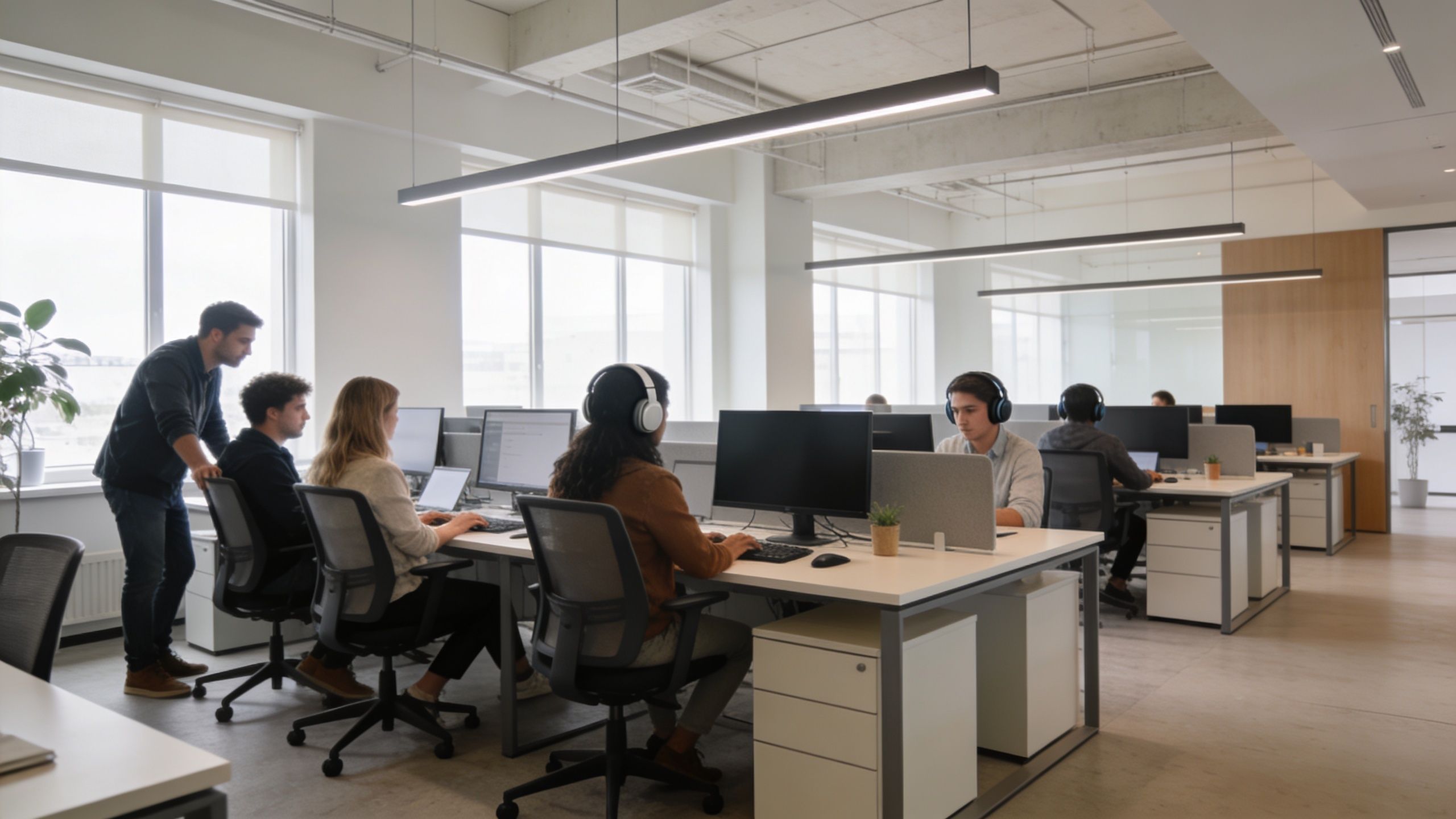
The open-plan problem isn’t solved by pods alone
Acoustic pods are excellent at one job. They create protected spaces for focused work, meetings and calls. But they can’t carry the whole workplace strategy on their own.
People still need somewhere to pause before a meeting, wait between calls, land briefly with a laptop or have a quick discussion that doesn’t justify occupying a booth. Without those support spaces, pod areas can feel congested and circulation starts to break down.
A better approach is to treat the workplace as an ecosystem. Office space design planning works best when quiet rooms, open zones, circulation routes and waiting points are considered together rather than purchased one by one.
Practical rule: Pods handle privacy. Benches handle transition. Most offices need both.
Benches create the missing middle
This is why the indoor seating bench has returned to relevance. It fills the awkward middle ground between a fully enclosed setting and a standard desk. It gives people a place to gather without over-formalising the interaction.
Used near acoustic booths, benches can soften the threshold around high-focus spaces. Upholstered versions absorb some sound rather than reflecting it. Backed designs encourage slightly longer use. Compact modular units make dead space beside pods work harder.
The common mistake is choosing a bench purely on appearance. A slim timber form might look sharp on a mood board, but if it creates echo, offers no back support and lacks enough depth for real use, it won’t improve the office. Good specification starts with behaviour, then supports it with furniture.
Why the Bench is Back in Business
Benches are back because office layouts have changed. Hybrid work has reduced the value of rows of fixed desks and increased the value of flexible, shared settings that support many short activities throughout the day.
In the UK, collaborative seating adoption in open-plan offices rose by 22% between 2021 and 2024, and facilities managers report benches saving an average of 15 to 20% of floor space compared with individual chairs in coworking spaces, according to Cognitive Market Research on indoor upholstered benches.
Why facilities teams are specifying them again
That space saving matters most where every square metre has to perform. A run of separate chairs needs clearance between units, creates visual noise and often leaves awkward gaps. A bench can tidy the footprint, define an edge and create more usable capacity within the same zone.
It also supports the way people use offices now. Many team interactions are brief. They need somewhere to sit for ten minutes, not a formal meeting room and not a full workstation.
Three uses come up repeatedly in pod-led offices:
- Pod overflow seating for people waiting outside meeting booths or phone pods
- Touchdown perches for short laptop tasks between meetings
- Informal huddle zones for conversations that benefit from face-to-face contact but don’t need enclosure
Where they work best around pod-led layouts
A bench works best when it has a clear job. Outside phone booths, a narrow bench can act as a neat waiting point. Beside larger meeting pods, a deeper upholstered unit can create a pre-meeting zone that feels more deliberate.
A banquette-style bench can also help anchor a collaboration area without building walls. That’s useful in coworking spaces and agile offices where layouts need to stay open but still require cues about where different activities belong.
A good bench gives people permission to use a space quickly and naturally. That’s why it suits modern offices better than a row of occasional chairs.
The key is not to overspecify. Not every circulation edge needs seating. Bench placement should support movement, not obstruct it. If users have to squeeze around a bench to enter a pod, the layout is working against itself.
Choosing the Right Bench Type and Materials
Specification starts with function. The best indoor seating bench for a reception edge isn’t usually the best one for a collaboration bay or a quiet touchdown area. Matching the bench to the expected behaviour prevents expensive mistakes.
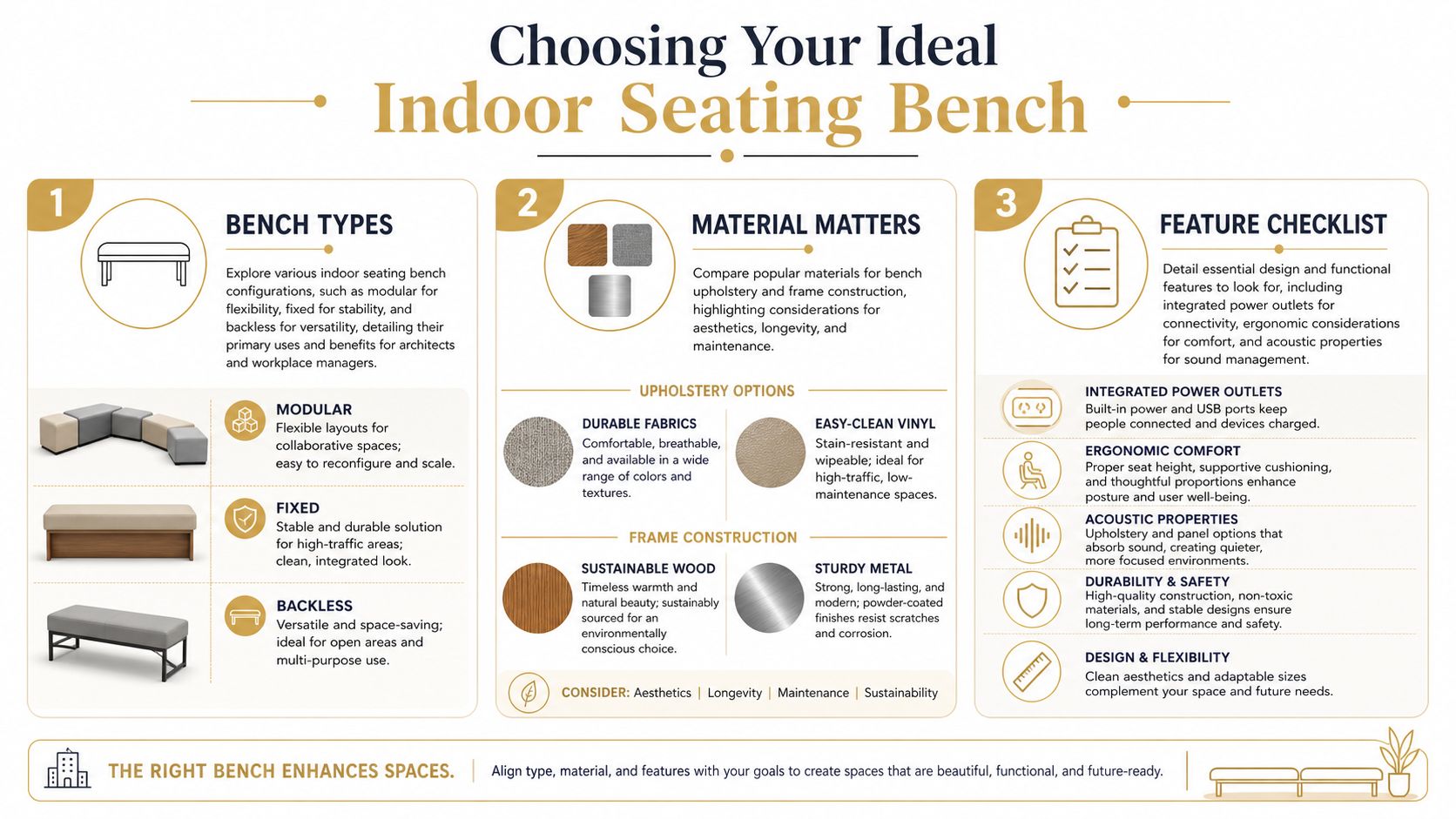
Pick the bench type by behaviour not by style
Modular benches suit offices that reconfigure often. They can form straight runs, corners or broken-up clusters and work well in flexible collaboration areas.
Freestanding backed benches are better for longer dwell times. They’re a strong fit outside meeting pods, in waiting zones and in project areas where people may sit with devices or papers.
Backless benches can work in light-touch touchdown spaces, but they’re often overspecified because they photograph well. In real use, people don’t stay on them for long. That’s fine for transient use, but not for sustained conversation or laptop work.
Fixed banquette seating creates the cleanest visual line and can make excellent use of perimeter walls. It’s a practical move where space efficiency matters and where the layout is unlikely to change.
A useful check is simple:
| Setting | Best-fit bench style | Common mistake |
|---|---|---|
| Waiting outside pods | Backed or upholstered freestanding bench | Using a hard backless timber bench |
| Informal collaboration | Modular upholstered bench | Choosing fixed seating too early |
| Perimeter touchdown zone | Banquette or backed run | Making it too shallow |
| Fast circulation edge | Compact bench with clear access | Overcrowding the route |
Materials that hold up in commercial use
Frame and seat materials need to balance appearance, maintenance and acoustic impact. Hardwood gives warmth and works well with biophilic schemes, especially beside timber-detailed interiors. Metal frames bring a crisper commercial look and can cope well with heavy use.
For upholstery, durability matters, but so does the effect on sound. Soft finishes help more than exposed hard surfaces in noisy open areas. Where the bench sits near booths, fabrics and cushioning can help the wider zone feel calmer and less harsh.
Material choices should also complement the pod palette. A minimalist bench can pair well with BlockO office pods. A richer upholstered finish often sits more comfortably beside Framery office pods, where the surrounding environment usually needs a more refined touch.
Acoustic detailing is often missed at this stage. Specifiers comparing finishes should review materials used for sound insulation so bench upholstery, nearby panels and pod surfaces work together rather than fighting each other.
"Choose the surface for the workload, then choose the colour for the scheme."
Key Specifications for Safety and Wellbeing
Commercial furniture has to do more than look tidy. It has to withstand constant use, remain safe under load and support comfortable sitting across a wide range of users.

Strength and durability come first
Commercial benches must comply with standards like BS EN 15373 and endure a force of 250 pounds (1112 N) applied to the seat, as outlined in Corada’s bench guidance. That matters because benches in offices don’t receive neat, static loads. People drop into them, shift sideways, perch on corners and use them repeatedly throughout the day.
Long benches need special attention. Without proper support, they can flex, creak and loosen over time. For busy offices, that usually means checking frame rigidity, centre support requirements and fastening methods before signing off the order.
Comfort needs dimensions not guesswork
The same source notes that an 18-inch seat height with a curved front edge helps prevent pressure points, and backrests extending 2 to 18 inches above the seat reduce lower back strain. Those details sound minor on paper, but they have a noticeable effect in real environments.
A bench that’s too shallow creates a perched posture. One that’s too high leaves shorter users uncomfortable. One with a hard square front edge can feel fatiguing surprisingly quickly.
A practical specification checklist should include:
- Seat geometry that supports relaxed sitting rather than perching
- Back support where users are likely to stay longer than a brief pause
- Edge detailing that avoids pressure behind the knees
- Stable access space around pod entrances so benches don’t create bottlenecks
Acoustics and maintenance matter too
Acoustic performance isn’t only about the booth itself. The surrounding furniture either helps the soundscape or makes it worse. Upholstered seating, softer finishes and considered spacing can support a calmer zone around focused work settings.
Maintenance should be discussed early, not after installation. Cleaning teams need finishes that can cope with daily wipe-downs, occasional stain treatment and regular traffic without degrading quickly. For offices with high footfall, a sensible maintenance plan sits alongside furniture selection. Resources such as Cleaner Connect's office deep cleaning are useful for planning how upholstered and hard-surface furniture will be looked after in practice.
Specification warning: If the bench is comfortable but difficult to clean, it won’t stay attractive for long. If it’s durable but uncomfortable, people won’t use it.
Creating Integrated Work Zones with Pods and Benches
The strongest office schemes don’t scatter products across the floor. They build small work neighbourhoods that support a specific rhythm of use.

Build neighbourhoods not furniture islands
A pod on its own can feel dropped into the middle of the office. The same pod, paired with a bench, a small table and a soft boundary, feels intentional. That difference affects how confidently people use the space.
A simple zone might include a phone booth, a short waiting bench and clear circulation. A larger setting might combine a meeting pod, two benches facing a central table and soft visual separation from the main desk area.
For light division without hard construction, Logika office partitions can help define the boundary around these zones. That’s useful when a workplace needs structure but still wants visual openness.
Match bench types to pod types
Different pod families call for different supporting furniture.
- Near Kabin office pods, compact benches usually work best. These pods often serve calls and short solo use, so the seating outside them should stay light and not overtake the footprint.
- Alongside Vetrospace meeting pods, a more substantial upholstered bench can create an arrival point and a spill-out zone for quick follow-up conversations.
- With Framery Subscribed pod rental, flexible benching makes sense because the workplace may evolve as headcount or team patterns change.
- For external breakout needs, The Meeting Pod Co outdoor pod range can be paired with interior seating strategies so the wider workplace feels joined up rather than split between inside and outside.
Layouts' success or failure hinges on key considerations. The bench shouldn’t compete with the pod. It should support the use of the pod and absorb the activity around it.
A short visual example helps show how these spaces can work in practice.
Use flexible procurement where change is likely
Not every office should commit to a fully fixed furniture plan. Businesses that are still testing attendance patterns, project teams or neighbourhood-based layouts benefit from flexibility.
That’s one reason pod hire has gained attention. Rental makes it easier to adapt without committing every decision upfront, especially where acoustic demand is clear but the final floor strategy is still developing. In those projects, modular benches are often a safer companion than fitted seating because they can move with the plan.
The same thinking applies in coworking, education support spaces and airport-related workplaces. Furniture and pods should be specified as a system that can respond to change rather than lock the whole floor into one assumption.
Sustainability and the Future of Office Furniture
Sustainability in commercial interiors isn’t just about choosing a recycled fabric or a timber finish with a greener story. It’s about whether the product stays useful, serviceable and relevant long enough to avoid early replacement.
Buy for lifespan not for launch day
A well-specified indoor seating bench should age well in three ways. Structurally, it needs to tolerate repeated use. Visually, it should sit comfortably within the scheme if branding or decor shifts. Practically, it should be maintainable without specialist effort.
That’s why durable frames, replaceable upholstery and timeless forms often outperform trend-led pieces. A bench that still works after layout changes is more sustainable than one that looked exciting at handover but becomes awkward a year later.
Responsible disposal and reuse matter too. Teams reviewing fit-out changeovers should look at office furniture recycling options early, not at the end of the project when time pressure encourages waste.
Circular thinking suits pod-led workplaces
Circular economy thinking fits especially well with pod-led offices because pods and supporting furniture are increasingly being treated as adaptable assets rather than permanent fixtures. That mindset encourages repair, reconfiguration and redeployment.
It also aligns with broader environmental goals. A workplace that combines long-life seating with rental or subscription-based pod use can reduce unnecessary churn and avoid the waste that comes with premature replacement cycles.
The sustainability approach at Gibbsonn reflects this wider shift toward more responsible commercial interiors. For clients, the practical takeaway is clear. Choose products that can stay in service, be maintained properly and adapt with the office rather than forcing another fit-out too soon.
The most sustainable furniture is often the furniture that still earns its place after the next organisational change.
Build Your Productive Workspace Today
A strong workplace doesn’t come from pods alone and it doesn’t come from furniture alone. It comes from how each element supports the others.
A better office works as one system
The indoor seating bench deserves more attention because it influences flow, comfort, acoustics and behaviour in ways that standard chair layouts often don’t. Used well, it supports the activity around pods, gives teams a place to gather informally and helps the office feel more organised without feeling rigid.
The practical checklist is straightforward. Choose the right bench type for the behaviour. Specify materials that suit traffic and cleaning needs. Check structural compliance and ergonomic details. Then place the bench where it supports pod use rather than blocking it.
That approach creates offices that feel easier to use. People know where to take a call, where to wait, where to have a quick discussion and where to focus. That clarity improves the whole workplace.
If you're planning a pod-led office upgrade and want expert advice on benches, booths and acoustic zoning that work together, speak to Gibbsonn. The team can help you plan a more productive workspace and you're also welcome to book an appointment to visit the showroom in Bishop's Stortford and see the options in person.