

Your Ultimate Guide to Drop Ceiling Kits for Modern Offices 2026
Is your office ceiling an overlooked asset? That vast, empty space above your head holds the secret to transforming a noisy, chaotic workplace into a calm, focused environment. With the right approach, you can turn a jumble of pipes and wires into a sleek feature that elevates your entire office. This is the untapped potential of modern drop ceiling kits.
Contents
- Your Office Transformation Starts From the Top
- Understanding Drop Ceiling Kits and Why They Matter
- Choosing the Right Ceiling Tiles for Your Office
- How to Integrate Office Pods with Your Drop Ceiling
- The Financial and Sustainable Case for Quality Drop Ceiling Kits
- Getting the Installation and Aftercare Right
- Frequently Asked Questions About Drop Ceiling Kits
These kits are the unsung heroes of great office design. They provide a practical and elegant solution for concealing building services while significantly improving the look and feel of your workspace.
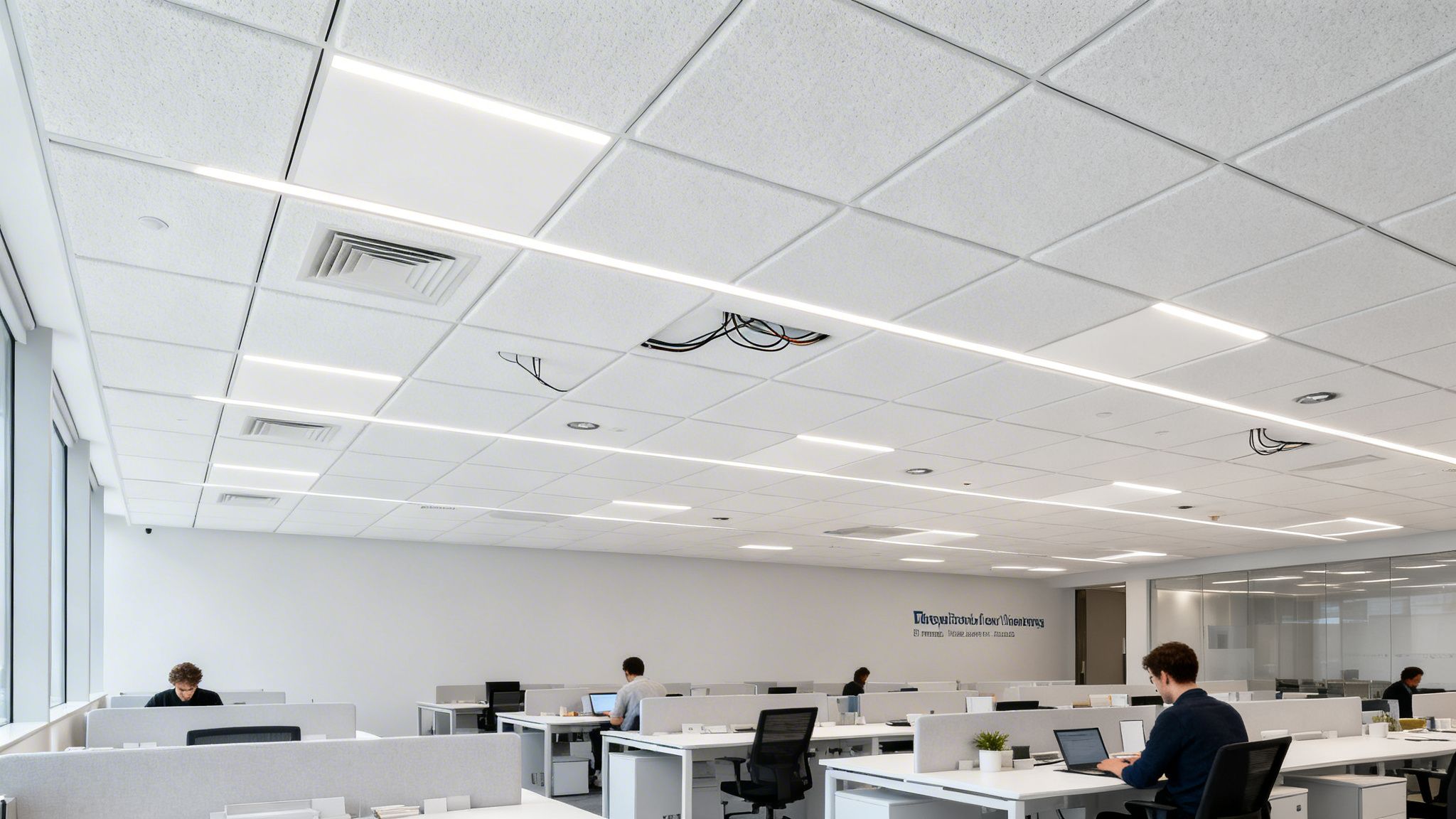
Your Office Transformation Starts From the Top
In a modern workplace the ceiling is so much more than a cover. It’s a strategic tool. As we have embraced open-plan layouts to foster collaboration we have also inherited their downsides: poor acoustics and the visual clutter of exposed building services. This is precisely where a drop ceiling kit becomes an elegant and incredibly practical solution.
“A suspended ceiling does more than just hide services; it actively shapes the user experience by controlling sound, improving light quality, and creating a sense of sophisticated order. It’s the canvas upon which a productive environment is built.”
Essentially a drop ceiling or suspended ceiling is a secondary ceiling hung from the structural one above. It creates a clean uniform plane that can instantly lift the aesthetic of any commercial space. But its real value lies in creating a crucial acoustic buffer absorbing ambient noise and stopping sound from bouncing around the room.
More Than Just Looks: A Foundation for a Flexible Future
Today’s workplaces have to be ready for anything. The need for spaces that can adapt has never been more critical and a drop ceiling is the perfect foundation for this kind of agility. It provides the framework you need to integrate modern solutions for privacy and focused work.
This guide is designed to walk you through how a drop ceiling kit can help you create a future-ready office. We’ll cover:
- Acoustic Mastery: How the right tiles can dramatically cut down on noise and distractions.
- Integrating Office Pods: The proper way to install freestanding booths like Framery pods with a suspended ceiling.
- Sustainable Choices: Selecting materials that support circular economy principles.
- Costs vs. Value: Getting a clear picture of the investment for your 2026 budget planning.
This approach is all about embracing modular and sustainable design. For example flexible rental models like Framery Subscribed let you bring in office pods to adapt your layout without the major capital spend. It’s a smart forward-thinking way to manage your workspace that aligns perfectly with our own commitment to sustainability.
Understanding Drop Ceiling Kits and Why They Matter
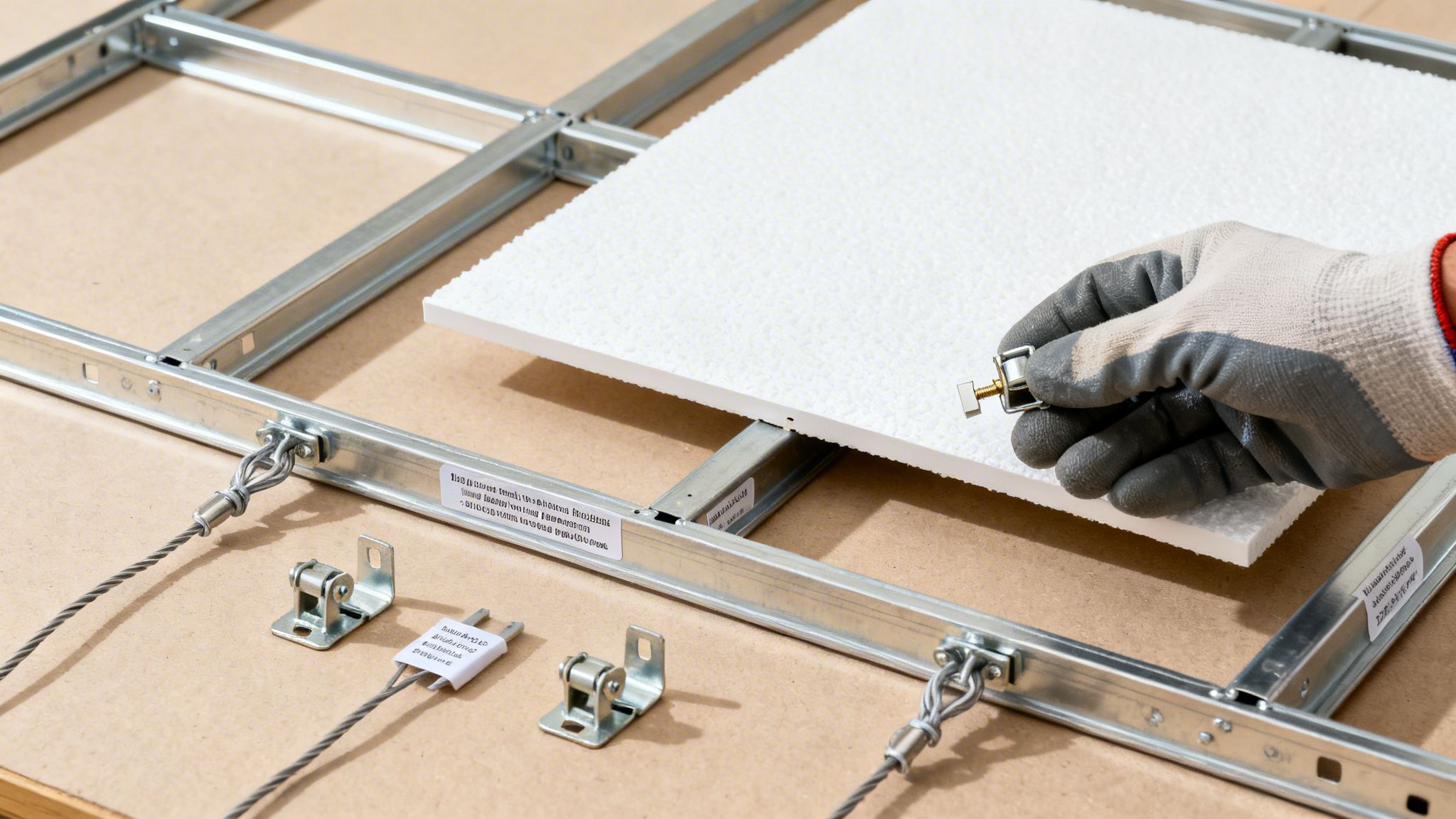
So what is a drop ceiling kit? At its simplest think of it as a second lower ceiling that hangs beneath the structural ceiling of your building. Its most obvious job is to create a clean professional finish neatly hiding away the complex web of pipes wiring and ductwork that keeps a modern office running smoothly.
But their real value goes far beyond just hiding the clutter. A well-chosen suspended ceiling can completely transform a workspace. It’s a powerful tool for shaping room acoustics integrating sophisticated lighting and bolstering your building’s fire safety strategy. To truly grasp their potential you first need to understand the components that work together behind the scenes.
The Core Components of a Drop Ceiling Kit
At their heart drop ceiling kits are a brilliantly simple and effective system. They’re built from a handful of key parts that come together to form the finished ceiling.
Before we dive deeper here’s a quick breakdown of what you’ll find in a standard kit and the role each part plays in the final installation.
| Component | Function | Key Consideration |
|---|---|---|
| Main Runners | The primary support beams of the grid, running the length of the room. | Must be securely fixed and level to support the entire system. |
| Cross Tees | Shorter metal sections that lock into the main runners to form the grid. | Spacing determines the size of the ceiling tiles you can use. |
| Suspension Wires | Strong wires that hang from the structural ceiling above to support the grid. | The length and number of wires depend on the ceiling height and weight. |
| Wall Angle Trim | A finishing piece installed around the perimeter of the room to support the grid edges. | Ensures a clean, professional join between the ceiling and the walls. |
| Ceiling Tiles/Panels | The visible panels that drop into the grid. | Available in various materials for acoustic, fire, and aesthetic performance. |
This modular approach is what makes drop ceilings so incredibly versatile and practical especially for anyone managing a commercial facility. The simplicity of the design allows for both quick installation and easy access for future maintenance.
“A drop ceiling isn’t just a cover-up; it’s a dynamic system that grants easy access for maintenance, enhances thermal insulation, and forms a critical barrier in your building’s fire defence. It’s an investment in both function and safety.”
A Key Element in Holistic Office Design
The real magic happens when you start to see a drop ceiling not as a standalone feature but as a vital part of your entire interior strategy. It’s what allows you to create a truly cohesive and high-performing workspace.
The gap created above the tiles known as the plenum is an absolute game-changer for organised building services. The importance of effective cable management for example is just one of the many practical challenges that these systems solve beautifully.
This isn’t just a niche product; it’s a foundational element of modern construction. The global market for dropped ceilings was valued at around £3.2 billion in 2023 and is projected to climb to approximately £5.2 billion by 2031. This remarkable growth points to a clear demand for workspaces that are not just visually appealing but also acoustically balanced flexible and easy to maintain.
Ultimately a drop ceiling kit provides the canvas for a better office environment. It empowers you to control sound integrate modern lighting and maintain a clean uncluttered aesthetic all while ensuring vital services remain easily accessible. That makes it an indispensable asset for any forward-thinking organisation.
Choosing the Right Ceiling Tiles for Your Office
The tiles you choose are far more than just the finishing touch on a drop ceiling kit. They are the visible heart of your ceiling doing the heavy lifting for acoustics aesthetics and the overall feel of your workspace. This isn’t just a design choice; it’s a decision that has a real measurable impact on employee wellbeing and productivity.
It’s easy to feel a bit lost in a sea of options. But don’t worry. By zeroing in on what really matters for a commercial space you can confidently pick a tile that takes your office from just ‘fine’ to truly fantastic. Let’s break down the most common materials and see what they bring to the table.
Comparing Your Ceiling Tile Options
Every tile material has its own personality and set of strengths. Getting to grips with these differences is the first step toward creating an environment that genuinely works for your team whether you’re chasing world-class acoustics a stunning design or just something tough enough to stand the test of time.
Here are the main players on the field for modern office ceilings:
- Mineral Fibre: Think of these as the reliable all-rounders of the ceiling world. Made from a smart mix of minerals recycled paper and binders they hit that sweet spot between acoustic performance fire resistance and affordability. There’s a reason they’re so popular because they just work.
- Fibreglass: When you absolutely have to nail the acoustics fibreglass tiles are your go-to. They are incredibly lightweight and brilliant at soaking up sound making them perfect for buzzing open-plan offices call centres or any collaborative space where echo is the enemy of productivity.
- Metal: For that sharp contemporary high-tech vibe nothing beats metal. Usually crafted from aluminium or steel these tiles are exceptionally durable a breeze to keep clean and project a crisp premium feel. They make a powerful statement in reception areas boardrooms and main corridors.
- Wood: Want to bring a sense of warmth and nature indoors? Wood is the answer. Whether you opt for solid panels or veneers wood tiles create a rich sophisticated look that feels grounded and calming. They’re a natural fit for executive suites or client-facing areas where you want to communicate quality and quiet confidence.
“The ceiling tile you choose is a statement about your company’s priorities. It can communicate a commitment to employee focus, a passion for design, or a deep respect for sustainability.”
The UK market certainly reflects these priorities. In 2024 the UK’s acoustic ceiling tile market hit a value of £95.7 million. It’s telling that mineral fibre tiles alone claimed 41% of that market share proving just how much businesses value that blend of cost fire safety and sound control.
Performance Beyond Aesthetics
While a great-looking ceiling is a win the smartest choices are always backed by solid performance. For any commercial space a few factors are non-negotiable:
- Acoustic Performance: Keep an eye out for two key ratings. The Noise Reduction Coefficient (NRC) tells you how much sound a tile will absorb inside a room. Meanwhile the Ceiling Attenuation Class (CAC) measures how well it stops sound from leaking into neighbouring rooms. You’ll want high scores in both for a workplace that values focus and privacy.
- Fire Resistance: In any commercial building fire safety is absolutely paramount. Tiles are rated based on how long they can withstand fire and your entire drop ceiling system must comply with UK building regulations. No compromises here.
- Sustainability: This is more than just a buzzword. Choosing tiles with high recycled content that can also be recycled at the end of their life is a tangible way to support the circular economy. It’s a powerful way to align your facilities management with your company’s sustainability goals.
Making the right call on tiles is fundamental to your project’s success. For a deeper look into the specifics of acoustic performance our guide on sound insulation ceiling tiles is a great next step. By thoughtfully balancing aesthetics with these critical performance factors you’ll ensure your new ceiling is a genuine asset for years to come.
How to Integrate Office Pods with Your Drop Ceiling
So you’ve made the smart move and invested in brilliant soundproof office pods to create quiet zones within a bustling open-plan office. It’s a fantastic way to give people the focus space they need. But then a practical question stops the project in its tracks: how do these freestanding pods fit with our suspended ceiling?
It’s a common puzzle and solving it properly is the difference between a seamless professional finish and a series of costly problems.
Many of the best pods including those from brands like Framery have top-mounted ventilation fans that need space to breathe. This creates an immediate conflict with the ceiling grid and tiles sitting directly above. Just cutting a hole isn’t the answer in fact it’s a recipe for disaster.
A clumsy integration can completely undermine the two most important jobs of your ceiling and your pod: acoustic privacy and fire safety. An unauthorised cut can void the fire rating of the entire ceiling and create a perfect path for noise to escape defeating the whole purpose of the pod. This is where a bit of expert planning makes all the difference.
Key Considerations Before Installation
Before a single pod is wheeled into position careful measurement and planning are absolutely essential. The relationship between the pod’s height its ventilation system and the ceiling grid’s position dictates everything that follows.
You need to get a clear picture by assessing three critical factors:
- Clearance: What’s the exact height from the finished floor to the underside of your ceiling grid? Now compare that to the total height of your office pod making sure to include its ventilation unit. Is there enough room for it to fit comfortably or are they going to clash?
- Ventilation Path: Take a close look at how the pod’s fans work. Do they pull air from the sides and push it out through the top? Understanding this airflow is the key to figuring out how to manage the exhaust without disturbing the ceiling.
- Structural Integrity: A standard drop ceiling grid is only designed to hold the weight of the tiles. It should never bear any extra load. You must ensure the pod stands completely on its own and doesn’t push up against or transfer any weight to the ceiling.
This simple guide breaks down the core decisions for any ceiling project and these principles become even more important when you’re planning an integration.
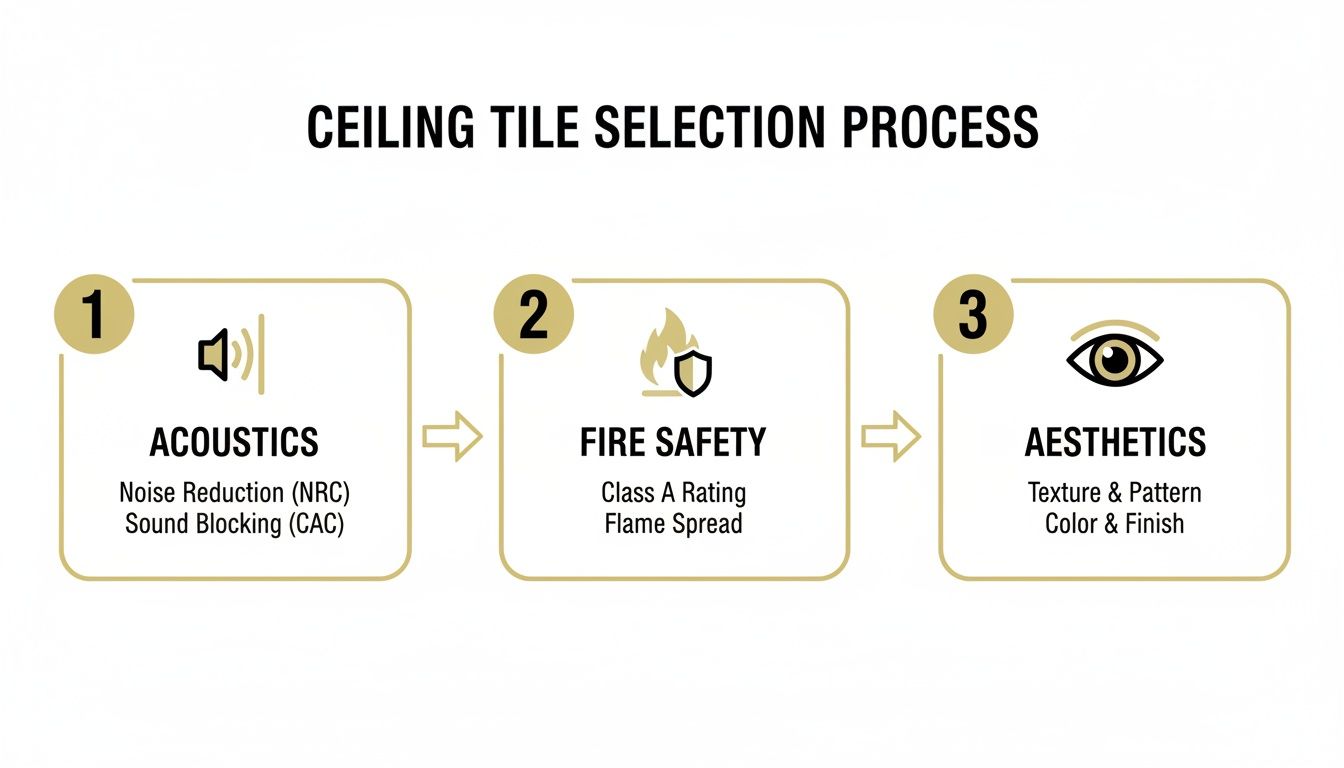
As you can see the three pillars are acoustics fire safety and aesthetics. A successful pod integration has to respect all three.
Proven Solutions for Seamless Integration
The good news is that this is a solved problem. There are tried-and-tested methods to make pods and drop ceilings work together beautifully. The right choice for you will depend on your office layout ceiling height and the specific pod you’ve chosen. As specialists we navigate these details every day to deliver a flawless result.
One of the most common and effective solutions is to simply re-route the pod’s ventilation. Instead of letting the fan exhaust straight up into a ceiling tile we can use a specialist kit to duct the air sideways releasing it harmlessly into the wider office space. This lets the pod sit perfectly under an unbroken ceiling preserving both its acoustic integrity and fire rating.
Another approach is to build a formal fire-rated “bulkhead” or opening within the ceiling grid that sits neatly above the pod. This is a more involved option that requires professional construction to ensure it’s fully compliant with UK building regulations but the finish is exceptionally clean.
“The goal is to make the pod feel like an intentional, integral part of the architecture, not an afterthought. Proper integration with the ceiling is what achieves this seamless look.”
These integrations are a perfect example of why working with an experienced partner is so crucial. We don’t just supply drop ceiling kits or pods; we understand the entire ecosystem. From the initial space plan to the final compliant installation we ensure every piece of the puzzle fits together in perfect harmony.
You can see examples for yourself in our gallery of interior pods. We’ll make sure your investment in privacy and focus is realised without a single compromise.
The Financial and Sustainable Case for Quality Drop Ceiling Kits
When it comes to fitting out your workspace it’s all too easy to get fixated on the initial price tag. But a truly smart investment delivers value for years to come. The conversation around drop ceiling kits needs to shift from just the upfront cost to the total cost of ownership and the incredible long-term benefits a quality system brings to your people your brand and the planet.
On paper a professionally supplied and installed drop ceiling can range from £40 to over £100 per square metre. The final figure really depends on the performance and aesthetic you’re after. While that’s an important number for your budget it’s much more helpful to see it as a strategic investment in your company’s future resilience and productivity.
An Investment in Long-Term Value
Choosing a higher-quality drop ceiling kit is a decision that pays you back time and time again. Better materials mean fewer repairs and replacements down the line which cuts down on maintenance costs and workplace disruption.
Even more importantly the right acoustic tiles create a calmer more focused environment. This has a direct and positive impact on employee wellbeing and productivity – a return that can easily eclipse the initial material costs.
Beyond that a quality ceiling can lead to real operational savings. The plenum space above the tiles is the perfect spot for high-performance insulation which can make a noticeable dent in your heating and cooling bills. This becomes even more effective when you pair it with modern energy efficient can lights. For a deeper dive take a look at our guide to insulating ceiling panels.
“A forward-thinking ceiling strategy is not an expense; it’s an asset. It supports your people, your planet, and your bottom line by creating an efficient, sustainable, and productive workspace.”
The UK market certainly reflects this shift in thinking. The national ceiling tiles market was valued at £258.5 million in 2023. It’s projected to nearly double reaching an estimated £477.8 million by 2030. This powerful growth signals a clear trend: businesses are investing in superior solutions to create better places to work.
Sustainability and the Circular Economy
In today’s world a responsible business strategy has to include a genuine commitment to sustainability. Your choice of drop ceiling kit is a fantastic tangible way to put those values into action.
By opting for tiles made from recycled materials which can themselves be recycled at the end of their life you’re making a powerful statement. You’re actively participating in a circular economy minimising landfill waste and reducing the demand for new resources.
This philosophy of flexible and sustainable asset management is at the heart of what we do. It’s why we created innovative models like our Framery Subscribed service which allows businesses to access world-class office pods through a simple subscription. This is office pod hire at its most flexible giving you the agility to adapt your space as your needs evolve without the fixed commitment of a purchase. This is what a modern financially astute and environmentally conscious workplace strategy looks like.
Ultimately by choosing durable recyclable drop ceiling kits and embracing flexible solutions you aren’t just improving your office. You’re showing the world what your company stands for. You can explore our full commitment to sustainability at Gibbsonn to learn more.
Getting the Installation and Aftercare Right
Choosing a high-quality drop ceiling kit is a great first step but its real potential is only unlocked through skilled installation and proper ongoing care. As a facilities manager you know that getting this part right means more than just a good-looking ceiling. It’s about guaranteeing safety achieving the acoustic performance you’ve invested in and protecting the long-term value of your workspace.
Think about it – a poorly installed ceiling is a ticking clock. It can undermine your fire strategy create frustrating sound leaks and even pose a genuine structural risk. Professional fitting isn’t just a recommendation; it’s the foundation for everything else.
The Importance of Professional Fitting and Pre-Installation Checks
Long before the first piece of grid goes up the real work begins with a thorough pre-installation check. This is where you see the difference a professional team makes catching potential problems on paper to prevent expensive headaches down the line.
A seasoned installer will always start with these fundamentals:
- Structural Assessment: Is the original ceiling strong enough to hold the weight of the new grid tiles and any integrated services? This isn’t something you guess.
- Plenum Planning: They’ll map out everything hidden in the ceiling void from HVAC ducting and wiring to sprinkler heads making sure there’s clear access for future maintenance.
- Layout and Levelling: A detailed plan is drawn up to ensure the finished grid is perfectly level and symmetrical aligning flawlessly with lighting vents and meeting pod positions.
In any commercial building professional installation is a legal and operational must-have. An expert fitter ensures your new ceiling complies with all UK building regulations especially the critical fire safety standards. This is about protecting your people your building and your business from serious liability.
“The integrity of a drop ceiling rests entirely on its installation. It’s the critical step that transforms a box of components into a compliant, high-performance building system.”
Long-Term Maintenance for a Ceiling That Lasts
Once your new ceiling is perfectly installed a straightforward maintenance routine is all it takes to keep it looking sharp and performing brilliantly for years to come. This simple effort protects your investment and maintains a clean professional and safe environment.
Routine Cleaning:
How you clean depends entirely on the tile. For most mineral fibre or fibreglass tiles a quick once-over with a soft brush or a vacuum’s brush attachment is enough to lift any dust. If you have wipeable vinyl or metal tiles a damp cloth with a mild non-abrasive cleaner will take care of any marks or smudges.
Replacing Damaged Tiles:
Let’s face it accidents happen. A cracked or scuffed tile can make an entire room feel neglected but thankfully the fix is easy. Just push the damaged tile up into the plenum space turn it at an angle and guide it out of the grid. Slotting in the new one is just as simple just reverse the steps and make sure it sits flush and secure.
Regular Inspections:
Set aside a few minutes once a year for a quick visual check. Scan the ceiling for any early warning signs like sagging water stains or damaged tiles. It’s also wise to check that the grid lines still look perfectly level and secure. This five-minute walk-around can catch small issues before they become big expensive problems and ensures the ceiling’s structural integrity is never compromised.
Knowing the ropes empowers you to keep your workspace in top condition. Of course the most seamless way to get a perfect result is to work with a partner who can manage everything for you.
Frequently Asked Questions About Drop Ceiling Kits
When it comes to suspended ceilings it’s natural to have questions. Getting it right is about more than just aesthetics; it’s about creating a safe productive and future-proofed environment.
Let’s tackle some of the most common queries we hear from facilities managers and decision-makers just like you.
How Much Do Drop Ceiling Kits Cost in the UK?
This is often the first question and the honest answer is: it depends. For your 2026 budgeting a realistic all-in figure for supply and professional installation is anywhere from £40 to over £100 per square metre.
What drives that range? It comes down to performance and finish.
- Entry-Level: Basic mineral fibre tiles will keep you at the lower end of that scale. They do the job but without the bells and whistles.
- High-Performance: If you’re looking for premium acoustic control or a stunning designer finish like wood you’ll be heading towards the upper end.
Every project has its own unique fingerprint. The only way to get a truly accurate number is to have a chat with an expert who can factor in your specific acoustic fire safety and design goals.
Can I Install a Commercial Drop Ceiling Myself?
While the DIY spirit is admirable for home projects it’s a definite no-go in a commercial setting. Professional installation isn’t just a recommendation; it’s absolutely essential for meeting the UK’s strict building regulations.
A certified installer ensures that every component works together as a compliant system. This covers everything from fire resistance and structural integrity to acoustic performance. It’s the only way to guarantee a safe high-quality result that protects your people your property and your business.
“A professionally installed drop ceiling isn’t just a feature; it’s a fully compliant system that protects your people, your property, and your investment by meeting all necessary safety standards.”
What Is the Best Ceiling Tile for Office Noise Reduction?
To really get a grip on office noise you need to look at two key numbers on the tile’s spec sheet: NRC and CAC.
Think of it this way: the Noise Reduction Coefficient (NRC) is like a sponge soaking up sound within a room. A score of 0.70 or higher is a great target. The Ceiling Attenuation Class (CAC) acts more like a barrier stopping sound from travelling between rooms. For this aim for 35 or more.
For bustling open-plan offices where focus is paramount your best bet will almost always be tiles made from fibreglass or high-density mineral fibre. They are the champions of acoustic control.
How Do Drop Ceilings Impact My Fire Safety Rating?
A properly specified and fitted drop ceiling is a critical part of your building’s fire defence plan. It’s not just about the tiles; the entire assembly grid tiles and installation method must work together as a single fire-rated system.
This rating tells you exactly how long the ceiling can hold back a fire preventing it from spreading into the void above. In an emergency that time is priceless. Using the correct fire-rated materials and certified installers isn’t optional it’s a mandatory step to comply with UK fire codes and ensure your workspace is as safe as it can possibly be.
At Gibbsonn we’re here to help you make sense of it all. Our goal is to create a space for you that isn’t just beautiful but also compliant sustainable and perfectly tuned to what your team needs to thrive. Whether it’s sorting out acoustics or integrating new office pods we have the expertise to guide you.
Ready to transform your workspace from the top down? We encourage you to book an appointment and come see us at our showroom in Bishop’s Stortford. Take the next step today.