
Is your open-plan office working against you? The constant buzz of conversations and ringing phones can make deep focus feel impossible while your energy bills quietly creep upwards. What if you could solve both problems with one smart, elegant solution? Welcome to the world of insulated suspended ceiling tiles: the unsung heroes of modern, productive, and sustainable workspaces.
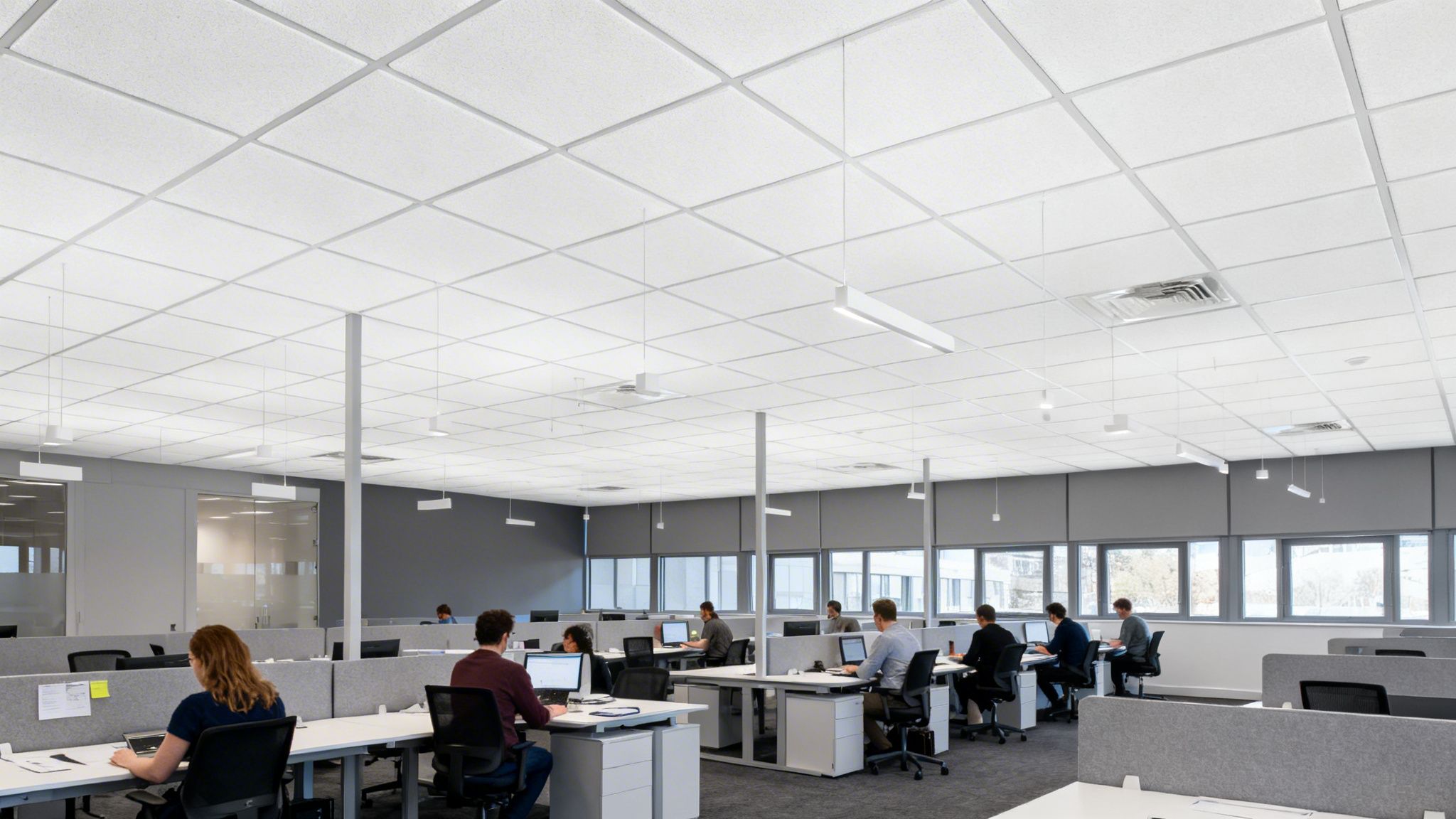
In so many UK offices, two problems persist: echoing noise and runaway energy bills. The very open-plan designs meant to foster teamwork can easily become a battleground of overlapping conversations making deep focused work a real challenge. Meanwhile keeping the temperature just right means the HVAC system is constantly kicking in pushing up your operating costs.
This is where insulated suspended ceiling tiles come in. They offer a surprisingly simple and elegant solution to both issues. Think of them not just as a finishing touch but as an active architectural element that improves everything happening below.
Transforming Your Workplace Environment
By absorbing unwanted sound and adding a vital layer of thermal insulation these tiles deliver tangible improvements from day one. You will notice a calmer atmosphere where your team can concentrate and you will see the difference in your energy bills.
The market certainly reflects this growing understanding. The UK acoustic ceiling tiles market where insulated suspended ceiling tiles play a huge role in superior sound control was valued at around £95 million in 2024. With more businesses realising their value that figure is projected to climb past £124 million by 2032.
A Foundation for Flexible and Sustainable Workspaces
The power of an insulated ceiling is truly unlocked when it becomes part of a broader design strategy. It creates a fantastic acoustic baseline that works perfectly with flexible solutions like our Framery Subscribed office pod hire service. This allows you to create layers of acoustic privacy giving your team the quiet spaces they need on demand.
What’s more making a conscious choice to specify tiles with recycled content supports a circular economy. This is a core part of our commitment to sustainability. It is a decision that benefits your people your budget and the planet.
How Insulated Ceiling Tiles Actually Work
So what’s the secret behind these high-performing ceiling tiles? Imagine your office ceiling acting less like a simple lid and more like a sophisticated climate and sound control system. That’s the essence of an insulated suspended ceiling. Let’s look at the simple yet brilliant thinking that makes them so essential for modern workspaces.
At its core the system is made of two key components: a lightweight metal grid hung from the main structural ceiling and the specialised tiles that drop into it. This clever design creates a space in between the plenum which is perfect for hiding away unsightly cables and ductwork while also forming the crucial thermal and acoustic barrier.
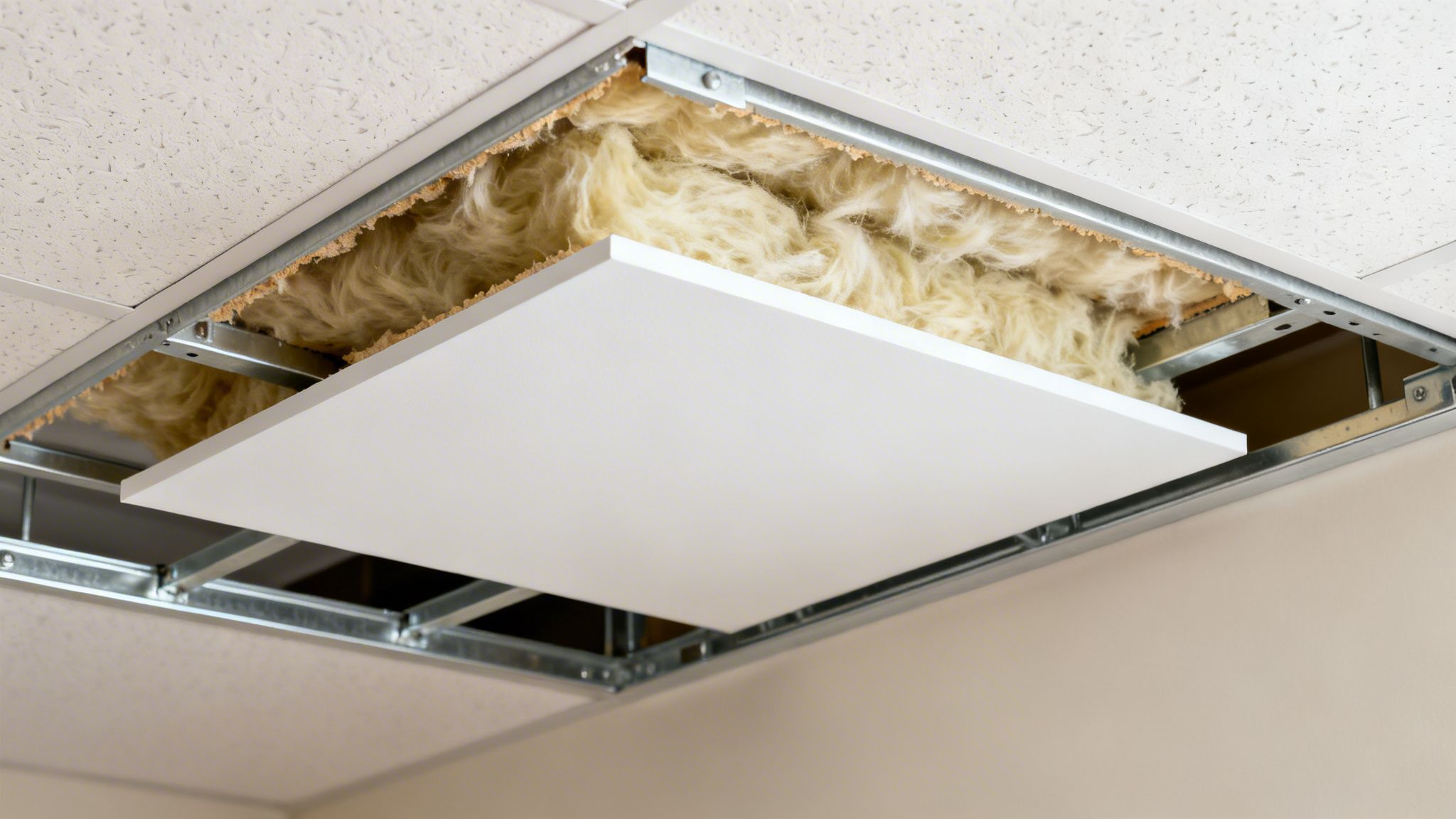
This sheer practicality is why suspended ceilings have become the backbone of commercial interiors across the UK. Their dominance in offices schools and hospitals is undeniable. In fact projections show them accounting for nearly 59% of the global ceiling market’s revenue share by 2025 driven by the need for easy access to services and updated workplace regulations. You can explore the data behind these ceiling tile market trends on Data Bridge Market Research.
The Science of Trapped Air
The real magic happens inside the tile itself. Think of a thermal flask keeping your coffee hot for hours. It works because a vacuum layer stops heat from transferring easily. Insulated ceiling tiles use a similar principle but their secret weapon is not a vacuum it is millions of tiny air pockets trapped within a fibrous structure.
Air is a terrible conductor of heat so these trapped pockets create a powerful thermal barrier. During winter it keeps the warm expensive air you have paid to heat from escaping upwards. In the summer it stops the heat from the roof or floor above from seeping down and turning your office into a greenhouse.
And here’s the clever part: that same dense fibrous web is also brilliant at absorbing sound. When sound waves from a phone call or a busy corridor hit the tile they get tangled in this complex maze of fibres. Their energy dissipates converting into a tiny unnoticeable amount of heat which effectively deadens the noise.
Key Performance Metrics for Insulated Ceiling Tiles
To truly get the right tile for your space you need to speak the language of performance ratings. Understanding these technical metrics is crucial for facilities managers and architects when specifying a project. This table breaks down what those acronyms on the spec sheet actually mean for your office.
| Metric | What It Measures | Why It Matters for Your Office |
|---|---|---|
| NRC (Noise Reduction Coefficient) | The tile’s ability to absorb sound, rated from 0.00 (fully reflective) to 1.00 (fully absorbent). | A higher NRC is vital for open-plan offices, meeting rooms, and quiet zones to reduce echo and improve speech clarity. |
| R-Value (Thermal Resistance) | The material’s resistance to heat flow. The higher the R-value, the better the insulation. | A higher R-value means better energy efficiency, leading to lower heating and cooling bills and a more comfortable, stable indoor temperature. |
| Fire Ratings (e.g., Class A) | How a material reacts to fire and contributes to flame spread, based on standards like BS 476. | Class A (or Class 0 in the UK) is the highest rating, ensuring the slowest flame spread and minimal smoke, which is critical for safety and building code compliance. |
These metrics are not just numbers; they are direct indicators of how a tile will contribute to the comfort safety and operational efficiency of your building. Choosing wisely here makes all the difference.
Common Materials and Their Strengths
A tile’s performance is directly tied to the materials it is made from. In the UK you will typically find two leading options:
-
Mineral Fibre: A fantastic all-rounder this is a popular choice for its balance of acoustic dampening fire resistance and value. It is created from a blend of natural and recycled materials like stone and slag which are melted and spun into durable fibres.
-
Fibreglass: When you need superior thermal and acoustic insulation fibreglass is the go-to. It is lightweight incredibly effective and made from fine strands of glass woven into a dense mat that excels at trapping both air and sound waves.
Here at Gibbsonn we have spent years installing these high-performance systems in commercial spaces across London Cambridge and Milton Keynes. Our hands-on experience means we can deliver a seamless installation that unlocks the full potential of whichever material you choose creating a workspace that’s quieter more energy-efficient and perfectly suited to your team’s needs.
The Double Win: A Quieter, More Efficient Workspace
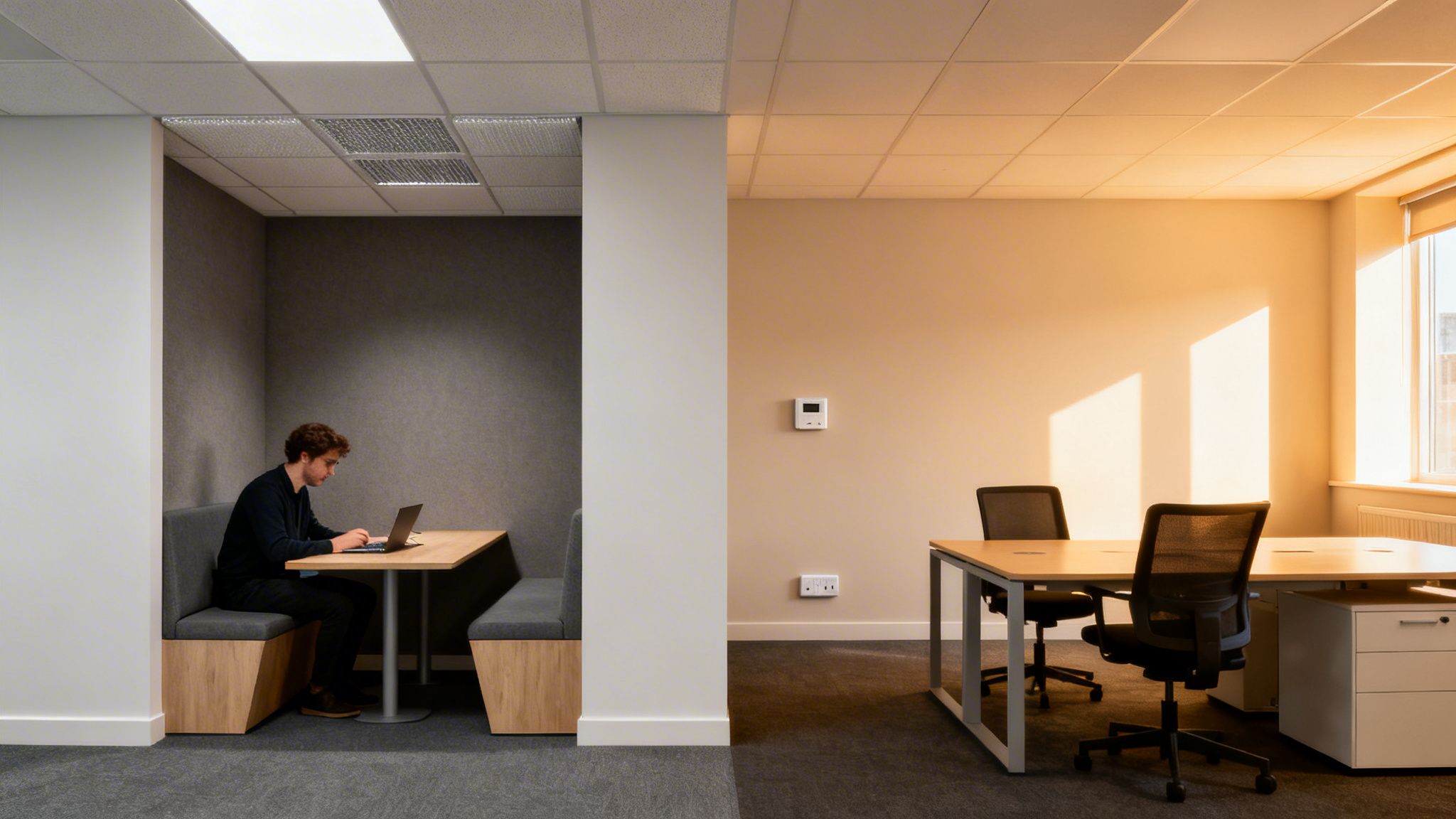
When you are shaping a new office or refurbishing an existing one every decision needs to count. You are looking for solutions that do more than just one job. That’s the real beauty of insulated suspended ceiling tiles: they offer a powerful double benefit tackling two of the most persistent challenges in any workplace distracting noise and spiralling energy bills.
These tiles work quietly and consistently above your head creating a space that’s not only more pleasant to be in but also significantly lighter on your finances and the planet.
Taming the Office Buzz: How Tiles Control Sound
First let’s talk about the remarkable difference these tiles make to the feel of a room. In a bustling office background noise is not just a minor irritation; it is a productivity killer and a major source of stress. This is where understanding a tile’s performance ratings becomes your secret weapon.
Two crucial metrics will guide your choice: the Noise Reduction Coefficient (NRC) and the Ceiling Attenuation Class (CAC). Getting to grips with what they mean will help you dial in the perfect level of acoustic control for every part of your office.
-
Noise Reduction Coefficient (NRC): Think of this as the tile’s ability to soak up sound like a sponge. A high NRC rating means the tile absorbs echoes and reverberation within a room making conversations crisp and clear. This is vital for open-plan areas and collaborative zones where you want to kill the clatter.
-
Ceiling Attenuation Class (CAC): This metric is all about privacy. It measures how well the ceiling blocks sound from travelling up over a wall and into an adjacent room through the ceiling void. A high CAC rating is your best friend when creating confidential meeting rooms or quiet focus pods next to a lively breakout space.
By choosing the right combination you effectively lay a blanket of quiet over the entire office. The tiles absorb the general hubbub of an open-plan floor and stop private conversations from leaking out fostering a more focused and comfortable atmosphere for everyone.
A Smart Way to Cut Energy Costs
Beyond acoustics the second game-changing benefit is all about thermal efficiency. The ‘insulated’ part of the name is where you will see a direct impact on your energy bills. These tiles create a thermal barrier helping you maintain a steady comfortable temperature inside no matter the season.
This insulation dramatically eases the strain on your heating ventilation and air conditioning (HVAC) systems. In winter it keeps the expensive warm air from escaping through the ceiling. Come summer it does the opposite blocking heat from the roof or floor above so your air conditioning does not have to fight so hard.
This drop in energy use is not just good for the bottom line; it is a meaningful step towards a more sustainable business. Using less energy lowers your building’s carbon footprint aligning perfectly with modern corporate responsibility goals and showing a genuine commitment to environmental stewardship. To get a better handle on the science it is worth exploring the fundamentals of energy-efficient insulation.
Choosing high-performance materials also supports a bigger mission. Many top-tier insulated tiles are made with recycled materials and are fully recyclable at the end of their life fitting perfectly into a circular economy model. This is something we are passionate about and you can discover more about our own commitments by reading about sustainability at Gibbsonn.
Ultimately these two benefits are two sides of the same coin. A quieter office boosts focus and wellbeing while an energy-efficient one is more cost-effective and responsible. With insulated suspended ceiling tiles you do not have to compromise between a great environment for your people and a great result for your business you get both.
Bringing It All Together: Ceilings, Pods, and a Sustainable Vision
A truly great ceiling is not just something you install overhead and forget about. It is an active player in your workplace strategy a tool that helps you balance the need for quiet focus with the energy of collaboration all while reflecting your company’s commitment to doing good work in a responsible way. This is where insulated suspended ceiling tiles really come into their own working alongside other smart office solutions to create a space that’s both wonderfully productive and genuinely sustainable.
When you pair a high-performance acoustic ceiling with flexible elements like office pods you are not just adding features you are creating layers of acoustic control. This combination gives you a workspace that can evolve with your team providing peaceful sanctuaries right where they are needed most.
Creating Total Acoustic Harmony with Office Pods
Picture your open-plan office. The general buzz of activity is already softened by a high-NRC ceiling taking the edge off background chatter. Now imagine dropping a dedicated near-soundproof booth into that space for a confidential video call or a head-down deep-focus session. That’s the incredible power of combining an insulated ceiling with an acoustic office pod like the ones from Framery.
The ceiling becomes your first line of defence soaking up ambient noise across the entire floor. The pod then offers a second concentrated layer of privacy. This integrated approach is a game-changer; it means activity outside the pod does not bother the person inside and the conversation within the pod does not leak out. For any business navigating a hybrid work model where video calls are a constant this is the gold standard.
We know that adding these quiet zones can feel like a big commitment. That is why we champion flexible solutions like our Framery Subscribed service.
Here is a look at how this flexible pod rental works:
It is a straightforward subscription that gives you access to premium Framery pods letting you scale your quiet spaces up or down as your team’s needs evolve. It is simply a smarter more agile way to equip your office for the demands of modern work.
Tying It All to Sustainability and the Circular Economy
Your choice of ceiling tile is about more than just performance it is a chance to tell a story about your company’s values. As businesses are rightly asked to be more transparent about their environmental footprint every decision carries weight. Choosing insulated suspended ceiling tiles with strong green credentials is a tangible step toward building a more sustainable business.
This choice plugs directly into the ethos of the circular economy a model built on eliminating waste and keeping materials in use for as long as humanly possible. Here’s how your ceiling can become a part of that story:
-
High Recycled Content: Many of the best acoustic tiles are made with a huge percentage of recycled materials like old tiles reclaimed slag from steel production or even newsprint. This immediately cuts down on the need for new raw materials and keeps waste out of landfill.
-
Recyclability: When they eventually reach the end of their long life many modern tiles can be sent back to the manufacturer and reborn as new products. This “closed-loop” system is the circular economy in its purest form.
-
Lower Energy Bills: The “insulated” part of the tile is arguably its biggest green superpower. By adding a thermal barrier you reduce the strain on your HVAC system which means your building uses less energy day in and day out. That leads directly to a smaller carbon footprint and helps you hit your wider sustainability goals.
At Gibbsonn we are passionate about helping our clients find solutions that are good for their people their bottom line and the planet. Our commitment to sustainability shapes our entire product catalogue and we actively seek out partners who are helping build a greener future. If you are just starting and want to understand the basics our guide on drop ceiling kits is a great place to begin.
By thoughtfully combining high-performance insulated tiles flexible solutions like office pods and a real commitment to circular principles you can create a workplace that’s truly ready for whatever comes next. It’s a space that is not just quieter and more comfortable but healthier more efficient and more responsible too.
A Practical Selection Guide for Your Project
Choosing the right insulated suspended ceiling tiles is one of those decisions that quietly shapes the entire feel of a workplace. Get it right and you create a space that’s comfortable safe and efficient. For facilities managers architects and business owners this is not just about picking a product; it’s about making a strategic investment in your building’s future and your people’s wellbeing.
Let’s cut through the jargon. This guide is designed to give you the confidence to ask the right questions understand what truly matters and specify a ceiling solution that delivers real lasting value.
Your Project Specification Checklist
Before you pick up the phone to a supplier the most powerful thing you can do is get crystal clear on your own needs. A little homework now puts you in the driver’s seat. Walk through your space and use this checklist to build a detailed picture of what success looks like for your project.
- Acoustic Needs Assessment: Where does noise cause the most disruption? Pinpoint your acoustic hotspots. You will likely need high sound absorption for busy open-plan areas and high sound blocking for private offices and meeting rooms where confidentiality is key.
- Thermal Performance Goals: Take a look at your recent energy bills. Reducing your HVAC running costs should be a primary goal. Think about what a meaningful improvement would look like and aim for a tile with an R-value that reflects that ambition.
- Fire Safety Compliance: This is non-negotiable. What are the specific fire safety regulations for your building? You must confirm the required fire rating such as Class 0 in the UK to guarantee complete compliance and most importantly the safety of everyone in the building. You can explore the details of these critical ratings in our guide on fire retardant boards.
- Moisture and Humidity Levels: Think about the different environments within your building. Areas like kitchens washrooms or even main entrances can be prone to humidity. In these zones you will want to specify tiles with enhanced moisture resistance to prevent sagging and damage.
- Lighting and Services Integration: How will your lights air vents and sprinkler systems fit into the new ceiling? A little forward planning on the layout ensures a clean uncluttered and perfectly functional finish.
- Aesthetic and Design Vision: What’s the look you’re going for? The ceiling is often called the ‘fifth wall’ for a reason. Consider the tile’s texture colour and edge detail to make sure it complements your overall interior design scheme.
This simple decision tree can help you visualise the best path forward for your office upgrade whether you’re tackling a major noise problem or just looking for a straightforward enhancement.
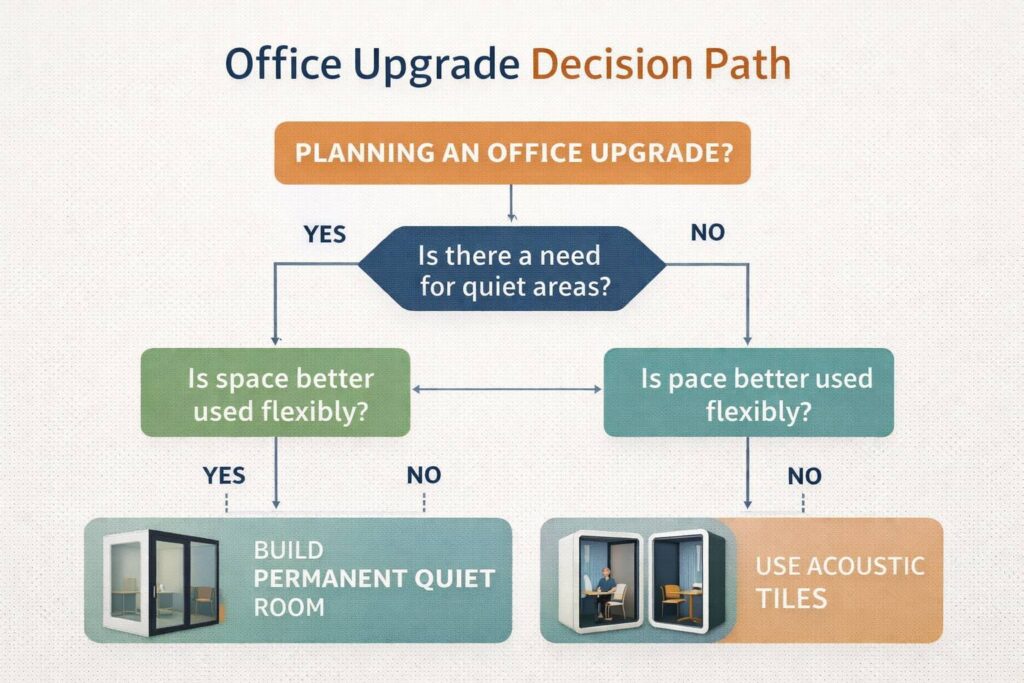
As the flowchart shows achieving true quiet in a modern office often means combining solutions. High-performance acoustic tiles paired with dedicated pods or booths can deliver outstanding results.
Key Questions to Ask Your Supplier
Once you have your project brief nailed down you are ready to talk to suppliers. A good partner won’t just try to sell you a tile; they will listen to your needs and help you find the perfect fit. Use these questions to gauge their expertise and find a company you can genuinely partner with.
- Based on my floor plan and noise issues which tiles offer the best balance of NRC and CAC ratings?
- What are the R-values for the tiles you’re recommending and what kind of energy savings can we realistically expect to see?
- Can you provide all the necessary documentation confirming the fire ratings meet current UK building regulations?
- What is the recycled content of these tiles and does the manufacturer offer a take-back or recycling scheme?
- How do you typically manage the integration of services like lighting and HVAC during the installation process?
Here at Gibbsonn we believe in being your project partner from day one. We are here to help you define what you need select the products that will deliver and ensure the final installation is flawless. This collaborative approach ensures your investment in insulated suspended ceiling tiles creates a better more productive and more efficient workspace for years to come.
Your Next Step Towards a Better Workspace
We have covered a lot of ground together in this guide. You have seen how something as seemingly simple as a ceiling tile can be a powerful tool not just a finishing touch. The right insulated suspended ceiling tiles do double duty quieting distracting noise while also chipping away at high energy bills. They are a foundational element in creating a workplace that’s not just productive but genuinely pleasant to be in.
Making the choice to upgrade your ceiling system is really an investment in your people’s daily experience. It’s a clear signal that you are committed to creating an environment where focus comes easily collaboration feels natural and well-being is not just a buzzword. This is how you create a space that lets your team do their best work.
Experience the Gibbsonn Difference
We know this process can feel overwhelming which is why we believe in working alongside you not just selling to you. Our real expertise is in listening to your challenges and helping you find the right fit. Whether you need to create quiet havens with flexible options like Framery Subscribed pod hire or you’re focused on boosting your building’s green credentials through a real commitment to the circular economy and sustainability we are here to help you navigate the options.
Ready to see how your office could be transformed? Let’s start a conversation.
We have made it simple to get in touch. Just a few details on our contact form help us come prepared for a meaningful chat about your project.
Even better we would love for you to come and see for yourself. We invite you to book an appointment and visit our showroom in Bishop’s Stortford. There is nothing quite like experiencing the tangible difference a well-designed space can make.
Your Questions, Answered
As specialists in creating better workspaces we get asked a lot of questions by facilities managers and designers across the UK. Here are some of the most common queries we hear about insulated suspended ceiling tiles along with our straightforward expert answers.
What’s the Real Cost of Insulated Ceiling Tiles in the UK?
It’s the question on everyone’s mind but the truth is there’s no single price tag. The cost of insulated suspended ceiling tiles really depends on what you need them to do. The final figure is shaped by key performance metrics like their acoustic ratings (NRC and CAC) their R-value for thermal efficiency and their fire safety classification.
While a high-performance acoustic tile might seem like a bigger spend per square metre initially we always encourage clients to see it as a long-term investment in their space and their people. The payback comes from significant energy savings and the very real productivity boost that comes from a quieter more focused environment. The best first step is always to have a chat with a specialist supplier who can give you a detailed quote based on your project’s unique needs.
Can We Install These in Our Current Office?
Absolutely. This is one of the biggest wins for suspended ceiling systems they are incredibly well-suited for retrofitting into existing commercial spaces. A professional installation team can work around your daily operations fitting a new grid and tile system with surprisingly little disruption.
This means you can completely transform your office’s acoustic comfort and energy performance without the headache and expense of a major refurbishment. It is a powerful way to modernise an older building and bring it in line with today’s standards for comfort and efficiency.
How Do These Tiles Help Us Be a More Sustainable Business?
This is a great question. Modern insulated tiles are designed with the circular economy front and centre making them a brilliant choice for any organisation that takes its environmental impact seriously. They contribute in a few powerful ways.
- High Recycled Content: Top manufacturers are now using impressive levels of recycled materials in their tiles. This slashes the demand for virgin resources and keeps a huge amount of waste out of landfill.
- End-of-Life Recyclability: These tiles are built to last but when they do reach the end of their life many can be fully recycled. Manufacturer take-back schemes often make this a simple closed-loop process.
- Drastic Energy Reduction: The thermal insulation is a game-changer. By its very nature it lowers your building’s heating and cooling needs cutting your carbon footprint every single day. This is a direct measurable contribution to corporate sustainability goals.
Choosing the right tile is more than a design decision; it is a clear statement about your commitment to a greener more responsible future.
We invite you to book an appointment and come and see us at our showroom in Bishop’s Stortford to experience the quality first-hand.
Contact Us