
The office sounds busy, modern, and collaborative. On paper, that looks positive. In practice, it often means someone is taking a sales call three desks away, a manager is trying to discuss a sensitive issue with no enclosed room available, and half the team is wearing headphones just to get through a routine task.
That’s the point where office privacy solutions stop being a design extra and start becoming an operational requirement. For facilities managers, the main question isn’t whether privacy matters. It’s which solution will solve the problem without creating new ones around budget, layout, compliance, or staff experience.
Office pods sit at the centre of that conversation in 2026. Used properly, they create quiet space without a full fit-out, support hybrid meetings, improve acoustic control, and give teams somewhere appropriate for focused work and confidential conversations.
Table of Contents
- Is the Open-Plan Office Killing Your Team's Productivity?
- Why Office Pods Are Now a Workplace Necessity
- How to Choose the Right Office Pod for Your Team
- Integrating Pods into a Holistic Privacy Strategy
- A Smart Investment Buying vs Hiring Office Pods in 2026
- UK Office Privacy Use Cases
- Create Your Quiet Revolution Today
Is the Open-Plan Office Killing Your Team's Productivity?
A typical open-plan floor can fail in the same way every day. A team member needs ten minutes of concentration but gets interrupted by movement, speech, and call noise. A line manager needs privacy for a welfare conversation but all enclosed rooms are booked. A hybrid meeting starts and the person in the office spends most of it apologising for background noise.
That’s why many organisations reviewing open-plan office design are no longer asking for more desks. They’re asking for better settings within the same footprint.
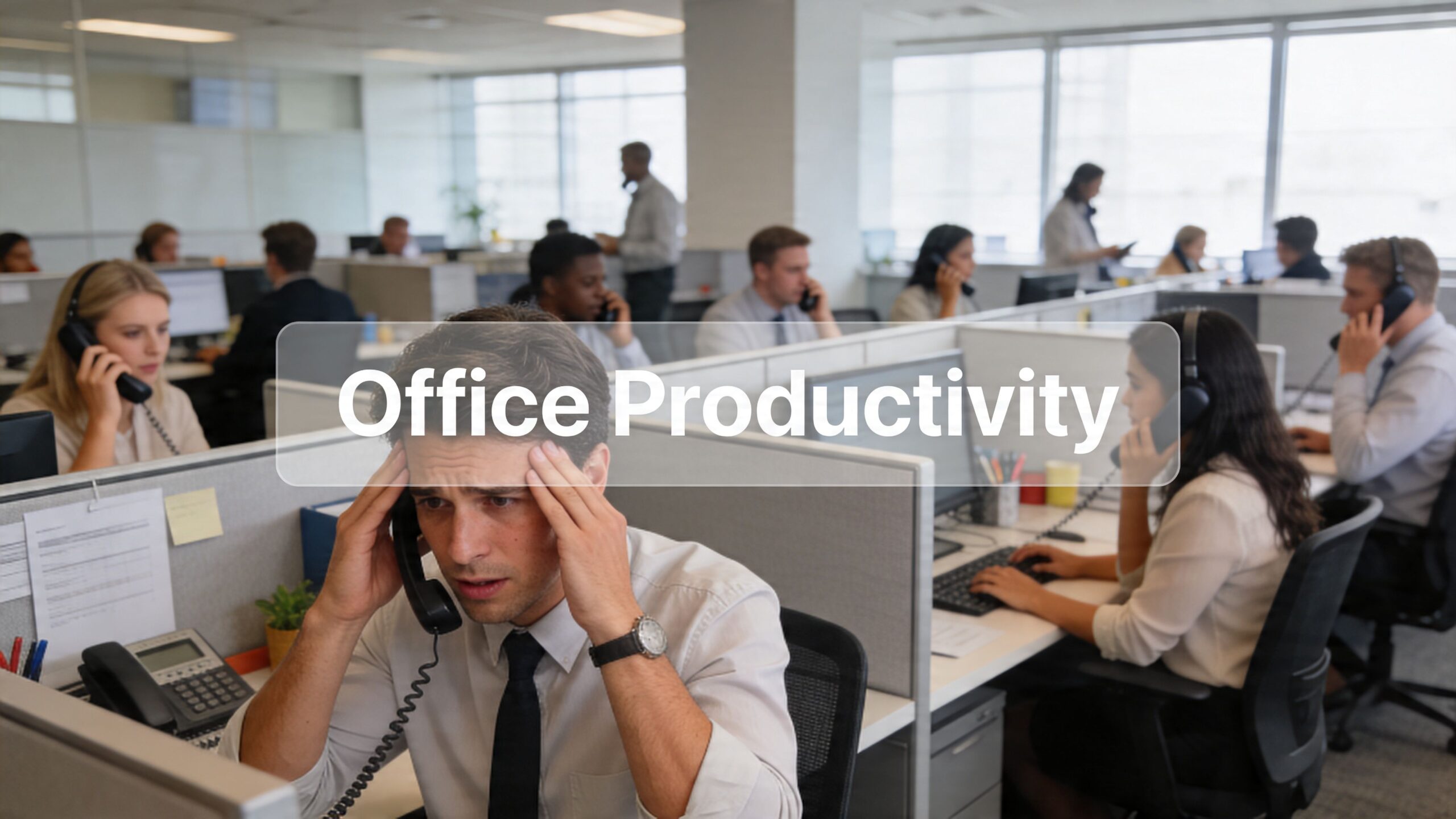
The mistake is to treat this as a comfort issue alone. It affects output, wellbeing, meeting quality, confidentiality, and how the office feels to use. When people can’t find the right environment for the task in front of them, the space itself becomes friction.
“A privacy pod works best when it’s planned as a work setting, not parked on the floor as a nice-looking object.”
A well-chosen pod gives the office something most open layouts have stripped away. It gives people a place to think, call, meet, and reset without forcing a major rebuild. That is why pods now sit inside broader office privacy solutions rather than being treated as standalone furniture.
Why Office Pods Are Now a Workplace Necessity
The UK workplace has a privacy problem built into its layout. Around 70% of office spaces use some form of open layout, and a Steelcase study found that 69% of middle managers report lacking the privacy they need at work according to this open office statistics review. That same source links open offices with a 70% drop in face-to-face interaction, 62% more sick days, and widespread dissatisfaction with sound privacy.
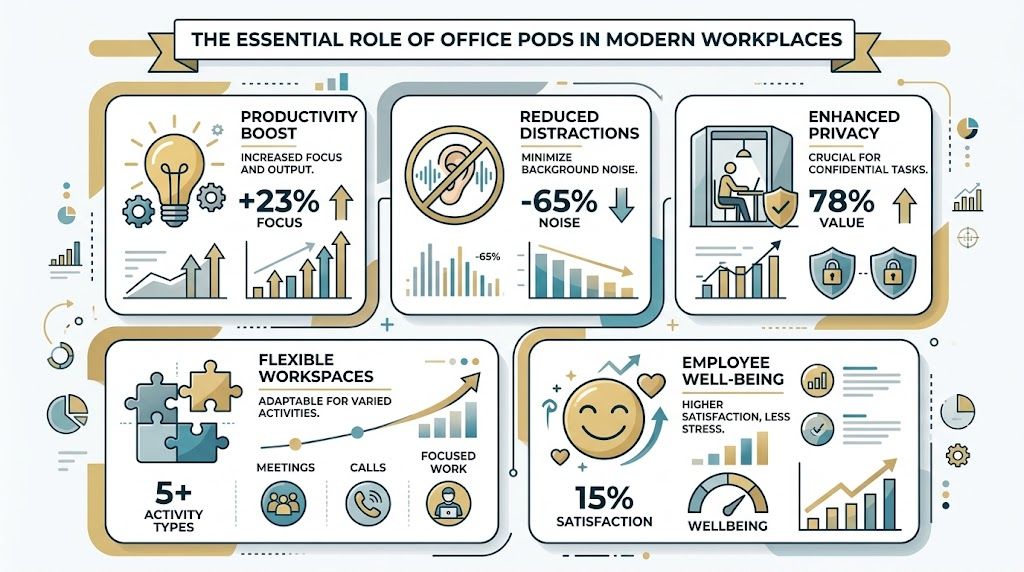
Facilities teams usually see the symptoms before leadership sees the pattern. Meeting rooms get booked for one-person calls. Breakout areas become overflow work zones. Teams start creating their own privacy measures with headphones, informal room claims, and constant calendar blocking.
Open-plan can remove the settings people need
Open plan isn’t automatically wrong. It can support visibility, faster access to colleagues, and efficient use of space. The issue starts when one layout is asked to serve every task.
Some work needs speech privacy. Some needs visual privacy. Some needs fewer interruptions.
A pod solves a specific gap that open plan often leaves exposed:
- For calls: it creates a contained space for private conversations and hybrid meetings.
- For focused work: it gives people a place to concentrate without the pressure of surrounding movement.
- For small meetings: it reduces room pressure and keeps short discussions from spilling across the floor.
Privacy now affects risk as well as comfort
Privacy isn’t just about noise. It also sits close to compliance and business resilience. In open offices, confidential calls, screens, and informal discussions can become far too exposed.
A review of UK workplace security pressures reports that 59% of SMEs were attacked in the past year and 27% experienced ransomware, with risks connected to IoT devices, supply chains, and cloud services in many cases, as outlined in these office security statistics. The same source notes that 60% of UK business leaders are increasing cyber-risk budgets.
That doesn’t mean a pod is a cyber tool. It means physical privacy still matters in a digital risk environment. When sensitive conversations happen in the open, the business is making avoidable exposure part of daily operations.
Practical rule: If staff are using meeting rooms for solo calls because the floor is too exposed, the office already has a privacy capacity problem.
Pods work because they restore choice
The strongest office privacy solutions don’t try to make every square metre silent. They create a better mix of settings so people can choose the right environment for the task.
That matters in hybrid workplaces. The need isn’t just for enclosed space. It’s for predictable enclosed space that’s available when people need it. A pod can deliver that far faster than a structural rebuild and with less disruption to the workplace around it.
How to Choose the Right Office Pod for Your Team
The wrong pod creates a new problem. It can eat floor space, underperform acoustically, feel stuffy in use, or end up serving only one narrow task. The right one earns its footprint every day.
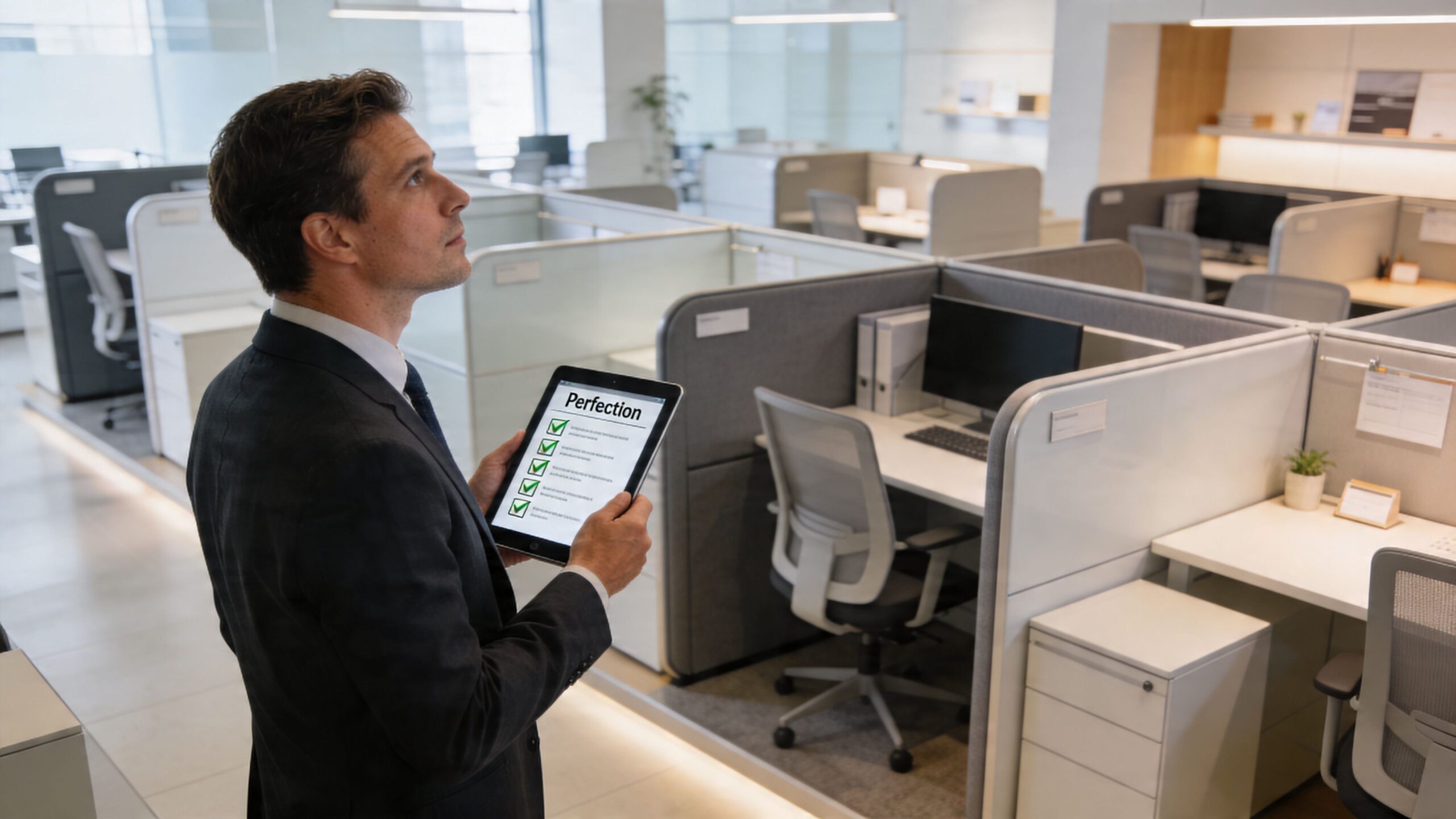
Choosing well starts with a basic discipline. Match the pod to the work. Don’t start with the catalogue.
Start with the task, not the product
A one-person call booth solves a different problem from a four-person meeting pod. The mistake many teams make is to buy a unit because it looks flexible, then expect it to cover every shortfall in the office.
A quick planning view helps:
| Need | What to specify |
|---|---|
| Private calls | Single-user booth with strong speech privacy |
| Hybrid meetings | Pod with power, lighting, ventilation and video-friendly background |
| Focus work | Comfortable seat or desk option with low internal noise |
| Short team huddles | Multi-person pod with enough room to meet without crowding |
Product ranges differ: BlockO pods can suit modular planning, Kabin office pods are often chosen when visual style matters alongside function, and Vetrospace pods are relevant where enclosed, health-conscious work settings are part of the brief.
Acoustic performance decides whether the pod works
If the pod doesn’t control sound well enough, staff won’t trust it for sensitive conversations. That’s the first test.
High-quality acoustic pods can achieve up to 45 to 50 dB sound reduction under BS EN ISO 717-1 standards, and some Framery pods have a 42dB Rw rating with Class A absorption, supporting true speech privacy where conversations are inaudible about a metre away, according to Framery’s smart privacy pod specifications. That’s the sort of detail worth checking before specifying.
A facilities manager should ask for more than marketing language. Ask what standard is being referenced, how the result is described, and whether the pod is suitable for confidential speech or just general noise softening.
For wider background control around the pod, materials matter too. This guide to best materials for sound insulation is useful when reviewing how pods interact with surrounding finishes.
A pod with weak acoustic separation doesn’t create confidence. Staff notice that immediately, and they stop using it for the jobs that matter most.
Ventilation, lighting and comfort matter more than brochures suggest
A pod can be acoustically strong and still fail in daily use. Poor airflow, harsh lighting, awkward seating, and excessive internal fan noise will push people back onto the open floor.
A practical specification should cover:
- Ventilation quality: Enough airflow for the intended occupancy and call length.
- Internal noise: Low enough that users don’t feel mechanical noise competing with concentration.
- Lighting: Clear, even light that works for calls and screen tasks.
- Accessibility: Door width, manoeuvrability and ease of entry should be considered early, not after ordering.
The user experience needs to match the task length. A quick-call booth can be more compact. A pod intended for focused work or repeated hybrid meetings needs a higher comfort threshold.
A useful product demonstration sits below.
Technology and access need early decisions
Pods now sit inside the digital workplace. That means occupancy visibility, power access, device charging, and integration with room booking behaviour all matter.
The most common oversights are simple. No nearby power route. Poor mobile signal. A pod placed where circulation noise is still high. Glass orientation that creates visual exposure during video calls.
When the office needs a stronger workplace system rather than a single pod, Framery pods are often part of that conversation because the range covers different use cases from calls to meetings. The important point is fit, not brand loyalty.
Brand, finish and layout still matter
A pod has to work acoustically and operationally, but it also has to belong in the space. Poorly matched finishes can make the office feel cluttered or temporary. Oversized pods can choke circulation.
A balanced review should include:
- Footprint efficiency. Measure not only the pod size but the approach space around it.
- Visual weight. Dark, bulky forms can dominate a floor unless they’re placed carefully.
- Cleaning and maintenance. Fabric choice, glass detailing, and hardware finish all affect ongoing upkeep.
For exterior settings, staff amenity areas, or campus environments where internal space is tight, external office pods from The Meeting Pod Co can bring enclosed meeting space outside the main building envelope.
Integrating Pods into a Holistic Privacy Strategy
Pods solve a major part of the privacy problem, but they work best when the floorplate supports them. That means office privacy solutions should be layered, not isolated.
Build privacy in layers
A good workplace usually combines enclosed pods with visual screening, acoustic treatment, and smarter zoning. If teams need broad space division as well as enclosed settings, soundproof office partitions and systems such as Logika can help shape quieter working areas without a permanent rebuild.
For a broader practical read on zoning larger interiors, this guide to partitioning systems is useful because it deals with space control in operational terms rather than pure aesthetics.
Think in zones, not isolated products
The most effective layouts usually separate the floor into distinct settings:
- Quiet zones: focus desks, low circulation, nearby single-user pods.
- Collaboration zones: shared tables, informal seating, meeting pods for short group sessions.
- Social zones: break areas placed so noise doesn’t spill into concentrated work.
- Confidential zones: enclosed settings near leadership, HR, finance, or client-facing teams.
That approach avoids a common failure. A business buys two excellent pods, then drops them into the noisiest circulation route in the office and wonders why they’re underused.
The best pod strategy starts with adjacency. Place private settings close to the teams that create the strongest need for them.
Privacy is also behavioural. Clear booking etiquette, sensible time limits for solo use, and visible workplace norms all help the hardware succeed. The pod provides the setting. The layout and operating rules determine whether that setting delivers consistent value.
A Smart Investment Buying vs Hiring Office Pods in 2026
The financial discussion has changed. Most budget holders no longer ask whether office privacy solutions are useful. They ask how to justify them against other workplace spend and how to keep flexibility if headcount, working patterns, or leases change.

A major issue is that many decision-makers still lack clear UK-specific benchmarks for pod investment. One reason rental models are gaining attention is that they can make ROI easier to assess by shifting spend from capital expenditure to operating expenditure, as discussed in this article on privacy pods and implementation considerations.
When buying makes sense
Buying can suit organisations with a stable workplace strategy, clear long-term occupancy, and confidence that the pod type and quantity won’t need frequent revision.
Ownership may be the better route when:
- The layout is settled: the business expects to keep the same footprint and space plan.
- The need is proven: pod usage demand is already clear and sustained.
- Asset control matters: the organisation wants the pods fully within its own capital plan.
The trade-off is rigidity. If the office changes quickly, owned pods can become harder to redeploy within the original financial model.
Why hiring is getting serious attention
Rental is attractive when the business wants agility. That can mean trialling pod numbers, matching costs to current usage, or avoiding a large one-off outlay while still solving a pressing workplace problem.
A useful external read on the operational case is Ways Your Business Could Save Money By Using An Office Pod. The value in that discussion is not a universal formula. It’s the reminder that space decisions should be judged against what they replace, including room pressure, design disruption, and underused square metres.
One route in this market is Framery Subscribed, which allows pod hire instead of outright purchase. That model suits organisations that want flexibility in the current cycle of hybrid work because it can reduce upfront commitment while giving the workplace team a clearer utilisation story.
The circular economy changes the discussion
Hiring also fits the wider sustainability brief. If a business is serious about the circular economy, furniture and workplace assets should stay in use longer, be maintained properly, and avoid unnecessary replacement cycles.
That’s why rental should not be viewed only as finance. It can also support more responsible asset use. A circular approach to workplace planning sits well with Gibbsonn’s sustainability commitments, particularly where organisations want flexibility without treating fit-out products as disposable.
For 2026 planning, the strongest argument is simple. Buy when the workplace is mature and stable. Hire when the business wants speed, flexibility, and a cleaner route to measurement.
UK Office Privacy Use Cases
Office privacy solutions become easier to justify when the use case is tied to a real operational risk or bottleneck. Three settings come up repeatedly in UK workplace planning.
Finance and legal conversations
A London finance or legal team often has a basic problem. Sensitive discussions happen all day, but enclosed meeting space is limited and oversized for the task. Booking a formal room for every short client call is wasteful. Taking those calls on the open floor is risky.
In hybrid environments, privacy pods can support auditable spaces for handling sensitive conversations and help organisations in sectors such as healthcare and finance address GDPR and ICO expectations, as noted in this discussion of the hybrid privacy crisis.
That’s where a speech-private pod changes the workflow. Staff stop competing for large rooms. Confidential calls move into a setting that’s built for them. The facilities team gets a solution that supports both utilisation and governance.
Hybrid tech teams and product work
A Cambridge software or product team needs a different kind of privacy. It isn’t always formal confidentiality. It’s often concentrated discussion between small groups, interviews with remote candidates, sprint reviews, or quick development conversations that can’t happen beside a busy bank of desks.
In that environment, the pod becomes a reliable hybrid room for short bursts of real work. It’s easier to access than a conventional meeting room and more professional than trying to run calls from an open bench.
A pod also helps avoid another common issue. Teams stop colonising cafés, corridors, and soft seating for conversations that need clear audio and a stable backdrop.
Outdoor space as a workplace asset
Some organisations have the footprint but not the internal capacity. Campus offices, hospitality venues, education settings, and larger mixed-use sites may have courtyards, terraces, or edge-of-building areas that could support work, meetings, or private conversations.
An external pod can turn that underused space into a practical asset. It gives the business another enclosed setting without taking more internal floor area away from desks or support functions.
A strong use case doesn’t start with the pod. It starts with the blocked activity that the current office can’t support properly.
That’s usually the clearest way to build internal agreement. Identify the friction. Show where the current layout fails. Then match the pod type to the task, user group, and compliance level required.
Create Your Quiet Revolution Today
Most workplaces don’t need more noise, more booking pressure, or more compromise. They need a better mix of spaces. That’s why office privacy solutions matter so much now. They improve focus, support wellbeing, protect sensitive conversations, and help the office function properly again.
Pods are central to that shift because they solve a real operational problem without requiring a full rebuild. They can support calls, focused work, hybrid meetings, and small team conversations in a far more controlled setting than the open floor can provide.
The strongest results come from treating pods as a strategic decision. The business case sits across productivity, compliance, staff experience, flexibility, and long-term workplace planning. That is why the buying model, acoustic performance, placement, and surrounding layout all deserve proper attention.
For teams weighing up the next step, seeing these solutions in person is often what makes the decision practical. A visit to the showroom in Bishop’s Stortford can help workplace and facilities teams compare pod types, test finishes, and understand what fits their space and budget.
If your team needs office privacy solutions that work effectively in practice, speak to Gibbsonn, book an appointment, and visit the Bishop’s Stortford showroom to see the options up close.