
The brief often starts the same way. The fit-out is moving forward, the pods are shortlisted, the finish palette is nearly signed off, and someone asks a question that sounds simple. Which designer office chair should go inside them?
That question catches many teams out because the wrong answer can undermine an otherwise strong workplace scheme. A chair that looks excellent in a showroom can feel oversized in a focus booth, too noisy on hard flooring, or awkward in a meeting pod where people need to turn, perch, and leave quickly. In a modern office, the chair isn't a separate purchase. It's part of a productivity system that includes acoustics, circulation, privacy, wellbeing, and maintenance.
A good designer office chair still needs presence. It also needs to work hard. In pod-led workplaces, that means the chair has to fit the enclosure, support different users, and align with how the space is used during the day.
Table of Contents
- The Modern Office Dilemma
- Redefining the Designer Office Chair for 2026
- The Perfect Pairing Matching Chairs with Acoustic Pods
- Ergonomics and Acoustics Inside the Booth
- Sustainability and Smart Procurement The Circular Economy
- Specification Beyond the Pod A Holistic Approach
- Create Your Perfect Workspace Today
The Modern Office Dilemma
Open-plan offices were meant to make work easier. They often make concentration harder.
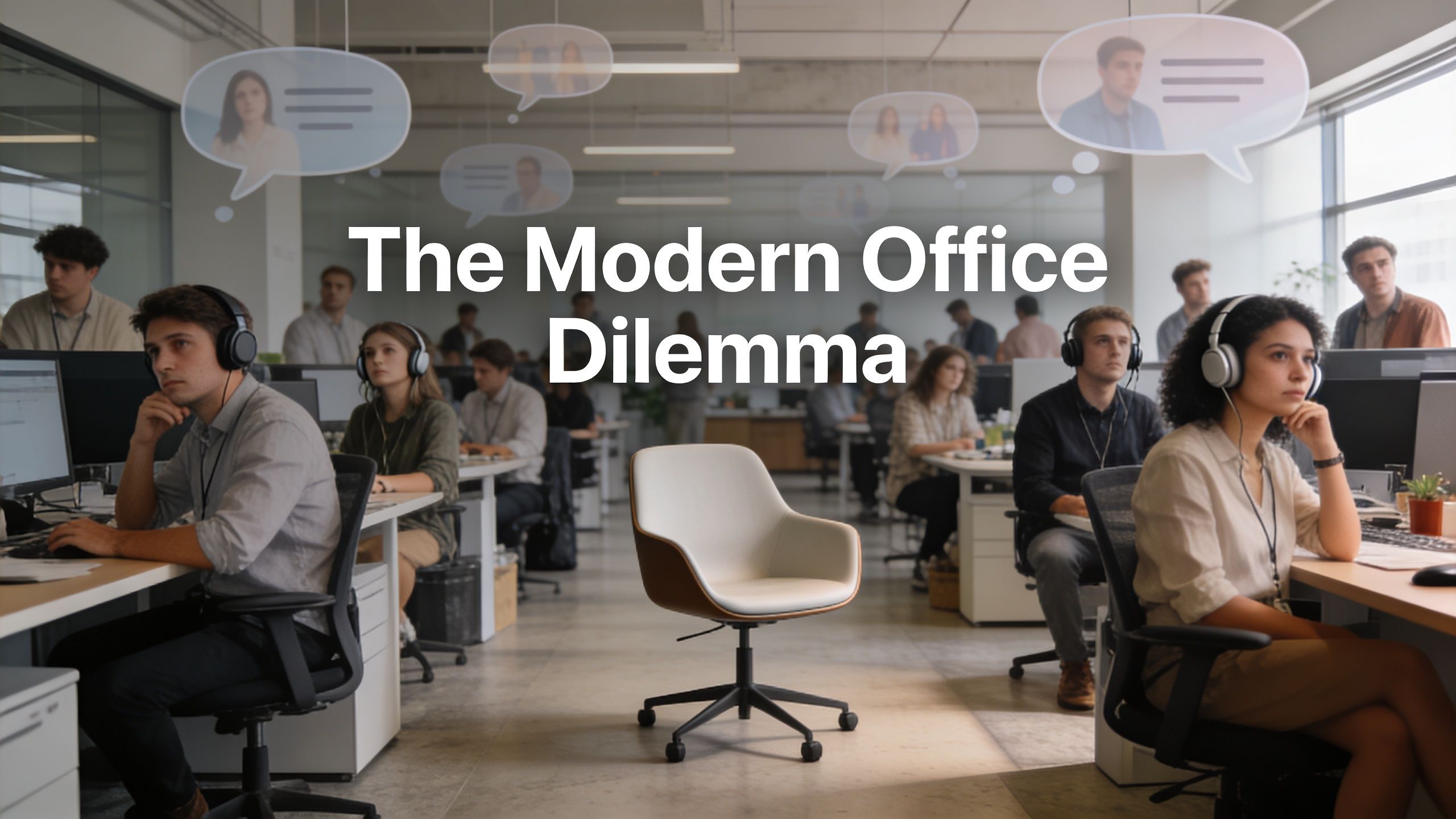
Many facilities managers recognise the same pattern. The office looks energised and connected, but calls spill across desks, informal chats carry further than expected, and staff start wearing headphones just to finish basic tasks. The room supports visibility. It doesn't always support focus.
Why the chair decision now matters more
In that environment, the designer office chair stops being a style choice and becomes an operational one. A chair used in an open touchdown area has one job. A chair used inside a pod has another. Inside an enclosed setting, small issues become obvious very quickly. Arms catch walls, bases restrict movement, and poor posture becomes more noticeable during focused work.
That changes the buying process. The question isn't just whether a chair is beautiful, premium, or recognisable. The question is whether it works in a specific zone with a specific purpose.
Practical rule: If a chair is being specified for a pod, assess it inside the pod, not in isolation on a supplier sheet.
Pods solve one problem and expose another
Acoustic pods are often the right answer when teams need quiet space without major building work. They create places for private calls, one-person concentration, quick catch-ups, and small meetings. Yet the pod only performs as intended when the seating supports the task.
A compact booth for a short call needs different seating from a deep-work pod where someone may stay for a longer focused session. A collaborative booth also needs different seating from a formal enclosed meeting setting. The same designer office chair won't suit every one of those uses.
That is where many refits lose value. Teams spend serious budget on privacy solutions, then treat the chair as an afterthought. In practice, the chair is one of the first things users judge because it's the point of direct contact with the workspace.
- Focus work needs stillness: The best chair helps the user settle quickly and stay comfortable without constant fidgeting.
- Call booths need efficient movement: Users should be able to enter, sit, speak, and leave without awkward repositioning.
- Shared environments need resilience: In high-turnover spaces, the chair has to cope with varied body types and repeated daily use.
A productive workspace isn't built from standout pieces alone. It's built from components that work together.
Redefining the Designer Office Chair for 2026
The term designer office chair can still mislead buyers. In commercial interiors, designer doesn't mean decorative first. It means the chair has been resolved properly. Proportion, ergonomics, material choice, durability, and visual fit have all been thought through.
That matters in 2026 because offices are under more pressure to do several things at once. They need to support focused solo work, easy collaboration, hybrid patterns, and a cleaner environmental story. A chair that only photographs well isn't enough.
Good design has always been tied to work
Britain has a long history here. In 1851, the office chair reached a much wider public at the Great Exhibition in London, where the Centripetal Spring Armchair helped establish purpose-built office seating as a serious category in workplace design, as outlined in this history of iconic office chair designs. That moment wasn't about styling alone. It connected industrial production, comfort, and the needs of working environments.
The same test still applies. A modern designer office chair should earn its place through performance as much as appearance.
Good seating has always reflected how people actually work. The shape may change, but the brief hasn't.
Three qualities worth checking first
A chair doesn't need every possible feature. It does need the right features for the setting.
| What to assess | What works | What usually doesn't |
|---|---|---|
| Visual character | A silhouette that complements the wider interior and pod finish | An oversized statement piece that dominates a small booth |
| User fit | Adjustability that supports different users and tasks | Fixed seating in spaces used by multiple people |
| Commercial durability | Materials and mechanisms selected for repeated use | Domestic-grade detailing in high-traffic workplace zones |
Designer no longer means chair only
Commercial buyers now have to think beyond the single object. A strong chair spec has to account for flooring, table height, acoustic conditions, user turnover, and maintenance access. It also has to sit comfortably within a broader furniture language.
In practical terms, that means the best designer office chair may not be the most expressive chair on the page. It may be the one that balances restraint, comfort, and compatibility. In pod-heavy workplaces, compatibility is often the deciding factor.
- Aesthetic discipline: The chair should support the scheme rather than fight it.
- Functional clarity: Users should understand how to sit and work in it immediately.
- Specification logic: The chair should make sense in relation to other zones, not just as a standalone purchase.
That is the standard commercial projects should now apply.
The Perfect Pairing Matching Chairs with Acoustic Pods
Most buying guides compare designer office chairs against other chairs. The more useful comparison is chair against environment.
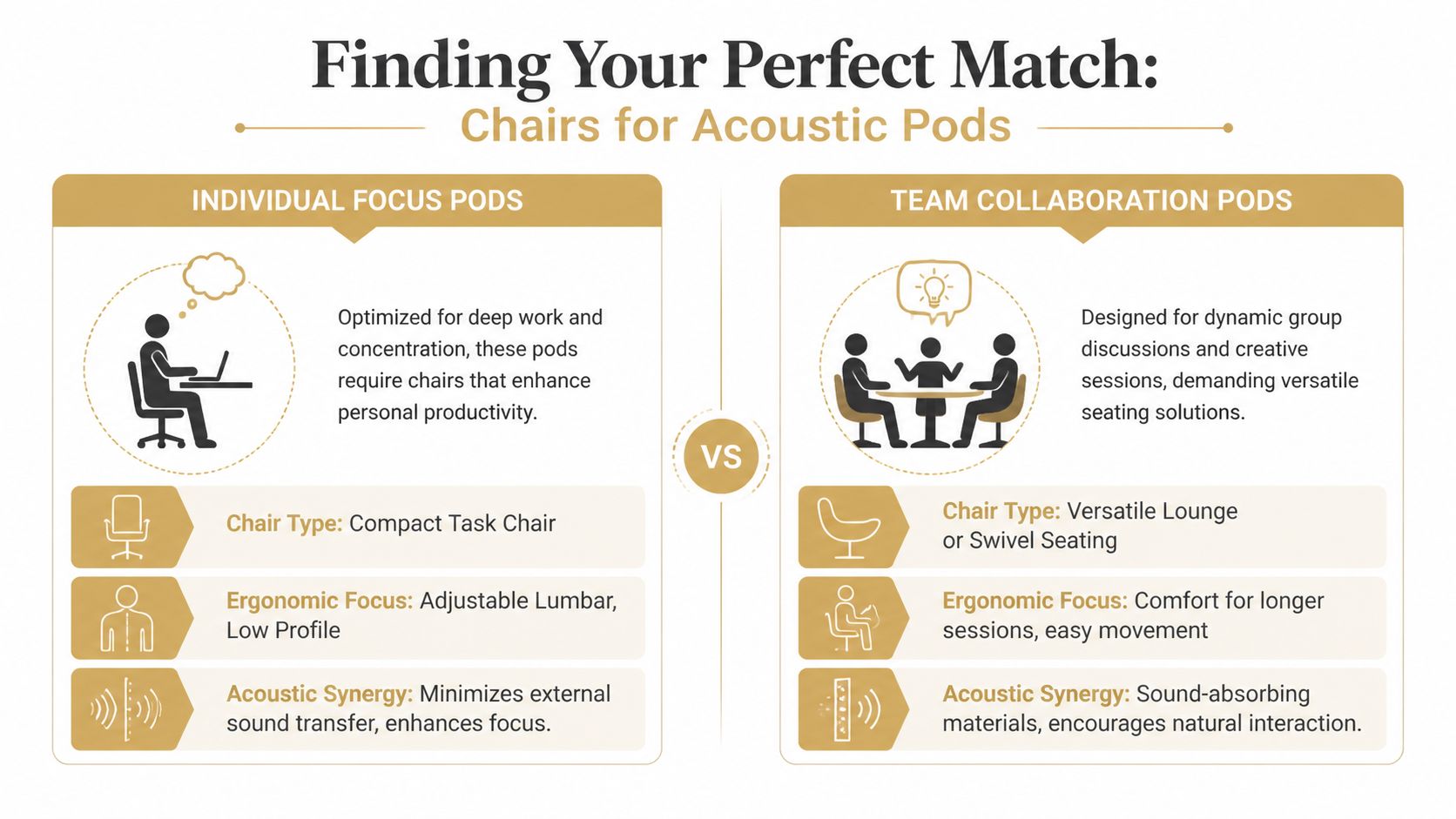
That shift matters because pod spaces vary widely. A phone booth has tight spatial tolerances and short dwell time. A single-person focus pod needs better ergonomic support. A group pod has to cope with movement, discussion, laptop use, and frequent turnover. One seating formula won't cover all three.
A 2025 British Institute of Facilities Management survey found that 68% of UK office workers report noise as their top distraction, while only 12% of facilities managers have specified pod-chairs that align acoustically and aesthetically, highlighting a gap in workplace strategy, as cited in this BIFM survey summary on pod-chair alignment.
Matching by pod type
The chair should respond to how the pod is used, not just how it looks from outside.
- For Blocko pods: Compact task seating usually works best in focused individual settings. Lower visual bulk helps the pod feel calm rather than crowded.
- For Framery pods: The right answer depends on model and intended session length. Task-based work benefits from refined ergonomic support and easy adjustment.
- For Kabin pods: Quick-call and light-touch uses often suit simpler seating with easy entry and exit. Over-specifying can slow the user down.
- For Vetrospace pods: Where the architecture is visually lighter, chairs with cleaner lines and controlled proportions tend to sit better in the space.
For teams assessing whether pods are the right investment in the first place, this guide to why office pods are the smartest investment for UK workspaces in 2026 is a useful companion read.
Common pairing mistakes
A pod can underperform without any fault in its acoustic build. The furniture can be the issue.
A beautifully made pod loses value quickly if users have to twist, perch, or shuffle just to get comfortable.
Three mistakes appear often in refit projects:
Oversized bases in small booths
Chairs with broad star bases or generous arm structures can reduce usable space and make entry awkward.Soft lounge seating where task work happens
It may look relaxed, but it often creates poor laptop posture and shorter productive sessions.Mismatched visual language
A highly expressive chair inside a restrained pod can feel unresolved. The space starts to look pieced together instead of intentional.
A simple way to choose
A quick specification filter helps.
| Pod use | Best chair direction | Watch out for |
|---|---|---|
| Phone calls | Compact, easy-entry seating | Deep seats and bulky arms |
| Focused solo work | Task chair with controlled footprint | Fixed-height seating |
| Small collaboration | Agile swivel or supportive meeting chair | Chairs that are too formal or too static |
The perfect chair isn't universal. It's the one that helps the pod do its job.
Ergonomics and Acoustics Inside the Booth
Inside a booth, comfort becomes more technical. In open space, users often stand up, reposition, or shift to another desk before discomfort builds. In a pod, they tend to stay put and expect the setting to support concentrated work.
That is why ergonomic detail matters more than many buyers expect.
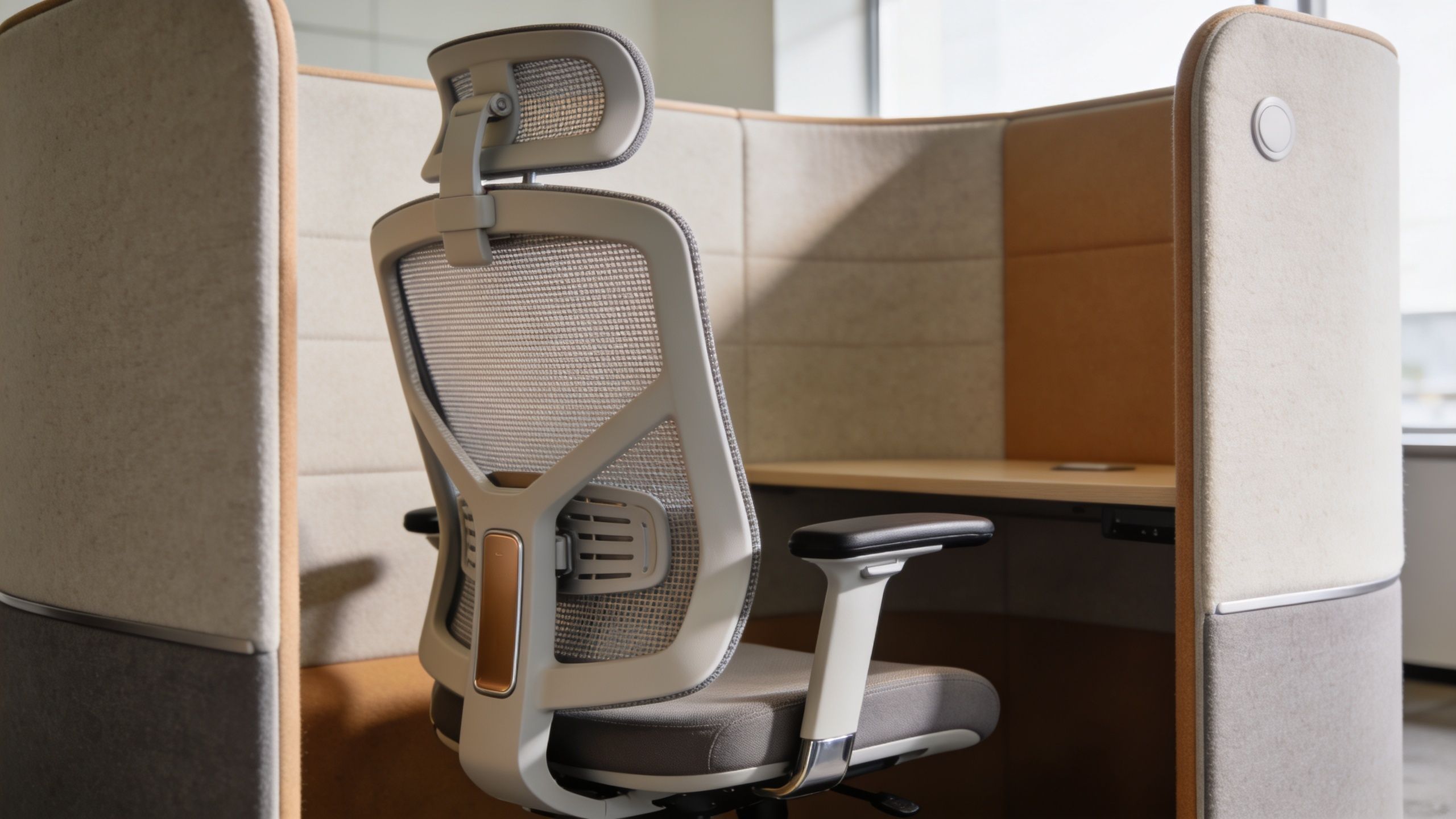
For UK compliance under the Health and Safety (Display Screen Equipment) Regulations 1992, chairs must be adjustable. Research cited in this executive chair ergonomic guide states that chairs with a full adjustment range of 40 to 52 cm can reduce musculoskeletal complaints by up to 35% compared with fixed-height alternatives.
The adjustments that make the difference
Inside a pod, a chair must adapt quickly to different users without becoming complicated. The strongest commercial options usually get the essentials right first.
- Seat height: The cited ergonomic range of 40 to 52 cm is a strong benchmark for multi-user office environments.
- Seat depth: Users need enough support without pressure behind the knee or forced forward sitting.
- Armrest control: Arms should support laptop and meeting work without knocking into pod sides or tables.
- Lumbar response: Support should feel present but not overbuilt. Aggressive lumbar shapes can divide opinion in shared spaces.
Materials affect more than comfort
The fabric and surface finish influence how the space feels. Mesh can improve airflow and reduce visual weight. Upholstered shells can create a softer acoustic impression and often look warmer in enclosed settings. Neither is automatically right.
What matters is the use case.
- Short occupancy booths: Simpler, cleaner materials are usually easier to manage.
- Longer focus sessions: Breathability and posture support matter more.
- Premium meeting pods: Upholstery quality, tactile finish, and noise behaviour all become part of the user experience.
A useful benchmark for design-led ergonomic thinking can be seen in Critelli Furniture Herman Miller products, where posture support and movement are treated as part of the chair's core design logic rather than optional extras.
Acoustics also extend beyond the pod shell. Ceiling treatment in the surrounding office still affects perceived quiet and speech spill, which is why office ceiling sound baffles are often part of a wider acoustic strategy.
Before final approval, it helps to see pod seating in use:
What works better in practice
The best booth seating usually shares a few traits. It has a compact footprint, clear controls, restrained arms, and enough movement to prevent static sitting. What tends to fail is the opposite. Too much chair, too many visual cues, and not enough real support.
Sustainability and Smart Procurement The Circular Economy
Commercial seating decisions shouldn't stop at purchase price. The better question is what the chair costs to own, maintain, adapt, and eventually replace.
That broader view matters even more in workplaces that use pods, booths, and flexible layouts. Furniture may need to move between zones, support changing headcount, or align with a wider sustainability brief. A chair that looks economical on day one can become expensive if it wears poorly, needs frequent servicing, or no longer suits the space after a layout change.
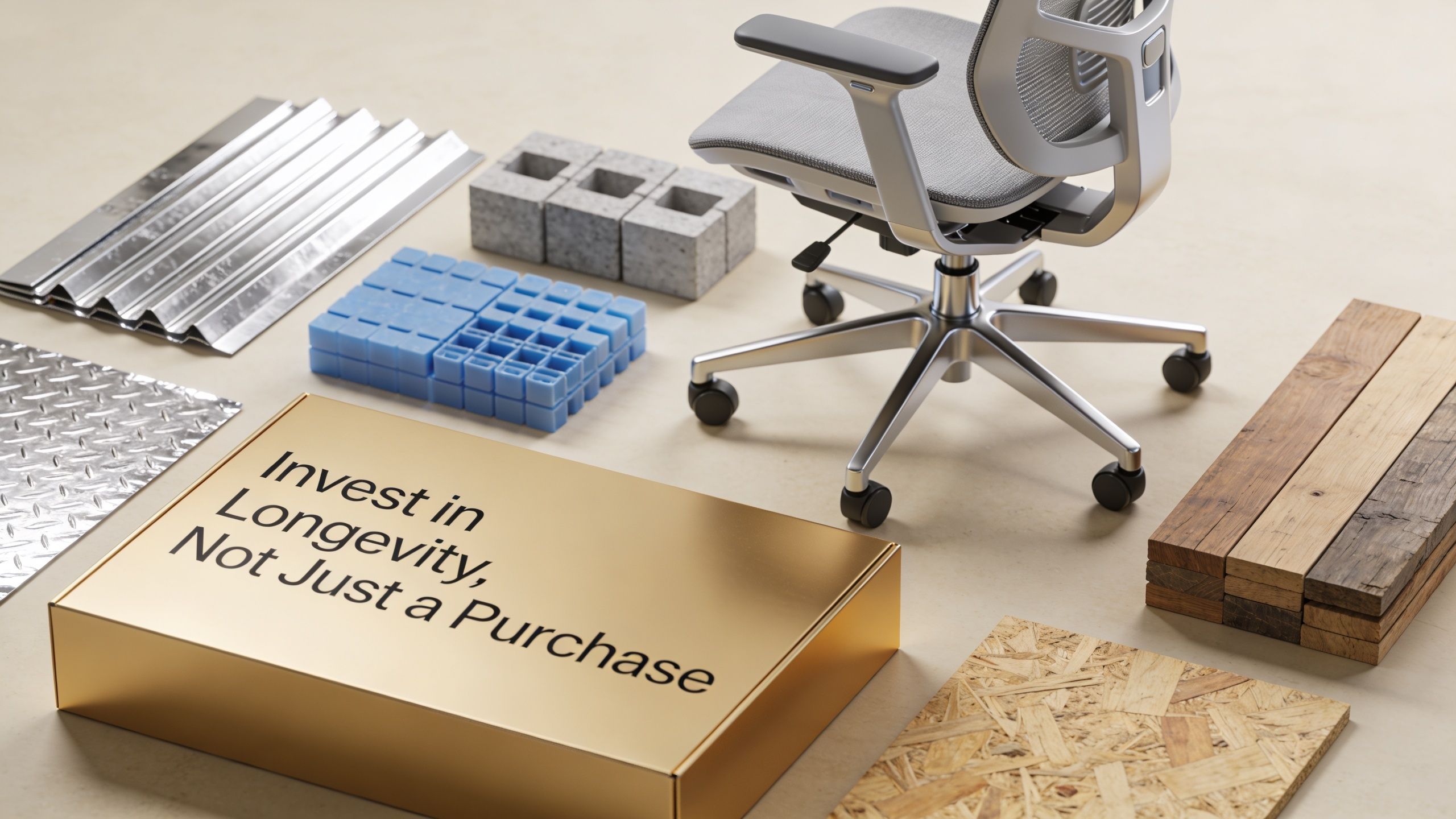
According to this commercial chair ownership and rental overview, the average total cost of ownership for a premium commercial chair can be around £450 annually. The same source notes a 28% increase in chair rental subscriptions in the UK, and that rental can cut total cost of ownership by 35% for businesses with changing needs.
Why ownership isn't always the smartest model
Traditional buying still works well for stable workplaces with fixed layouts and predictable use. It is less effective where teams are resizing, trialling pod formats, or planning phased refurbishment.
Specification note: A sustainable furniture strategy isn't just about recycled content. It's about keeping products in useful service for longer and avoiding premature replacement.
Three procurement routes tend to make the most sense:
- Direct purchase for stable zones: Best where usage is clear and the workplace layout is unlikely to change.
- Rental for flexible estates: Useful when teams need to preserve capital or expect the mix of spaces to evolve.
- Blended models: A sensible route for many organisations. Buy core items. Rent where uncertainty is higher.
The circular economy in workplace furniture
A circular approach changes the conversation from disposal to continuation. That includes repair, refurbishment, redeployment, take-back planning, and product life extension. It suits pod-led offices because those environments are often adapted over time rather than stripped out wholesale.
Two resources are especially relevant for teams building this into procurement decisions:
- For broader environmental commitments: Sustainability at Gibbsonn
- For end-of-life and reuse planning: office furniture recycling support
Rental also has a practical role in this model. Pod hire and subscription services can support trial periods, project swing space, and phased upgrades without locking the organisation into the wrong long-term specification. For teams considering pod hire specifically, Framery Subscribed is a strong example of how flexibility and circular thinking can work together.
The best commercial decision is often the one that preserves options.
Specification Beyond the Pod A Holistic Approach
A pod-led office fails in small ways before it fails in obvious ones. The chair clips the booth wall on entry. Arms hit the worktop. A meeting chair looks right on the finish schedule but feels wrong after 40 minutes in a semi-enclosed room. Good specification avoids those errors by treating seating as part of the room, the circulation path, and the work pattern around it.
That principle should carry across the whole floor. The chair that works inside a Framery booth is rarely the right answer for an open collaboration area, and a loose lounge chair that performs well in breakout space can create posture, clearance, and cleaning problems in a pod.
Create a coherent seating language
A connected scheme usually has to do three jobs at once. Keep the workplace visually consistent. Support the task in each setting. Give facilities and workplace teams a specification they can maintain without creating unnecessary variation.
That does not mean using one chair everywhere.
A focus pod often needs a compact task chair with controlled movement, a defined sitting position, and dimensions that respect the booth footprint. A nearby meeting zone may need a lighter visual profile and a more upright perch to support shorter conversations. A collaboration area divided with Logika partitions may benefit from agile chairs that move easily, stack or reset quickly, and still look considered next to higher-value architectural elements.
The test is straightforward. Specify for the activity first, then check how that chair behaves in the wider setting.
Build the spec like an operations document
The strongest schedules read like operating instructions, not marketing copy. Facilities teams need to know what the chair is for, who will use it, how often it will be adjusted, what it can tolerate, and what happens when a part fails.
European guidance gives a more credible benchmark here than generic online product claims. Standards such as BS EN 1335 for office work chairs and BS EN 16139 for non-domestic seating help specifiers check dimensions, safety, and strength in the contexts where these chairs are used. They do not pick the product for you, but they do stop avoidable mistakes, especially in shared environments and multi-zone refits.
A practical chair schedule should record:
- Intended setting: Focus pod, meeting pod, touchdown desk, breakout area, reception, or terrace room.
- User pattern: Dedicated user, hot-desk use, visitor use, or high-turnover shared use.
- Dimensional limits: Overall width, arm height, base footprint, turning circle, and clearance under worksurfaces.
- Adjustment level: Full task adjustment where users sit for longer periods, or simplified controls where misuse is more likely.
- Maintenance requirements: Cleanability, replaceable parts, upholstery lead times, and access for repairs.
- Acoustic and visual fit: Whether the chair supports the calm, contained feel needed inside enclosed or semi-enclosed settings.
For teams formalising this information, the discipline behind product data sheets is useful. This guide on maximize Shopify sales is relevant because it shows how consistent product information helps comparison and decision-making, even though the workplace context is different.
Don't forget exterior settings
Exterior rooms need their own chair logic. Enclosed outdoor spaces such as The Meeting Pod Co deal with different temperature swings, more dirt transfer, and heavier wear at entry points. Finishes, glides, fabrics, and frame materials all need closer scrutiny.
Indoor assumptions rarely survive first contact with an external terrace.
The best specifications connect pods, open areas, meeting settings, and exterior rooms into one clear furniture strategy. That gives the project a stronger visual identity, fewer operational headaches, and a better return on every chair specified.
Create Your Perfect Workspace Today
The right designer office chair doesn't win on looks alone. It earns its place by supporting the task, fitting the space, and working as part of a wider acoustic and workplace strategy. That is especially true in pod-led offices, where the chair has a direct effect on comfort, concentration, and how the space is used every day.
Facilities teams planning a refit usually get the best outcome when they test seating decisions against real settings. Not just finishes boards and product sheets, but actual use. How long will people sit there. How often will the chair be shared. How easily can it be adjusted. How well does it sit inside the pod without compromising movement or visual calm.
The strongest projects also stay flexible. Ownership, rental, circular procurement, acoustic support, and future layout changes should all be part of the decision from the start.
For teams ready to review pods, seating, and the wider workplace together, a showroom visit makes the process far easier. Seeing products side by side in person helps decision-makers judge proportion, comfort, finish quality, and acoustic intent much more confidently than a PDF ever can. Booking an appointment and visiting the showroom in Bishop's Stortford is a practical next step for any serious refit.
Gibbsonn helps organisations create productive, future-ready workplaces with premium pods, booths, acoustic solutions, and carefully considered furniture. To discuss a project, book an appointment, or arrange a visit to the Bishop's Stortford showroom, get in touch with Gibbsonn.