

The usual advice gets this wrong. A large wood desk isn't the smartest upgrade for a modern workplace. It's a symbol from another era, built for status, permanence, and private offices. Most UK teams now work in open-plan layouts where the actual problem isn't a lack of desk presence. It's a lack of quiet, privacy, and control.
That changes the brief for facilities managers. The best investment in 2026 isn't the biggest desk in the room. It's the ability to give people the right setting for focused work, private calls, quick meetings, and reset time without expensive construction. A beautiful desk can still have a place. It just can't fix the thing that's hurting performance.
Table of Contents
- The Large Wood Desk and The New Status Symbol
- The Problem with Open Plan The Desk Cannot Solve
- The Answer Is Quiet A Guide to Office Pods
- Smart Finance and Sustainability The Circular Economy of Pods
- Designing Your Agile Workspace with Pods and Partitions
- Build Your Future-Proof Office Today
The Large Wood Desk and The New Status Symbol
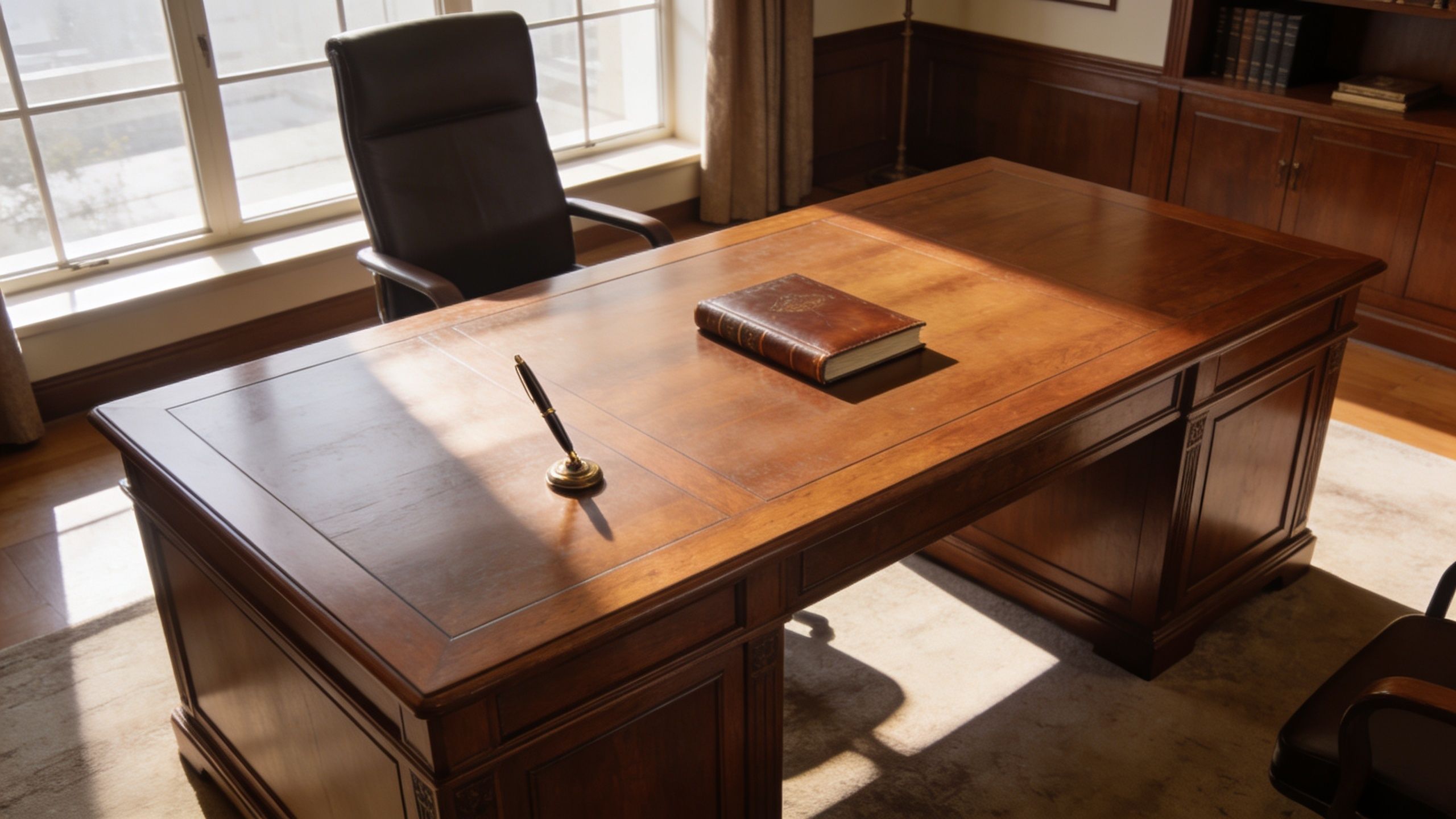
The large wood desk earned its well-deserved reputation. In Britain, larger desk forms became established in the 1750s onwards when partners desks and pedestal desks emerged and remained influential for centuries, while the Victorian period drove major growth in large wooden desk manufacturing and reinforced the desk as a marker of professional standing, according to Canonbury Antiques' history of antique desks and this history of desk design.
Why the old symbol still appeals
That appeal hasn't vanished. Solid timber still signals permanence, authority, and taste. Victorian makers pushed that idea hard. Mahogany became the premium choice, mass production expanded in the 19th century, and a split emerged between cheap office furniture and high-quality hardwood pieces for buyers who still wanted craftsmanship, as noted in the earlier Canonbury reference.
The old desk also solved real problems for its time. The kneehole desk improved seated access to the writing surface, and later bureau-cabinet forms added storage above and around the work area. Those weren't superficial design moves. They shaped the ergonomics and layout logic that still influence premium desks now.
Practical rule: If a workspace still depends on one oversized desk to communicate authority, the workplace strategy is behind the way people actually work.
A desk can still be useful. It can also be handsome. But it no longer represents the highest-value workspace decision.
What matters more now
The new status symbol is productive quiet on demand. Teams don't need more furniture theatre. They need places to think, call, meet, and recover from open-plan overload without leaving the floor.
That's where the old logic breaks. A desk is a surface. It isn't an acoustic solution. It doesn't create privacy. It doesn't shield a confidential call. It doesn't give a manager a quick one-to-one space. It doesn't help a neurodiverse employee escape constant interruption.
Even desk accessories only refine the work surface. They don't change the environment. For teams still improving workstation setup, Blu Monaco's guide on how to elevate your productivity with organizers is a useful reminder that better organisation helps, but organisation alone won't solve noise and visual distraction.
The Problem with Open Plan The Desk Cannot Solve
Open-plan offices often fail in the same way. They ask one environment to do everything. Focus work sits beside calls. Informal chats spill into admin areas. Video meetings happen near touchdown desks. Then people get blamed for being distracted by a layout that guarantees distraction.
Noise is the operational problem
For UK workplace leaders, noise isn't a minor annoyance. It's a direct productivity issue. The CBI/Pertemps Employment Trends Survey indicates 58% of UK workers cite noise as a workplace distraction, as stated in the verified brief for this article's underserved angle.
That single point matters more than another conversation about timber finish or desk style. If noise is already undermining concentration, adding a bigger desk changes almost nothing. It may even make the problem more obvious by anchoring someone in the middle of acoustic spill.
A useful reality check for any facilities manager is to review the whole layout, not just workstation furniture. That usually starts with broader open-plan office design thinking rather than another isolated desk purchase.
A desk can't create privacy
The desk industry still talks far too much about appearance and far too little about use in real open offices. The article brief identifies a clear gap in market guidance around large wood desk ergonomics and acoustic performance in UK open-plan offices, especially where desks sit near acoustic pods or booths.
That gap matters because large desks can create practical issues of their own:
- Sound reflection: Hard wood surfaces don't soften speech. In busy open areas, they can reinforce the sense of acoustic sharpness rather than reduce it.
- Monitor positioning: Bigger surfaces allow more kit, but they don't guarantee better posture or visual comfort unless the whole setup is planned properly.
- False privacy: A wide desk can feel substantial, but it doesn't create a sound-controlled boundary for calls, HR chats, or concentrated solo work.
A large desk can make someone look important. It can't make the office quiet.
There are also physical performance issues once bigger desks enter mixed-use layouts. For desks above 60 inches wide, a 25 to 30mm core thickness is recommended to prevent sagging when supporting monitor arms weighing 20 to 40 lbs, and desks wider than 72 inches can show measurable deflection within 6 to 12 months if thickness falls below that threshold, according to Eureka Ergonomic's guide to executive desk dimensions and thickness. In pod-adjacent environments, that kind of movement can interfere with alignment and integration.
That is the core issue. Open-plan offices don't need more heroic desks. They need spaces that separate incompatible tasks.
The Answer Is Quiet A Guide to Office Pods
An office pod does what a desk never can. It creates a defined environment inside the wider office. That means better control over sound, privacy, focus, and behaviour. A pod tells people what the space is for. A desk doesn't.
What office pods actually do
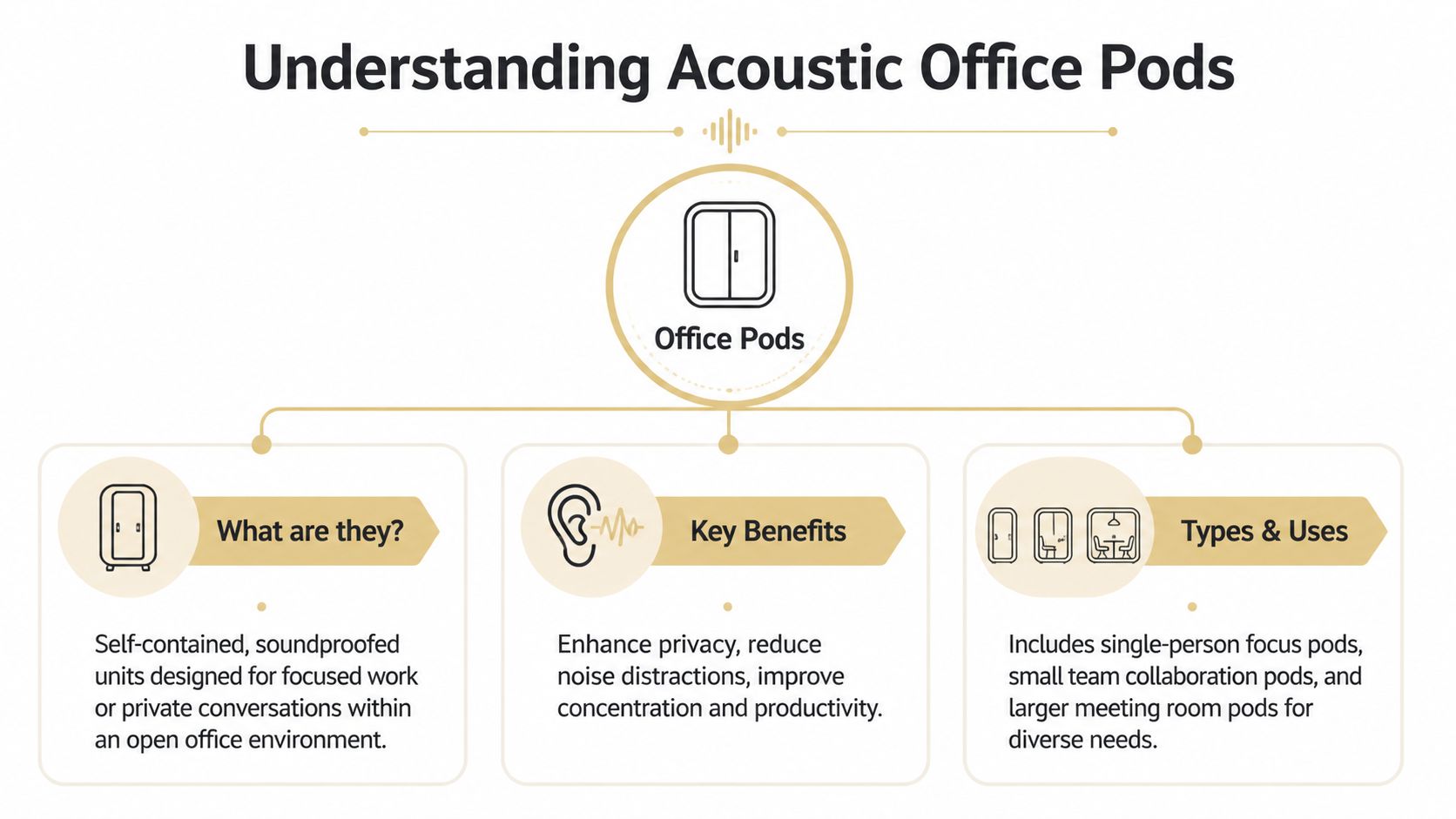
The simplest way to think about pods is this. They are self-contained acoustic rooms placed inside an existing workplace. Instead of rebuilding the office, a team inserts targeted quiet where it's needed most.
That makes them a far better answer for modern work patterns than fixed traditional furniture. They support a mix of tasks across the day without forcing every activity into the same noisy background.
For a broader view of how enclosed quiet spaces fit into modern workplaces, this overview of office privacy solutions is a sensible starting point.
A short product walkthrough helps make the category easier to visualise:
Which pod suits which task
Not every pod solves the same problem. That's exactly why they work.
| Pod type | Best use | Why it works better than a large wood desk |
|---|---|---|
| Single-person phone booth | Calls, video meetings, private admin | It removes the user from background office noise |
| Focus pod | Deep work, reading, writing, sensitive tasks | It creates mental separation and fewer interruptions |
| Small collaboration pod | Two to four people working through issues | It keeps discussion contained without booking a meeting room |
| Meeting pod | Team sessions, interviews, hybrid meetings | It gives structure, privacy, and better speech control |
| External pod | Overflow meetings, visitor conversations, flexible site use | It extends usable workspace beyond the core office footprint |
The market now offers strong options across each of these categories. Blocko suits teams that want clean design and flexibility. Framery is widely recognised for acoustic workplace pods and booths. Kabin gives specifiers customisation options, while Vertrospace focuses heavily on healthy, comfortable use. For outdoor settings or extra capacity beyond the interior footprint, The Meeting Pod Co adds another practical route.
Why pods outperform furniture-only upgrades
A facilities manager choosing between another premium desk package and a pod should ask a blunt question. Which option solves more than one problem at once?
Pods usually win because they address several workplace pressures together:
- Focus: They give people a place to work without constant interruption.
- Privacy: They support confidential calls and one-to-ones without occupying a formal room.
- Flexibility: They can be introduced without a full fit-out reset.
- Wellbeing: They offer a calmer setting inside a busy office.
- Space efficiency: They help teams use open-plan space more intelligently.
There are also practical planning reasons to move beyond oversized desks. Premium large wood executive desks cited in the verified brief can support 330 to 350 lbs and weigh 70 to 80 lbs, with one listed example measuring 70.87" W × 31.3" D × 29.92" H at 72 lbs, while workstation loading with users and equipment can exceed 500 lbs in clustered layouts, based on the product data in this large wood executive desk listing. In dense floorplates, that matters.
Pods don't replace every desk. They replace the bad assumption that desks are enough.
Smart Finance and Sustainability The Circular Economy of Pods
Workplace strategy has moved on from one-off furniture buying. The smarter question now is whether a business should own every workspace asset outright in the first place.
Why ownership isn't always the smart move
A traditional large wood desk usually follows a fixed model. Buy it, place it, work around it, live with it. That approach suits permanent layouts and stable teams. Many organisations don't have either.
Pod hire is more aligned with how businesses now operate. It gives workplace leaders room to adapt when teams grow, shrink, reconfigure, or relocate. That's why subscription and rental models deserve more attention than they usually get.
A strong example is Framery Subscribed. It offers access to pod solutions through a more flexible route than a standard capital purchase. For organisations managing uncertainty, that matters. It reduces commitment to a layout that may stop fitting the business far sooner than expected.
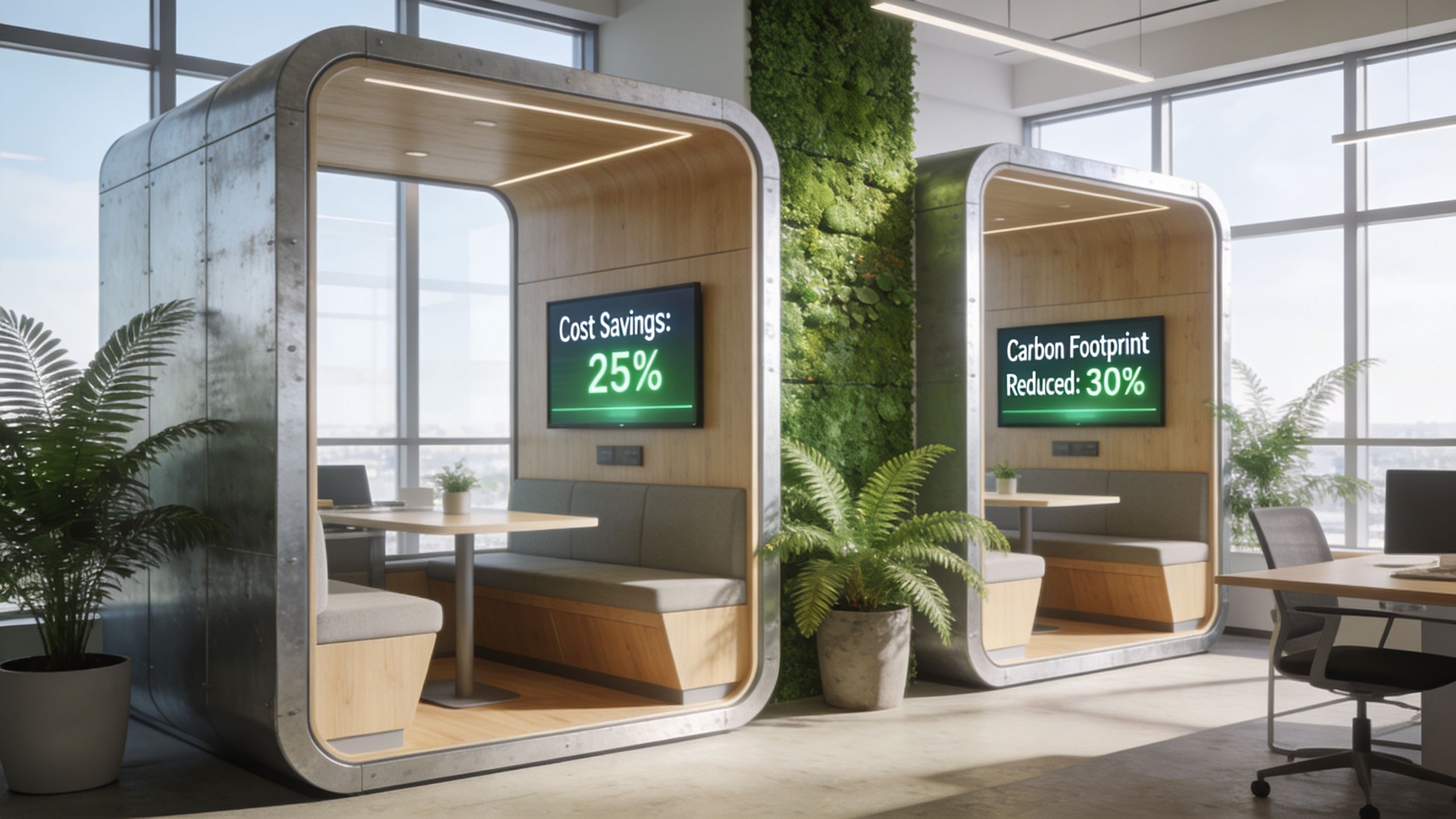
A desk-heavy scheme can lock a floor into old assumptions. Subscription pod models support change.
The circular economy isn’t just a buzzword. It’s a strategic advantage. Pod rental gives businesses flexibility while avoiding the wasteful buy, use, dispose pattern.
Circular thinking beats fixed furniture
The sustainability case is just as strong. The verified brief highlights an underserved need for UK-specific sustainability, sourcing transparency, and circular economy practices for large wood desks. Retailers talk about solid wood and reclaimed finishes, but often leave out the harder questions around lifecycle, refurbishment, take-back, and environmental accountability.
That gap becomes more visible as UK organisations align workspace decisions with long-term environmental goals. The same brief notes the UK's commitment to net-zero by 2050 and points to office furniture waste as part of the wider issue. A circular model addresses that more directly than fixed ownership.
The practical contrast looks like this:
- Traditional furniture ownership: buy, install, depreciate, replace
- Circular pod model: use, return, refurbish, redeploy
That second model is more intelligent for changing workplaces. It reduces the pressure to treat every purchase as permanent and encourages better asset use over time.
For teams weighing these decisions, a clear sustainability policy matters more than generic green language. Gibbsonn's approach to sustainability and circular thinking points in the right direction because it treats workspace products as part of a longer lifecycle, not just a one-off sale.
There is still a place for desks, including practical affordable office desks where open workstation settings make sense. But the smarter long-term strategy is to stop asking fixed desks to carry every functional, financial, and environmental burden on the floor.
Designing Your Agile Workspace with Pods and Partitions
A good office doesn't need more furniture. It needs better zoning. That means each part of the workplace should support a clear type of behaviour.
Build zones not rows of desks
The old model filled a floorplate with desks and hoped people would self-manage the noise. The better model creates a sequence of settings. Focus work goes in one area. Quick collaboration happens elsewhere. Private calls move into booths or pods. Informal gathering has its own place.
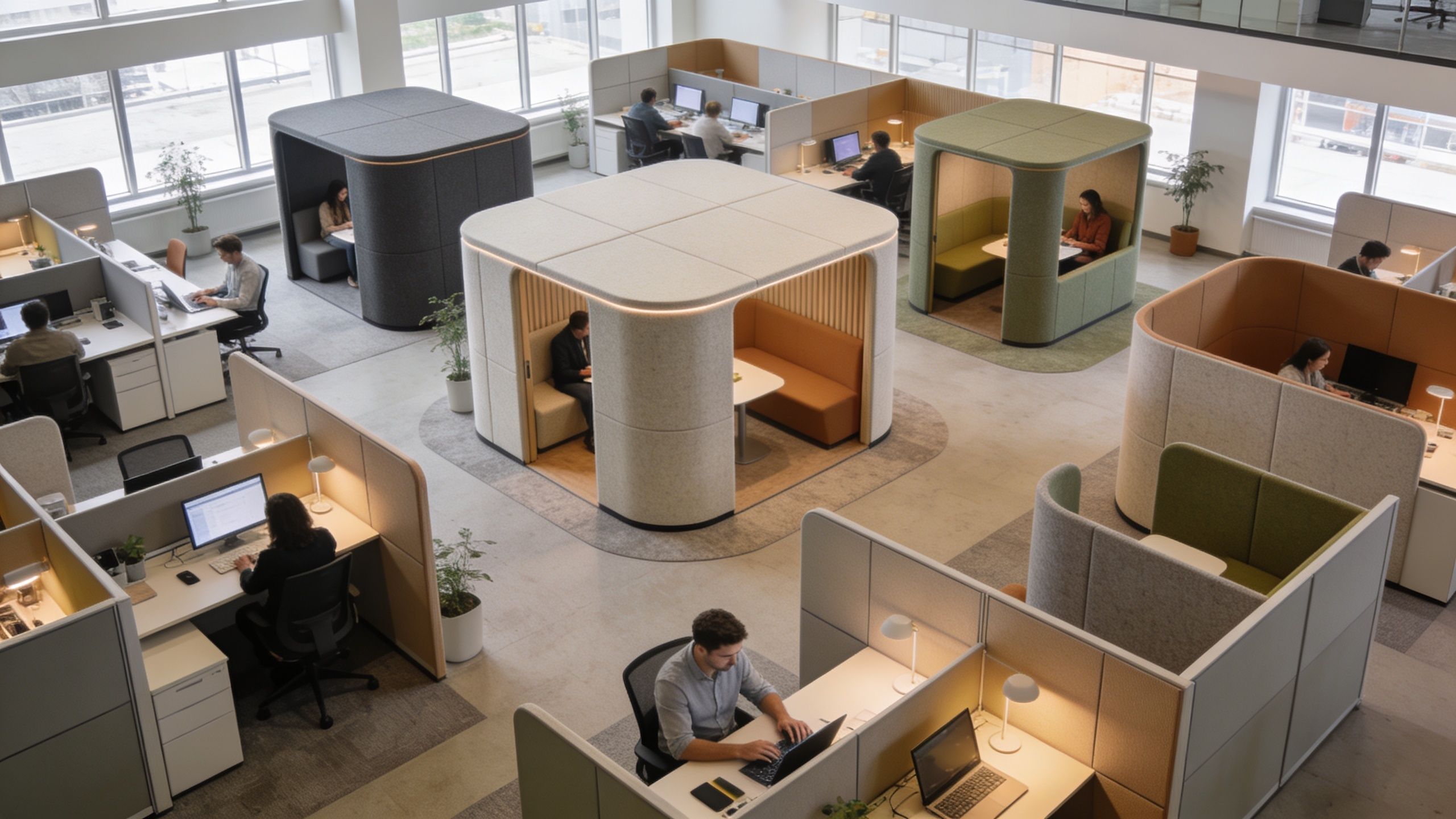
Pods are useful because they act like small pieces of architecture. They define function without permanent building work. A single-person booth can calm a noisy run of desks. A meeting pod can absorb conversations that would otherwise spill into circulation space.
A simple zoning model works well:
- Quiet zone: desks for focused individual tasks, supported by nearby focus pods
- Communication zone: phone booths and short-meeting pods for calls and fast discussions
- Collaboration zone: larger pods for team sessions and hybrid meetings
- Social zone: café or breakout settings away from heads-down work
The best office layouts don't treat every square metre the same. They assign purpose.
Use partitions with purpose
Pods work even better when paired with well-planned partitions. That's where products from specialists such as Logika can help shape movement, create visual screening, and soften transitions between zones.
Partitions shouldn't be used as clutter. They should guide behaviour. A low screen can signal that a desk bank is for concentration. A glazed divider can define a collaboration area without making it feel closed off. Combined with pods, partitions let a team reshape the office without jumping straight to construction work.
The finish layer matters too. Colour, graphics, and visual warmth influence whether people want to use a quiet area. Teams refining those details may find this guide on how to select office wall art helpful because it focuses on choosing artwork that supports the mood and purpose of a workspace rather than decorating for decoration's sake.
The result is a more agile office. Not louder. Not busier. Just better organised.
Build Your Future-Proof Office Today
The old power symbol was a large wood desk. The smart power move now is giving people places to think, speak, and work without distraction.
That shift matters because status furniture does nothing for call privacy, focused work, hybrid meetings, or staff wellbeing. Acoustic pods do. They turn office spend into something useful instead of tying budget up in bulky pieces that lock you into an outdated layout and add little beyond appearance.
Choose the asset that improves output.
A business that keeps buying oversized desks to signal importance will keep paying for the same workplace problems. A business that invests in acoustic settings, flexible planning, and circular procurement is far more likely to create a workplace people can use properly. That is the difference between designing for image and designing for performance.
The next step should be practical. Review the floorplate. Pinpoint where noise, interruptions, and privacy failures are happening. Then specify pods around real tasks, not assumptions or showroom theatre.
That matters even more during a relocation or consolidation. Quiet space should be planned at the start, because retrofitting privacy after teams move in costs more and causes more disruption. Workplace leads handling a move can use this expert office relocation guide to structure the practical side properly.
The best workplaces in 2026 will not be remembered for the biggest executive desk in the building. They will be judged by how well the space supports concentration, conversations, confidential calls, and change over time.
Gibbsonn helps UK organisations create quieter, smarter workplaces with premium acoustic pods, booths, privacy solutions, and flexible planning support. To discuss pod hire, Framery Subscribed, workplace zoning, or a full pod and partition strategy, speak to the team directly.
Teams are also encouraged to book an appointment and visit the showroom in Bishop's Stortford to see the pods in person, compare options, and make faster specification decisions with confidence.